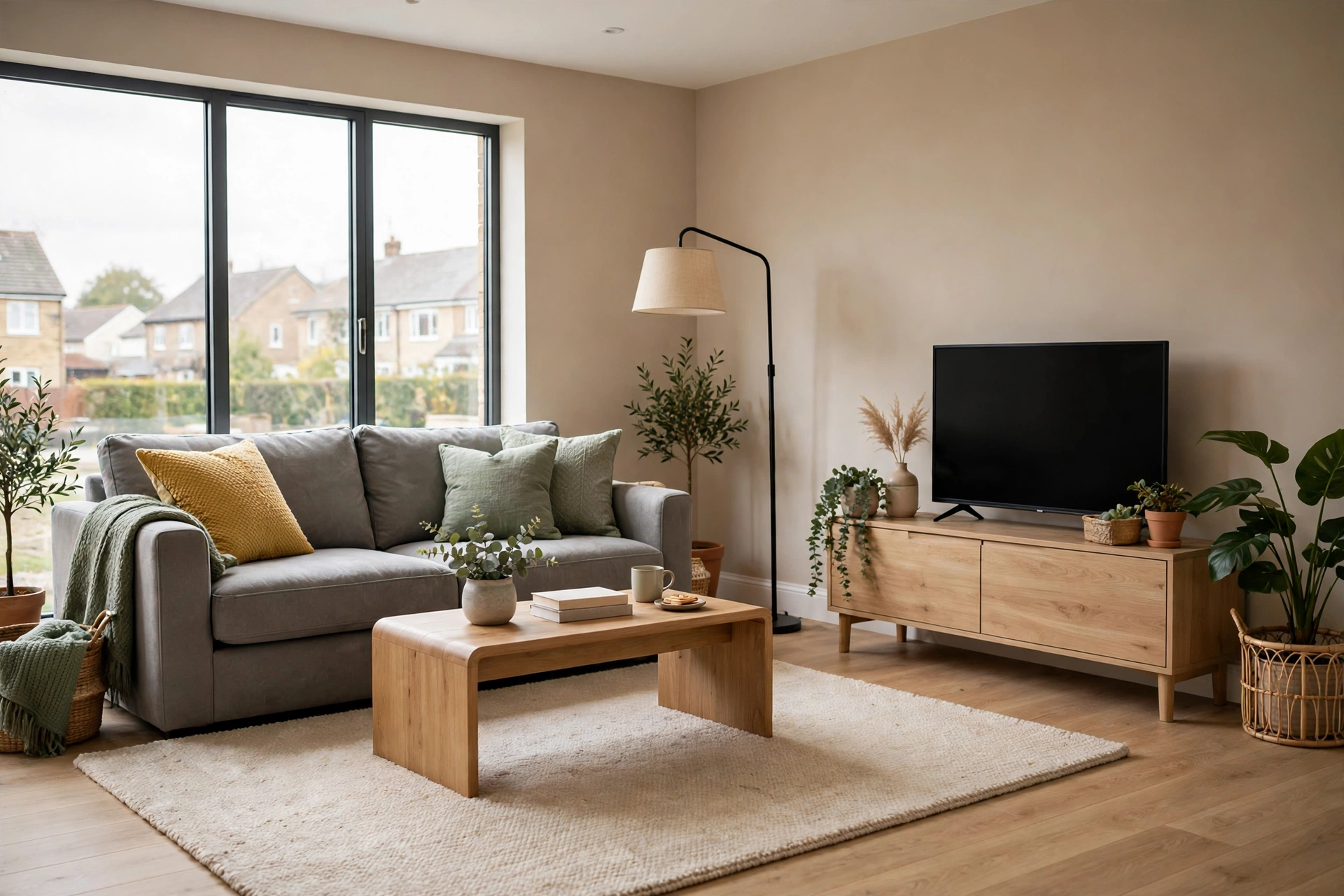
Short answer: The best new build living room ideas start with the layout, not the shopping. New build rooms are usually smaller and squarer than older homes, with plain white walls and little built-in character, so choose a slim sofa that fits the wall, warm up the white with paint or texture, layer lighting instead of relying on one ceiling light, and add storage that does not eat floor space. A few well-chosen pieces from Dunelm, IKEA or B&M will do more than a room full of impulse buys.
What Is a New Build Living Room?
A new build living room is the main reception room in a recently built home, usually finished by the developer in plain white emulsion with light wood or grey carpet, standard ceiling heights and a simple layout. Unlike a Victorian terrace or a 1930s semi, there are rarely alcoves, picture rails, fireplaces or original floorboards to work with. That blankness is both the problem and the opportunity: nothing needs stripping back, but nothing gives the room character either, so every bit of warmth and personality has to be added by you.
Most new build living rooms in the UK measure around 3.5 to 4.5 metres across, which sounds generous until a three-seater sofa, a coffee table and a television unit go in. Measure before you buy anything, and keep a tape measure in your pocket on every shopping trip. A sofa that looked compact in a huge showroom can swallow a new build room whole.
Start With the Layout, Not the Shopping
It is tempting to start buying cushions, but the layout decides whether the room works. New build living rooms are often square or only slightly rectangular, and the television point, sockets and radiator usually dictate where things can go. Sketch the room on paper, mark the door swing, the windows and the sockets, then try each layout before committing.
Three layouts suit most new builds:
- Sofa against the longest wall: the safest choice in a square room. It leaves the centre open and gives a clear view of the television without blocking the window.
- Sofa facing the window: works well when the television sits on a side wall. You get natural light on your face in the evening and the room feels brighter all day.
- Floating sofa with a console behind it: the best option for open-plan new builds, where the living area flows into the kitchen diner. A slim console table or a low bookcase behind the sofa creates a boundary without a wall.
Leave at least 45 centimetres between the coffee table and the sofa so people can walk past comfortably. In a small room, a rug that is too small makes everything look scattered, so choose one large enough for the front legs of the sofa and chairs to sit on it. In most new builds that means at least 160 by 230 centimetres.
Warm Up the White Walls
Developers paint new builds brilliant white because it suits every buyer, but it can feel cold and flat once you move in. You do not need to paint every wall. One warm colour on the main wall, or even a single feature wall, changes the whole feel of the room.
Warm neutrals work best in new builds because they suit the light wood floors and grey carpets developers favour. Compare the most popular choices:
- Warm white: shades such as Dulux Egyptian Cotton or Farrow & Ball Wimborne White keep the room bright while removing the clinical edge of brilliant white.
- Soft sage green: a calm, modern choice that suits plants and light wood. It works especially well in north-facing rooms that never get much direct sun.
- Warm greige: a mix of grey and beige that feels cosy without looking dated. It pairs well with black metal, oak and cream fabrics.
- Deep green or navy feature wall: one dark wall behind the sofa adds depth and makes the television blend in. Keep the other walls pale so the room does not feel smaller.
If you love the look of dark green living room ideas, a new build is the ideal place to try them, because the plain walls and simple lines let one bold colour do all the talking. Check your developer warranty first, though: some builders prefer you to wait a year before painting, while the house settles and dries out. If painting is off the table for now, large-scale art, a tall mirror or textured wallpaper panels on one wall will add the same warmth without touching the paint.
Choose Furniture That Fits New Build Proportions
New build rooms punish oversized furniture. Deep corner sofas, chunky recliners and wide sideboards that look fine in a Victorian living room can block doorways and radiators here. Look for slimmer profiles: a sofa with a depth of around 90 to 95 centimetres rather than 110, raised on short legs so you can see floor underneath, which makes the room feel bigger.
A good rule of thumb for the television is to sit roughly two and a half times the screen size away from it. A 55-inch television suits a viewing distance of about 3.5 metres. In a compact new build room, that often means a 43-inch or 50-inch screen fits better than the biggest set in the shop, and wall-mounting frees up floor space.
Multifunctional furniture earns its place in a new build. A storage ottoman holds throws and remotes, a nesting set of side tables tucks away when guests leave, and a slim media unit with closed cupboards hides cables, consoles and clutter. IKEA has built a whole range around exactly this problem, from the BESTA storage system to the slim LACK coffee table, while Dunelm and The Range offer similar pieces at prices that suit a first-home budget.

Storage Ideas for Homes With No Alcoves
Older homes hide clutter in alcoves and under-stair cupboards, but new builds rarely do, so storage has to be planned. Use height and dead space instead of floor space.
- Floating shelves: a run of shelves above the sofa or beside the television holds books and ornaments without a single centimetre of floor.
- A tall, narrow bookcase: fits the gap beside a door or window that a wide unit never would, and draws the eye upwards.
- Baskets and boxes: woven baskets under a console table and matching boxes on shelves keep toys, chargers and paperwork out of sight.
- Hidden television storage: a media unit with doors hides the router, games consoles and all their cables, which is half the battle in a new build with limited sockets.
If your new build does have a small recess or an awkward corner, our alcove ideas for living rooms show how to turn it into shelving or a reading nook rather than leaving it empty.
Add Character Without Damaging the Walls
New build walls are usually plasterboard, which means heavy fixings need special plugs and some developers ask you to avoid drilling in the first year. That does not mean bare walls. Lean a large mirror or framed art against the wall on top of a console, use freestanding floor lamps and tall plants for height, and hang lighter frames with removable adhesive strips rated for the weight.
Texture is the fastest way to make a new build feel lived in. A chunky knit throw over the sofa arm, a mix of velvet and linen cushions, a woven rug under the coffee table and a wooden tray on the side table all add the layers that bare plasterboard lacks. Choose three textures and repeat them around the room so it feels planned rather than random.
Houseplants do more for a new build than almost any purchase. A tall fiddle-leaf fig or olive tree in the corner softens the straight lines, while trailing plants on a shelf add life at eye level. Start with a snake plant or a pothos if you are new to plants; both forgive forgetful watering.
Layer the Lighting
Most new builds come with a single central ceiling light, often a plain pendant, and that alone makes the room feel flat in the evening. Layer three types of light instead: a main ceiling light on a dimmer, a floor lamp beside the sofa for reading, and small table lamps or LED strips for a warm glow. Warm white bulbs, around 2700K, suit living rooms far better than cool daylight bulbs, which belong in kitchens and bathrooms.
A floor lamp with a fabric shade throws soft light across the room, and battery-powered LED strips behind the television or under floating shelves add a modern glow without any wiring, which matters when sockets are scarce. For more on this, see our guide to small hallway lighting ideas, which uses the same layering principle in a tight space.
Budget-Friendly Buys for a New Build Living Room
Furnishing a whole room from scratch is expensive, so spend on the pieces you touch every day and save on the rest. A good sofa and a decent rug are worth the money. Cushions, throws, vases, candles and art can come from budget retailers and still look expensive when the colours match.
B&M and The Range are strong for accessories, seasonal pieces and storage baskets. Homesense is the place for one-off finds such as a statement mirror or a textured throw at a fraction of the high street price. Dunelm covers the middle ground with curtains, cushions and rugs in every colour, while IKEA remains hard to beat for clever small-space furniture. Buy the big pieces first, live with the room for a fortnight, then fill the gaps. The room will tell you what it still needs.
Make It Cosy, Not Cluttered
The final step is restraint. A new build living room feels cosy when every object has a reason to be there, not when every surface is covered. Pick a simple colour palette of three colours, repeat it in cushions, art and accessories, and leave some empty space on shelves and tables. Our cosy living room ideas for winter show how throws, warm lighting and soft textures build that feeling without adding clutter.
Live in the room for a few weeks before buying the finishing touches. You will notice which corner feels empty in the evening and where the light falls in the morning. Those observations are worth more than any shopping list.
Frequently Asked Questions
How do I make a new build living room feel cosy?
Layer texture and warm light: a large rug, soft throws and mixed cushions, warm white bulbs around 2700K, and one wall in a warm neutral such as sage green. Plants and wooden accessories add the natural warmth plain white walls lack.
What size sofa fits a new build living room?
Measure your wall first, then choose a sofa at least 20 centimetres narrower than the wall it sits against. In most new build living rooms a two-seater or a compact three-seater around 180 to 200 centimetres wide fits best. Slim sofas around 90 centimetres deep, raised on legs, leave more visible floor and make the room feel bigger.
Can I paint the walls in a new build house?
Yes, but check your developer warranty first. Some builders recommend waiting 12 months while the house dries out and settles, so hairline cracks can be filled and repainted under warranty. If you paint earlier, use the same type of emulsion the developer used and keep a note of the colour for touch-ups.
How do I decorate a new build living room on a budget?
Spend on the sofa and rug, and save on accessories from B&M, The Range, Homesense and IKEA. Buy the big pieces first, live in the room for a fortnight, then add cushions, art and lighting in a simple three-colour palette. One large rug and one feature wall will change the room more than a dozen small purchases.