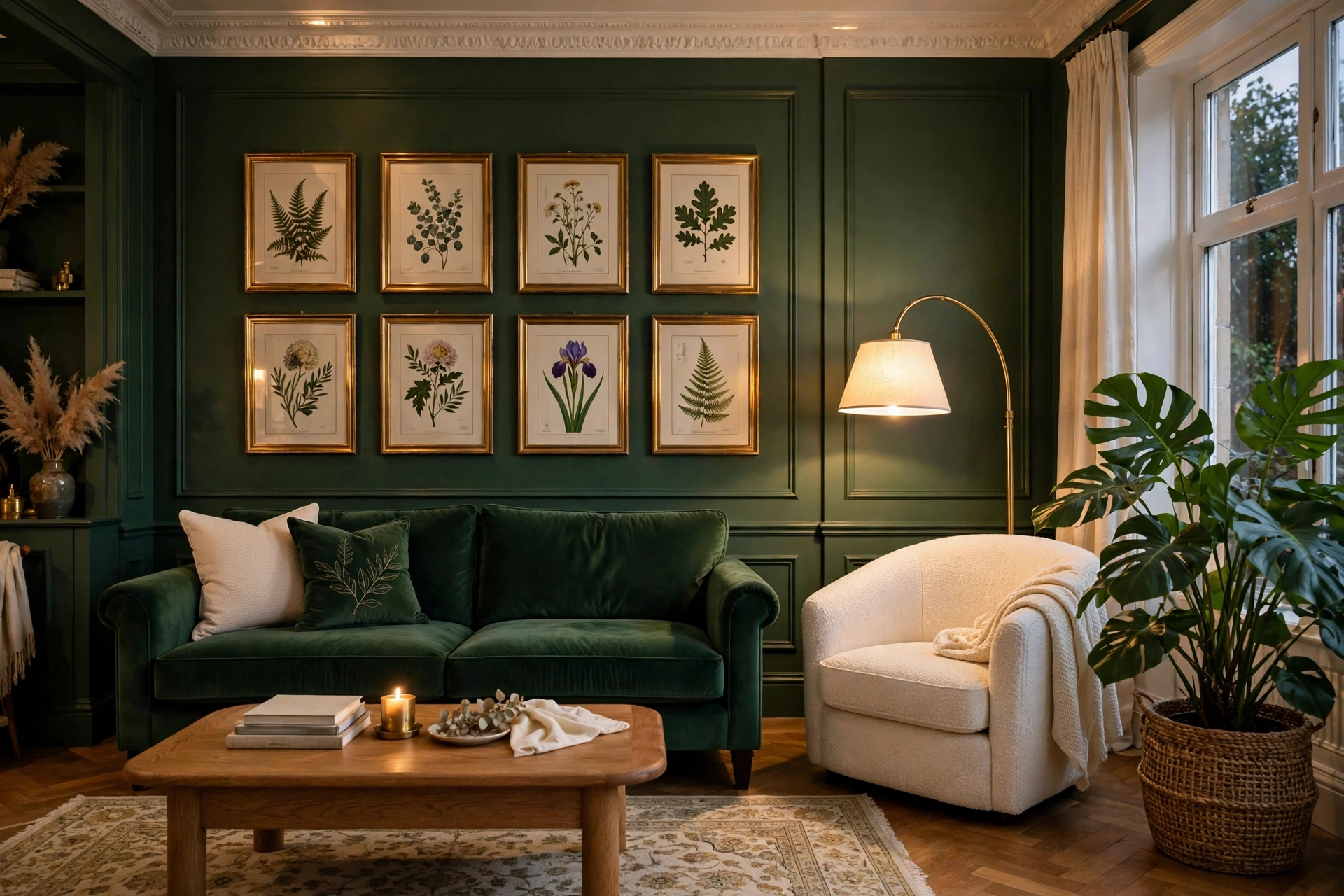
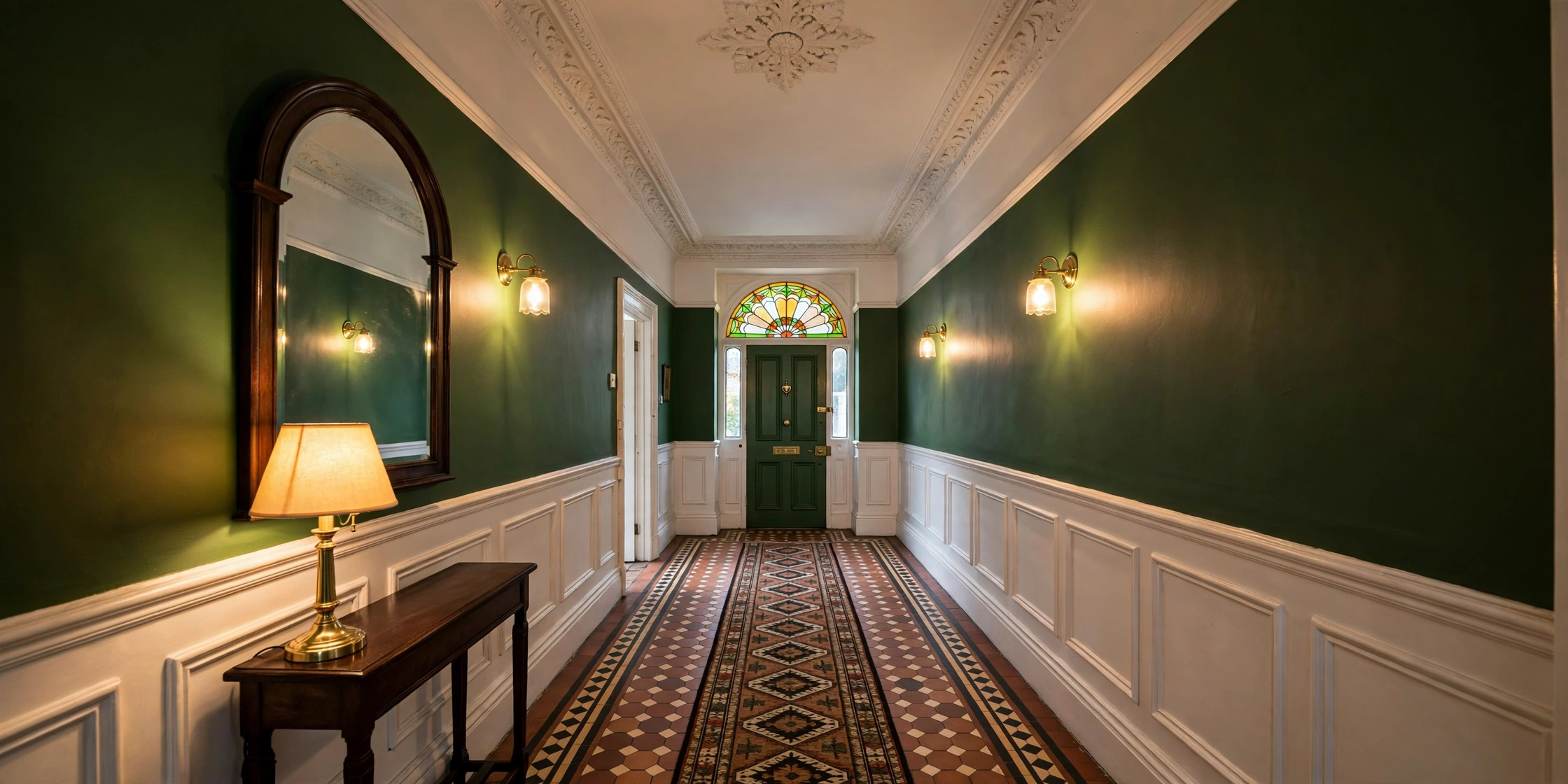
Short answer: The best Victorian terrace hallway ideas celebrate the original features, use warm period colours, and add clever storage. Restore the tiled floor, cornicing and ceiling rose, paint the walls in a deep heritage shade, hang a large mirror to bounce light down the narrow space, and finish with a runner, a slim console table and warm wall lights for a hallway that feels welcoming rather than cramped.
What Makes a Victorian Terrace Hallway Special
A Victorian terrace hallway is the long, narrow entrance passage found in the millions of terraced houses built across Britain between roughly 1837 and 1901. These homes were built for the growing urban middle classes, and their hallways were designed to impress: high ceilings, decorative plasterwork, patterned encaustic floor tiles, panelled doors and a staircase rising from the entrance. Around a quarter of homes in England are terraced, and a huge share of those date from the Victorian era, which is why this hallway shape is one of the most common in the UK.
The challenge is familiar to every owner. The hallway is often only 90 to 110 centimetres wide, with little natural light beyond a fanlight above the front door. The trick is to restore what is worth keeping, hide what is not, and choose colours and furniture that suit the proportions instead of fighting them.
1. Restore the Original Floor Tiles
If your hallway still has its original encaustic tiles, you are lucky. These geometric patterned tiles, often in terracotta, cream, black and ochre, were laid in the entrance as a showpiece and they are the single most valuable feature in a Victorian terrace hallway. Clean them with a pH-neutral tile cleaner, never with bleach or acid, and seal them with a breathable tile sealer once they are fully dry.
If the tiles are damaged beyond repair, reproduction encaustic-look tiles from UK suppliers such as Original Style or Fired Earth come in the same classic patterns and sizes. A well-laid tile floor also solves the practical problem of a hallway that takes muddy boots, wet umbrellas and pram wheels every day.
Where the original floor is long gone and budget is tight, a hard-wearing runner over wood-effect flooring or painted floorboards is a good compromise. Choose a runner in a deep red, navy or sage pattern that picks up the colours of the tiles you would have had.
2. Choose Period Colours That Suit a Narrow Space
Victorian hallways were never painted magnolia. The period palette is rich and confident: deep greens, inky blues, warm ochres, burgundy and charcoal, often with a cream or off-white ceiling to keep the height. A dark wall colour sounds risky in a narrow space, but in a hallway with a high ceiling it does the opposite of what you expect. It makes the walls recede, the woodwork glow and the space feel intentional rather than poky.
Try these proven combinations for a Victorian terrace hallway:
- Farrow & Ball Studio Green with Wimborne White woodwork for a deep, classic green that suits original plasterwork.
- Dulux Heritage colours in a midnight blue below the dado rail, with a lighter tone above, to echo the traditional two-tone scheme.
- Farrow & Ball Railings or Hague Blue on the front door inside face, with brass furniture, for an instant period statement.
- Warm ochre or mustard on one wall if the hallway gets little daylight, to add warmth without painting the whole space dark.
- Sage green with cream cornicing for a softer look that still reads as period rather than modern minimal.
Keep the ceiling white or a very pale cream. It lifts the height, reflects the light from the fanlight and stops a dark scheme from feeling heavy overhead.
3. Bring Back the Cornicing, Ceiling Rose and Dado Rail
Victorian builders finished their hallways with plaster cornicing, a ceiling rose and often a dado rail with wallpaper or paint below. If yours survives, clean it gently and paint it in the same white as the ceiling so the detail reads clearly. If it was stripped out, reproduction plaster cornice from UK makers such as Stevensons of Norwich can be fitted by a plasterer in a day and transforms the proportions of the room.
A ceiling rose is worth restoring even if you fit a simple pendant. It anchors the light fitting and gives the eye a reason to look up, which is exactly what a narrow hallway needs.
4. Light It Like a Victorian Hallway, Not a Corridor
Most Victorian terrace hallways have one small source of daylight, the fanlight above the front door, and sometimes a window on the half landing. Good artificial lighting matters more here than in almost any other room. A single ceiling pendant is rarely enough. Layer three types of light for the best result:
- A pendant or lantern hanging from the ceiling rose, ideally a brass or black metal design with a warm bulb.
- Wall lights spaced along the hallway at around 1.8 metres high, which wash the walls with warm light and make the space feel wider.
- A small table lamp on the console table for a soft pool of light at eye level, which is the most welcoming of all.
Use warm white bulbs, around 2700K, throughout. Cool white light makes period colours look flat and the hallway feel like an office. For more on choosing the right warmth, see our guide to warm white vs cool white bulbs UK and our small hallway lighting ideas UK.
5. Hang a Large Mirror to Double the Light
A mirror is the oldest trick in the Victorian hallway book and it still works. Hang the largest mirror the wall will take, ideally opposite or beside the front door fanlight, so it catches the daylight and throws it back down the hallway. A tall arched mirror suits the period, as does a gilt framed mirror or a simple black framed mirror with bevelled glass.
Position the mirror above the console table and keep the frame in proportion to the wall. In a very narrow hallway, a mirror that runs almost the full width of the wall makes the space feel twice as wide. Avoid hanging a mirror where it reflects a cluttered corner or the inside of a cupboard; it should reflect light, the front door or a pretty view down the hall.
6. Add a Slim Console Table and Smart Storage
Victorian hallways were built before the age of parcels, school bags and twelve pairs of shoes, so storage has to be added without blocking the passage. A console table 25 to 30 centimetres deep is the classic answer. It gives you a home for keys, post and a lamp without eating into the walkway. Look for a narrow oak or painted console at Dunelm, IKEA or The Range, or hunt for a Victorian original at a salvage yard.
Under the stairs is the second storage gift in a terrace hallway. A bespoke under-stair cupboard, or even simple shelves with baskets, hides coats, shoes and cleaning kit. Add a row of brass hooks on the wall for coats and a shoe bench with a lift-up lid. Keep the floor clear: in a hallway this narrow, every item on the floor makes the space feel smaller.
7. Lay a Runner That Leads the Eye Forward
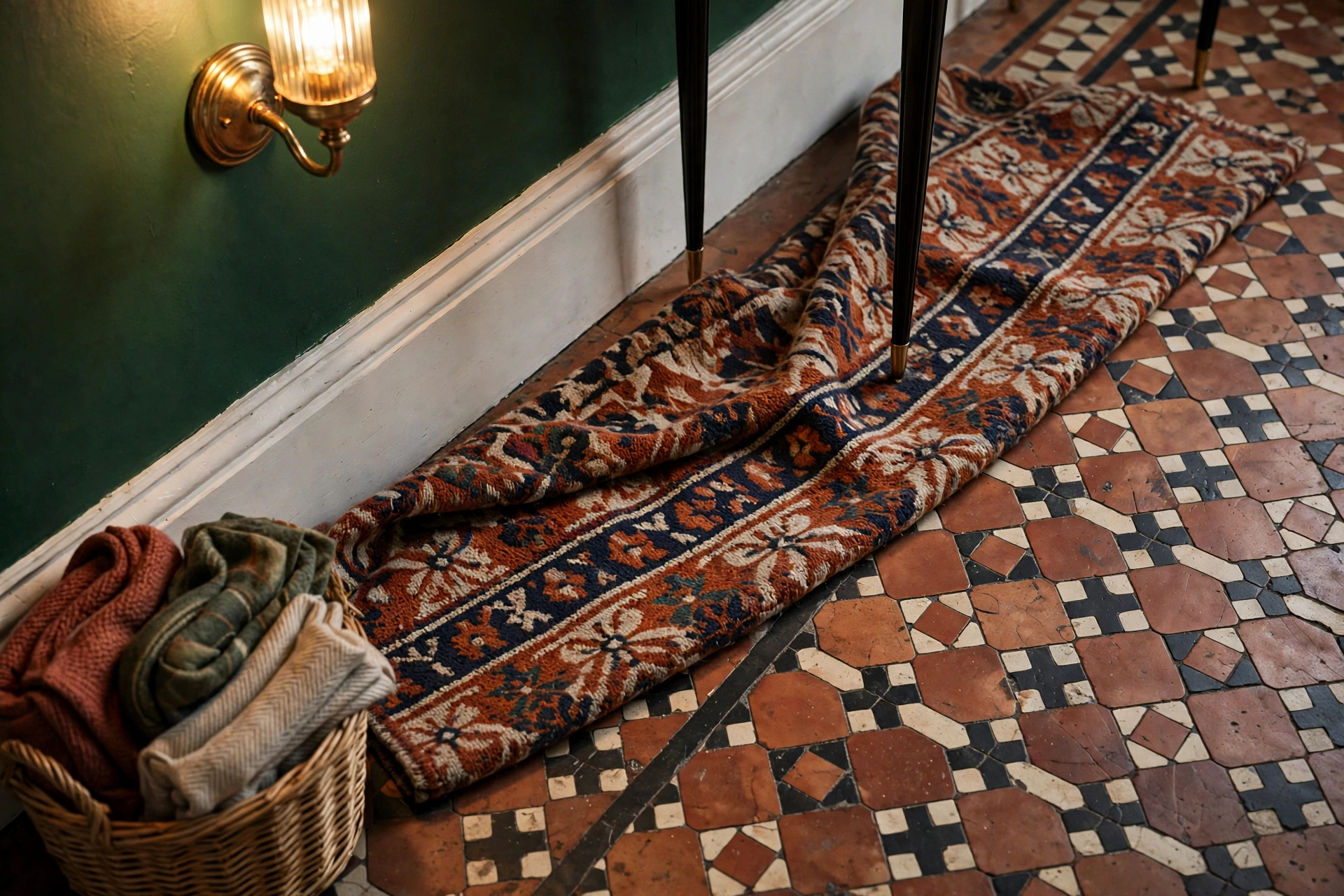
A runner is the finishing touch that pulls a long hallway together. It protects the floor, softens footsteps and, most importantly, leads the eye from the front door to the back of the house, which makes the hallway feel like a journey rather than a tunnel. Choose a runner that leaves 10 to 15 centimetres of floor showing on each side and runs the full length of the hall.
Traditional patterns suit the period best: a Persian-style runner in deep reds and blues, a simple striped wool runner, or a geometric pattern that echoes the floor tiles. Homesense and B&M both stock affordable runners in these styles, while a vintage rug from a local antiques centre adds a layer of age that new rugs cannot fake. Use a non-slip underlay so the runner stays flat on tiles.
8. Style the Walls With Art and a Gallery Touch
Victorian hallways were often hung with pictures from floor to ceiling, and a small gallery wall suits the space perfectly. Hang two or three framed prints in a vertical line on the longest wall, keeping the frames at eye level and the spacing even. Black and white photographs, botanical prints or vintage maps all suit a period hallway.
Keep frames slim and consistent in colour so the display reads as one piece rather than clutter. If the wall is very narrow, a single large framed print works better than a crowded cluster.
9. Make the Front Door a Feature
The front door is the first thing visitors see and the last thing you see when you leave, so it deserves attention. Victorian front doors usually have four panels, a fanlight above and original stained glass. If the stained glass survives, clean it and let it be the star. If it was replaced with plain glass, a stained glass film or a restored panel from a salvage yard brings the colour back.
Paint the door in a heritage colour such as Farrow & Ball Railings, Hague Blue or a deep red, and fit brass furniture: a centre knob, a letterbox, a knocker and a house number. A new coir door mat and a polished brass knocker complete the entrance. For seasonal ideas that work with this setting, see our autumn hallway decor ideas UK.
10. Soften It With Texture and Scent
Keep the styling light. A hallway this narrow cannot carry much decoration, so choose three or four pieces you love and let them breathe. A mirror, a lamp, a runner and a single piece of art will do more than a dozen small ornaments crowded onto every surface.
Victorian Terrace Hallway Ideas: At a Glance
Use this quick comparison to plan your hallway in the order that makes the biggest difference for the least disruption:
- Biggest impact, lowest cost: paint the walls in a period colour and hang a large mirror.
- Biggest impact, medium cost: restore or reproduce the floor tiles and fit a runner.
- Best for light: warm wall lights plus a table lamp on the console.
- Best for storage: a slim console table, under-stair cupboard and wall hooks.
- Best finishing touch: a heritage colour on the front door with brass furniture.
Frequently Asked Questions
What colour should I paint a Victorian terrace hallway?
Deep period colours work best: dark green, inky blue, charcoal or warm ochre, with a white or cream ceiling to keep the height. Dark colours make narrow walls recede and original woodwork stand out, so do not be afraid of a bold shade in a hallway with a high ceiling.
How do I make a narrow Victorian hallway feel wider?
Hang a large mirror to bounce light from the fanlight, keep the floor clear of clutter, lay a runner that leads the eye forward, and use wall lights to wash the walls with warm light. Light colours above the dado rail and a white ceiling also help the space feel taller and wider.
Should I keep the original tiles in my Victorian hallway?
Yes, if you can. Original encaustic tiles are a valuable period feature and very hard wearing. Clean them with a pH-neutral cleaner, repair damaged tiles with matching reproductions, and seal them once dry. If they are beyond saving, reproduction tiles in the same pattern are the next best option.
What furniture fits a Victorian terrace hallway?
Choose slim pieces only: a console table 25 to 30 centimetres deep, a narrow shoe bench, wall hooks for coats and a small mirror above the console. Avoid anything deeper than 30 centimetres or it will block the passage and make the hallway feel cramped.