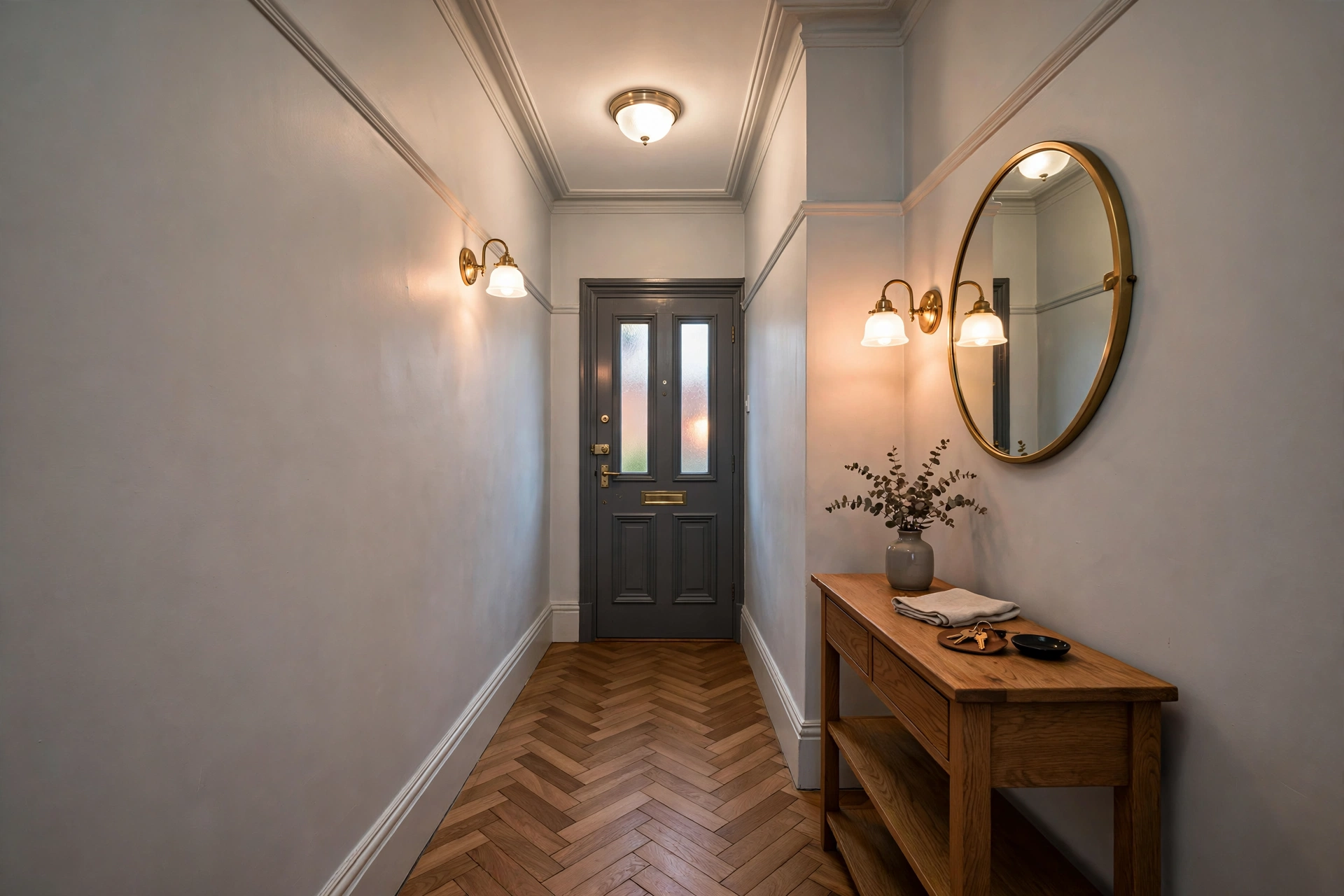
Short answer: The best small hallway lighting combines a bright flush-mount ceiling light with warm wall lights spaced along the walls and a mirror to bounce the glow around. Use warm white bulbs (2700K), layer at least two light sources, and light the darkest corners first — a narrow UK hallway can feel twice as wide with the right lighting alone.
Hallways are the most neglected rooms in British homes. They are often narrow, windowless, and lit by a single sad pendant dangling from the ceiling — which is exactly why good lighting makes such a dramatic difference here. In Victorian terraces, new-build flats and everything in between, the hallway is the first thing guests see and the space you walk through dozens of times a day. These 16 small hallway lighting ideas will make yours feel brighter, bigger and far more welcoming.
Why Hallways Are the Hardest Rooms to Light
Hallway lighting is really three jobs in one: it must be bright enough to be safe (you are navigating stairs, doors and shoes in it), flattering enough to be the first impression of your home, and atmospheric enough that it does not feel like a corridor in an office. The classic mistake is relying on a single central ceiling light, which throws harsh shadows into the corners and leaves the ends of a long hallway in gloom. The fix is layered lighting: a general overhead light plus lower-level wall lights plus small accents, so light reaches every part of the hall from more than one direction.
Overhead Lighting for Small Hallways
1. Swap the Pendant for a Flush-Mount Ceiling Light
In a hallway with a standard UK ceiling height of around 2.4 metres, a dangling pendant eats headroom and throws all its light in one pool. A flush-mount or semi-flush ceiling light sits tight to the ceiling, spreads light evenly, and instantly makes the hall feel taller. Opal glass or frosted designs diffuse the glow so there are no harsh hotspots. Dunelm and IKEA both do excellent flush mounts under £40.
2. Use Two Small Ceiling Lights Instead of One
If your hallway is long rather than square, one central light will always leave the ends dark. Two smaller ceiling lights — one near the front door, one near the stairs or far end — give even coverage and stop the “tunnel” effect. It is a bigger job (an electrician may need to extend the circuit), but it is the single most effective upgrade for a long narrow hall. For more on flattering wall-level light to pair them with, see our bedroom wall light ideas — the same fittings work beautifully in halls.
3. Consider Recessed Spotlights
Recessed downlights disappear into the ceiling, which makes them brilliant for very small or low hallways where any visible fitting feels bulky. Space them about a metre apart along the centre line of the hall. Choose fire-rated LED downlights (a legal requirement where the ceiling is a fire barrier between floors) and warm white 2700K lamps so the hall feels cosy rather than clinical.
4. Try a Slim Track Light
A single slim track running the length of the hall, with two or three adjustable heads, lets you aim light exactly where you need it — at the artwork, the mirror, the dark corner by the understairs cupboard. Tracks look neat in modern flats and new builds, and most are simple for an electrician to fit to the existing ceiling rose wiring.
5. Renter-Friendly: Battery Ceiling Lights
If you rent and cannot touch the wiring, battery-operated LED ceiling lights with a remote control stick to the ceiling with adhesive pads and give surprisingly decent light. They will not replace mains lighting, but as a supplement in a dark rented hall they are a genuine improvement — and they come with you when you move. Pair them with the plug-in wall lights below.
Wall Lights: The Secret to a Cosy Hallway
Wall lights are what turn a hallway from a passageway into a room. They throw light up and down the walls, which makes the space feel wider, and at a lower level they are far more flattering than overhead glare. As a rule of thumb, space wall lights 1.5 to 2 metres apart and mount them about 1.6 to 1.7 metres from the floor.
6. Fit Sconces in Pairs Along the Walls
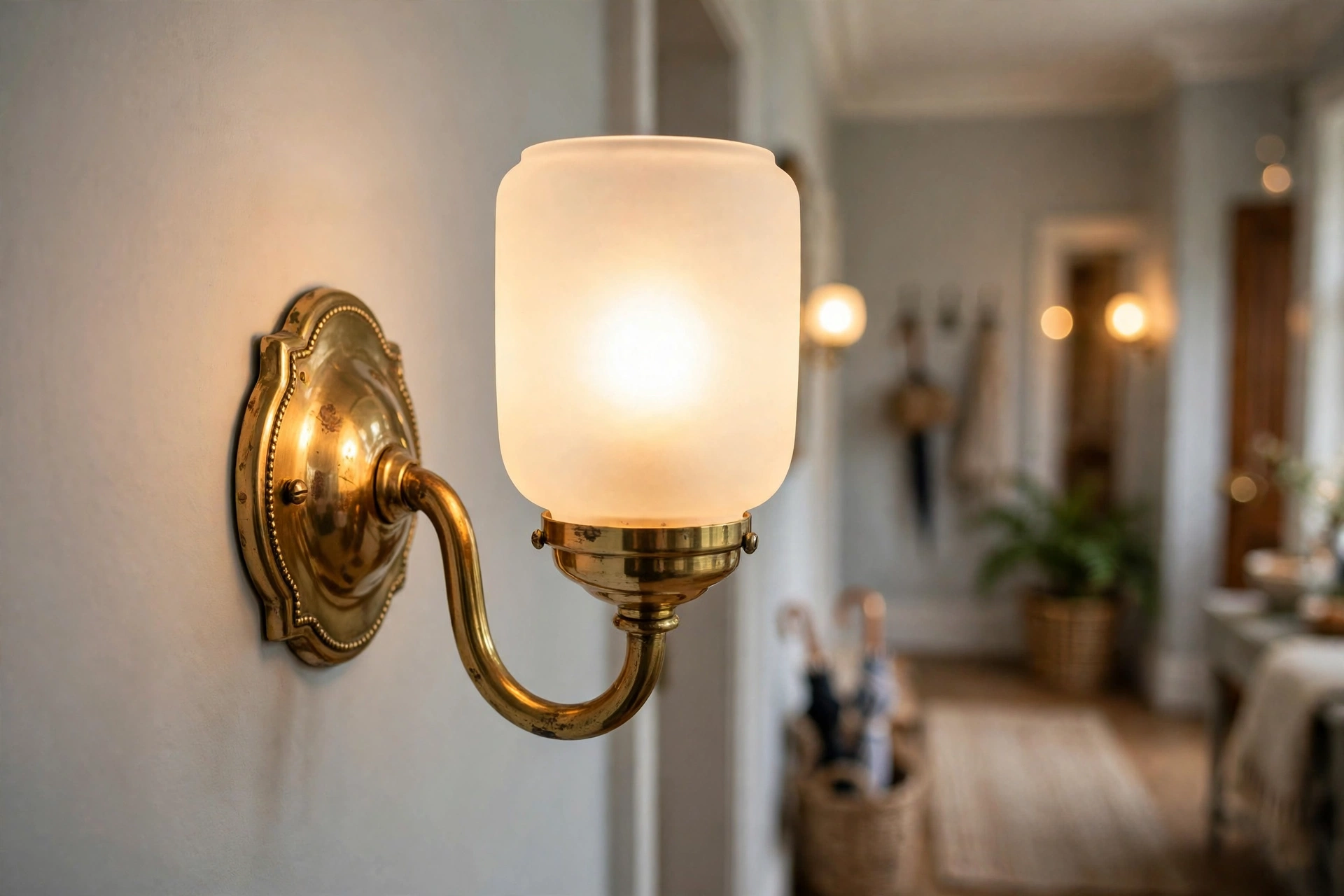
The classic hallway move: a pair (or a run) of matching wall sconces. Brass, matt black or opal glass sconces suit almost every UK interior from Victorian terraces to new builds. Keep them on a separate switch from the ceiling light so you can run just the sconces in the evening for a soft, welcoming glow.
7. Add Picture Lights Over Art and Mirrors
A slim picture light above a framed print or mirror does double duty: it spotlights the artwork and washes the wall with gentle light. Battery-powered picture lights now last months on a charge and fix with adhesive strips — no wiring, no electrician, no landlord negotiations.
8. Use Plug-In Wall Lights
Plug-in wall lights are the renter’s best friend. They mount with screws or strong adhesive and plug into the nearest socket, with the cable tidied down the wall or behind furniture. IKEA, Dunelm and B&M all sell affordable plug-in designs, and you can put them on a timer plug so the hall is lit when you get home.
9. Choose Up-Down Washers for Drama
Up-down wall lights (fittings that throw light both up toward the ceiling and down toward the floor) create beautiful pools of light on the wall. On a pale wall the effect is striking — the wall itself becomes the light source. They work best on the long wall of a narrow hall, where the wash visually pushes the walls apart.
10. Go Cordless With Battery Wall Lights
Rechargeable battery wall lights with motion sensors or remotes are ideal for awkward spots: inside an understairs cupboard, beside the front door, or on a wall with no nearby socket. Stick them up, charge every few months, and enjoy light exactly where the wiring does not reach.
Clever Tricks That Multiply Your Light
11. Run LED Strips Under a Console Shelf
A self-adhesive LED strip tucked under a hallway console table or floating shelf throws a soft wash of light across the floor and wall behind it. Warm white (2700K) strips on a dimmer or smart plug create the loveliest evening glow, and the whole project costs under £20. It is also a lovely base layer for seasonal styling — our Scandi Christmas decor ideas show how fairy lights and candlelight build on the same principle in winter.
12. Add Motion-Sensor Lights by the Front Door
A small motion-sensor light above or beside the front door means you are never fumbling for a switch with armfuls of shopping. Battery-powered options fix in minutes, and mains-powered ones can be wired to the existing hall circuit. Choose a warm white sensor light so the entrance feels welcoming rather than like a security floodlight.
13. Hang a Mirror Opposite (or Beside) a Light
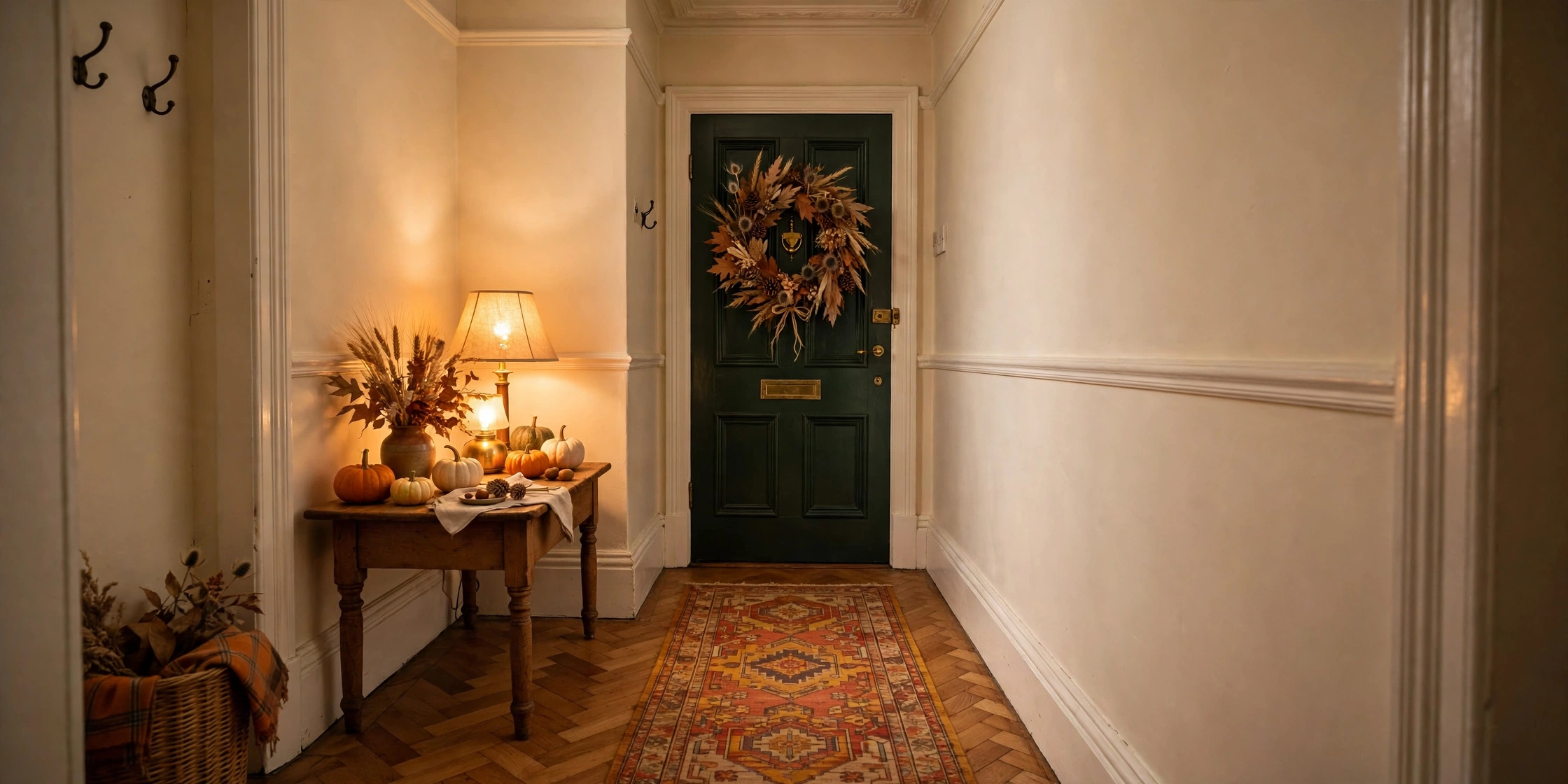
A mirror does not create light, but it is the cheapest way to double what you have. Hang a large mirror on the wall opposite a window or beside a wall light and it will bounce the glow deep into the hall. In a windowless hallway, a mirror opposite the brightest fitting is the closest thing to a second window. For styling the hall around your new lighting, see our autumn hallway decor ideas.
14. Keep Furniture Open and Light-Friendly
A bulky closed shoe cupboard swallows light; an open console table or a bench with space beneath lets light flow through. If you must have closed storage, choose pale colours and a gloss or satin finish that reflects light rather than a dark matt that absorbs it.
15. Light the Stairs With Step Lights
If your hallway includes the staircase, low-level step lights or an LED strip along the stringer make the stairs safer and look spectacular. They also mean you can navigate to the bathroom at night without switching on the main hall light. Recessed step lights need an electrician; adhesive LED strips are a DIY job.
16. Finish With Fairy Lights in Winter
From October to February, a string of warm white fairy lights along a console, mirror frame or bannister adds the layered, low-level glow that makes a hallway feel genuinely cosy. On a timer plug they switch themselves on at dusk — the easiest win on this entire list.
Warm White vs Cool White: What Works in Hallways?
Bulb colour temperature changes everything in a small hallway. Here is the quick guide:
- 2700K (warm white): the cosy, golden glow of traditional bulbs — the best choice for hallways you want to feel welcoming. Use it for wall lights, sconces and evening lighting.
- 3000K (warm-neutral white): slightly crisper while still warm — good for the main ceiling light in a hall that also needs to feel bright and practical.
- 4000K (cool white): bright and bluish — fine for a utility area or garage, but it makes a small hallway feel cold and flat. Avoid it here.
- Daylight (5000K+): far too blue for a home hallway; it flatters no one and nothing.
Our full warm white vs cool white bulbs guide goes deeper on choosing temperatures room by room.
One quotable fact worth knowing: according to the Energy Saving Trust, switching to LED bulbs can cut the energy your lighting uses by up to 90% compared with old-style incandescent bulbs — so layering extra lights in the hallway does not have to mean a bigger electricity bill.
Frequently Asked Questions
How many lights does a small hallway need?
At least two light sources: one overhead ceiling light for general brightness plus one or two wall lights or accents for warmth. A long hallway (over 3 metres) benefits from two ceiling lights or a run of three wall sconces so the far end does not sit in shadow.
What colour temperature is best for hallway lighting in the UK?
Warm white, 2700K to 3000K. Warm light flatters skin tones, makes paint colours look richer and helps the hallway feel welcoming. Cool white (4000K and above) makes small hallways feel cold and institutional — save it for the garage or utility room.
Can I add wall lights without an electrician?
Yes — plug-in wall lights and battery-operated wall lights need no wiring at all and are ideal for renters. Anything wired into the mains, however, should be fitted by a qualified electrician, who will make sure the work meets UK wiring regulations.
How do I make a dark hallway with no windows brighter?
Layer your lighting (ceiling + wall + accent), use warm white LEDs, paint walls and ceiling in a light-reflective pale colour, hang a large mirror to bounce light around, and keep the floor pale. Together these tricks can make a windowless hallway feel remarkably bright.