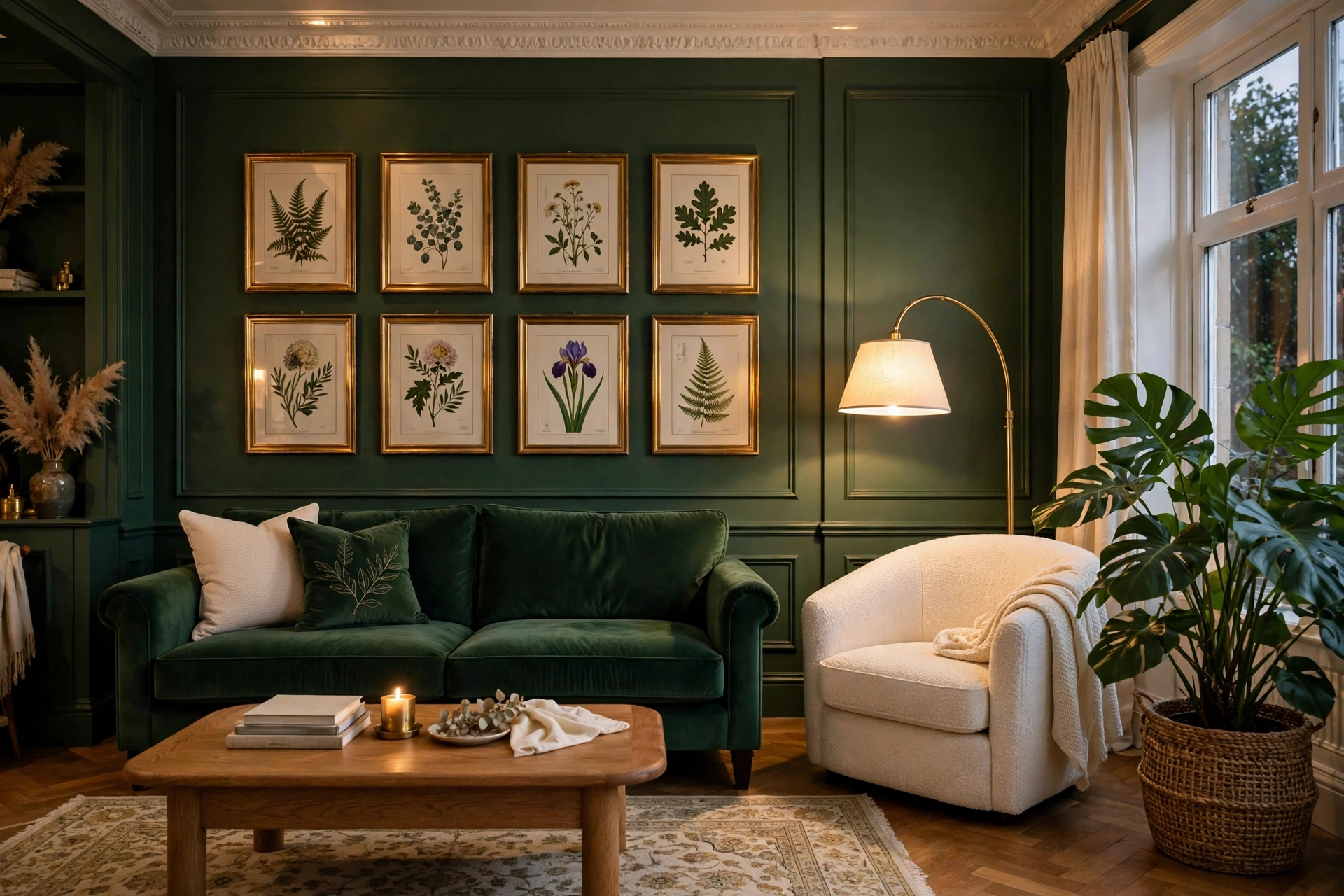
Short answer: Layer three types of light instead of relying on one overhead fitting. A tall floor lamp gives general light, table lamps and wall lights add warm pools of light at seating height, and dimmable warm white bulbs at 2700K tie it all together. In most UK living rooms, three to five light sources beat a single ceiling light.
Plenty of UK homes have a living room with no ceiling light at all. Victorian terraces with low ceilings, converted flats, new build snugs and rented homes often come with a single wall socket and a bare ceiling rose, or nothing overhead at all. It can feel like a problem, but it is actually an opportunity. A room lit from several low, warm sources usually feels cosier and more flattering than a room lit by one harsh pendant.
What layered lighting means
Layered lighting is the practice of building a room’s light from several sources at different heights, rather than depending on one central fitting. Interior designers split it into three layers. Ambient light is the general background glow that lets you move around safely. Task light is focused light for reading, working or sewing. Accent light highlights a picture, a shelf or an architectural feature. A ceiling light only ever supplies the first layer. When you have no ceiling light, you simply supply all three layers with lamps, wall lights and clever extras, and the result is often better.
The three layers your living room needs
- Ambient layer: one or two floor lamps in opposite corners, or a pair of matching table lamps, to lift the whole room.
- Task layer: a reading lamp beside your favourite chair or a small lamp on a side table near the sofa.
- Accent layer: a picture light, a fairy light draped over a bookshelf, or an LED strip behind the television.
Aim for at least three sources in a small living room and five in a larger one. Space them around the room rather than clustering them on one side, and keep the brightness balanced so no single lamp dominates.
1. Start with a floor lamp
A floor lamp is the closest replacement for a ceiling light, because it throws light up and out across the room. An arc floor lamp works beautifully over a sofa or reading chair, curving the light down exactly where you sit. A tall tripod lamp suits a corner and bounces light off a pale ceiling, which spreads it further. A torchiere, the type with an upward-facing bowl, is the best choice if you want the most general light from one lamp, because it washes the ceiling and the whole room glows softly.
Place your main floor lamp in the darkest corner, usually the one furthest from the window. Look for a lamp with a fabric shade in a light colour, as it diffuses the light and avoids glare. Dunelm and IKEA both sell good arc and tripod floor lamps from around 35 pounds, while The Range and B and M are worth checking for budget finds under 25 pounds.
2. Add table lamps at seating height
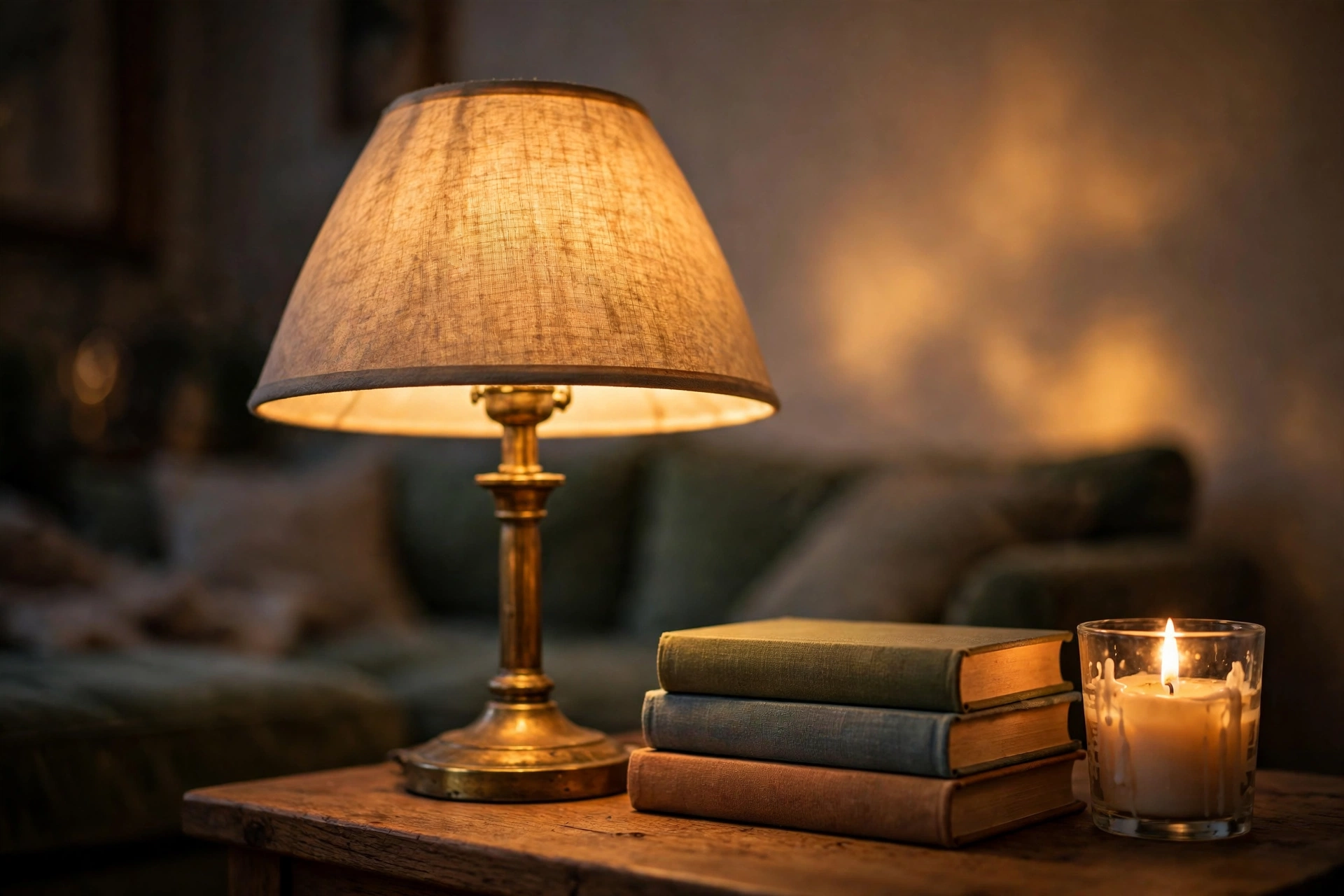
Table lamps are what make a room feel cosy. Light at seating height falls on faces, books and cups of tea, which is exactly where you want it in the evening. Put a small lamp on each side table, or one on a console behind the sofa. Matching pairs look tidy on either side of a sofa or a fireplace, but mixed lamps in a similar style look more relaxed and collected.
Choose lamps with opaque or lined shades so the bulb is hidden from view when you sit down. A bulb of around 400 to 800 lumens is plenty for a table lamp, which is roughly the brightness of a 40 to 60 watt old-style bulb. If you want more advice on choosing lamp shades and bases for a snug evening feel, our guide to cosy living room ideas for winter covers textures and warm tones that pair well with lamplight.
3. Use wall lights where a ceiling light would go
Wall lights are the secret weapon in a living room with no ceiling light. They free up floor and table space, they sit at the perfect height to light a room evenly, and many are plug-in, so renters can fit them without an electrician. A pair of plug-in wall lights flanking a mirror, a television or a fireplace creates a balanced glow and makes the wall feel finished.
Battery-operated picture lights are another renter-friendly option. They stick or screw above a framed print and wash the artwork in warm light, adding a gallery feel for very little money. If you do own your home and want a permanent fix, an electrician can fit hardwired wall lights for roughly 80 to 150 pounds per fitting, including the light itself. For more ideas on lighting narrow spaces and hallways that lead off the living room, see our small hallway lighting ideas.
4. Fairy lights and LED strips fill the gaps
Once your main lamps are in place, fairy lights and LED strips add the final layer of warmth. Drape warm white fairy lights along a bookshelf, around a window frame or inside a glass jar on the mantelpiece. Stick a warm white LED strip behind the television to reduce eye strain and make the screen feel like part of the room, or run one along the top of a low bookcase for a soft upward glow.
Keep fairy lights warm white, never cool white or multicoloured, if you want a grown-up look. Battery-operated sets with a timer are the easiest option, as they switch themselves off after six hours and need no nearby socket. Homesense and B and M are good hunting grounds for unusual fairy lights and lanterns at low prices.
5. Smart bulbs and dimmers give you control
Without a ceiling light, you will switch lamps on and off several times a day, so make it easy. Smart bulbs from brands like Philips Hue, IKEA Tradfri or TP-Link Tapo screw into ordinary lamp holders and let you dim each lamp from your phone or with a voice assistant. A smart plug does the same job for any lamp for under 10 pounds, and lets you switch a whole group of lamps on with one tap when you walk in.
Dimmers matter more than brightness. A room with five lamps at half brightness feels far cosier than a room with one lamp at full brightness. If your lamps have built-in dimmers, use them. If not, choose dimmable LED bulbs and a compatible dimmer plug, and check that the bulb packaging says dimmable before you buy.
Warm white vs cool white: the choice that makes or breaks it
Colour temperature is measured in Kelvin, and it changes the mood of a room completely. Here is a simple comparison for living rooms:
- 2200K to 2700K, warm white: golden, candle-like light. The right choice for living rooms, bedrooms and any room where you relax.
- 3000K, warm neutral: slightly crisper white with a hint of warmth. Works well in kitchens and bathrooms, but can feel a little stark in a cosy living room.
- 4000K and above, cool white or daylight: bright, blue-toned light. Fine for a home office corner, but it will make a living room feel like a shop floor in the evening.
Buy 2700K bulbs for every lamp in your living room, and keep them all the same. Mixed colour temperatures are the most common reason a lamp-lit room feels odd, even when the furniture is lovely. We explain the difference in detail in our guide to warm white vs cool white bulbs.
As a rule of thumb, a standard 60 watt equivalent LED bulb produces around 800 lumens, which is enough to light a seating area comfortably when it sits in a shaded lamp. A whole living room usually needs around 1,500 to 3,000 lumens in total, spread across your lamps, rather than one very bright bulb in one place.
Layout ideas for common UK living rooms
Victorian terrace living room
These rooms are often long, with a fireplace on one wall and a bay window at the front. Put a floor lamp in the far corner by the fireplace, a table lamp on a side table beside the sofa, and a picture light above the mantelpiece mirror. The bay window suits a small lamp on the sill, which looks lovely from the street on dark evenings.
New build living room
New build rooms tend to be squarer, with white ceilings and limited sockets. An arc floor lamp over the sofa gives you a ceiling-light effect without any wiring, and a pair of matching table lamps on a media unit balances it. Add an LED strip behind the television for evening viewing.
Flat or rented living room
Renters need light that leaves no marks. Use plug-in wall lights with adhesive hooks, battery fairy lights, and lamps you can take with you when you move. A tall floor lamp in the corner and two table lamps will light most flat living rooms well, and a smart plug means you never have to crawl behind the sofa to switch them off. Our guide to bedroom wall light ideas includes plug-in and battery options that work just as well in a living room.
How much does it cost?
- Budget, around 60 to 100 pounds: one floor lamp, two table lamps and a set of fairy lights, all from B and M, IKEA or The Range.
- Mid-range, around 150 to 300 pounds: a quality arc or tripod floor lamp, matching table lamps, plug-in wall lights and smart bulbs.
- Premium, 300 pounds and up: designer floor lamps, hardwired wall lights fitted by an electrician, and a full smart lighting system.
Buy the budget tier first and add one lamp at a time.
Common mistakes to avoid
- One lamp only: a single lamp leaves half the room in shadow and makes the lit half feel harsh.
- Mixing colour temperatures: a cool white bulb next to a warm white bulb will always look wrong.
- Bare bulbs at eye level: always shade a bulb you can see while sitting down, or the glare will tire your eyes.
- Forgetting the ceiling: a torchiere or an uplighter that bounces light off a pale ceiling adds far more general light than a downward lamp of the same brightness.
- Ignoring the paint colour: dark walls soak up light, so a room painted in Farrow and Ball Hague Blue or Dulux Sapphire Salute needs one or two extra lamps compared with a room in a pale neutral.
Frequently Asked Questions
Can you light a living room properly with no ceiling light?
Yes. Three to five lamps at different heights, all in warm white at 2700K, will light a living room as well as a ceiling light, and the room will usually feel cosier. A floor lamp in the darkest corner plus table lamps at seating height covers the basics.
How many lamps does a living room need without a ceiling light?
A small living room needs at least three light sources, and a larger room needs four or five. Count every lamp, wall light and LED strip as a source, and space them around the room so no corner is left dark.
What is the best floor lamp for a living room with no ceiling light?
An arc floor lamp is the best all-rounder, because it curves over the seating area like a pendant. A torchiere is the best choice for general light, because it bounces light off the ceiling and fills the whole room. Both are widely available from Dunelm, IKEA and The Range.
Are plug-in wall lights a good option for renters?
Yes, plug-in wall lights are ideal for rented homes, as they need no wiring and leave only small hook holes. Battery-operated picture lights are another renter-friendly option for lighting artwork, mirrors and shelves without an electrician.