
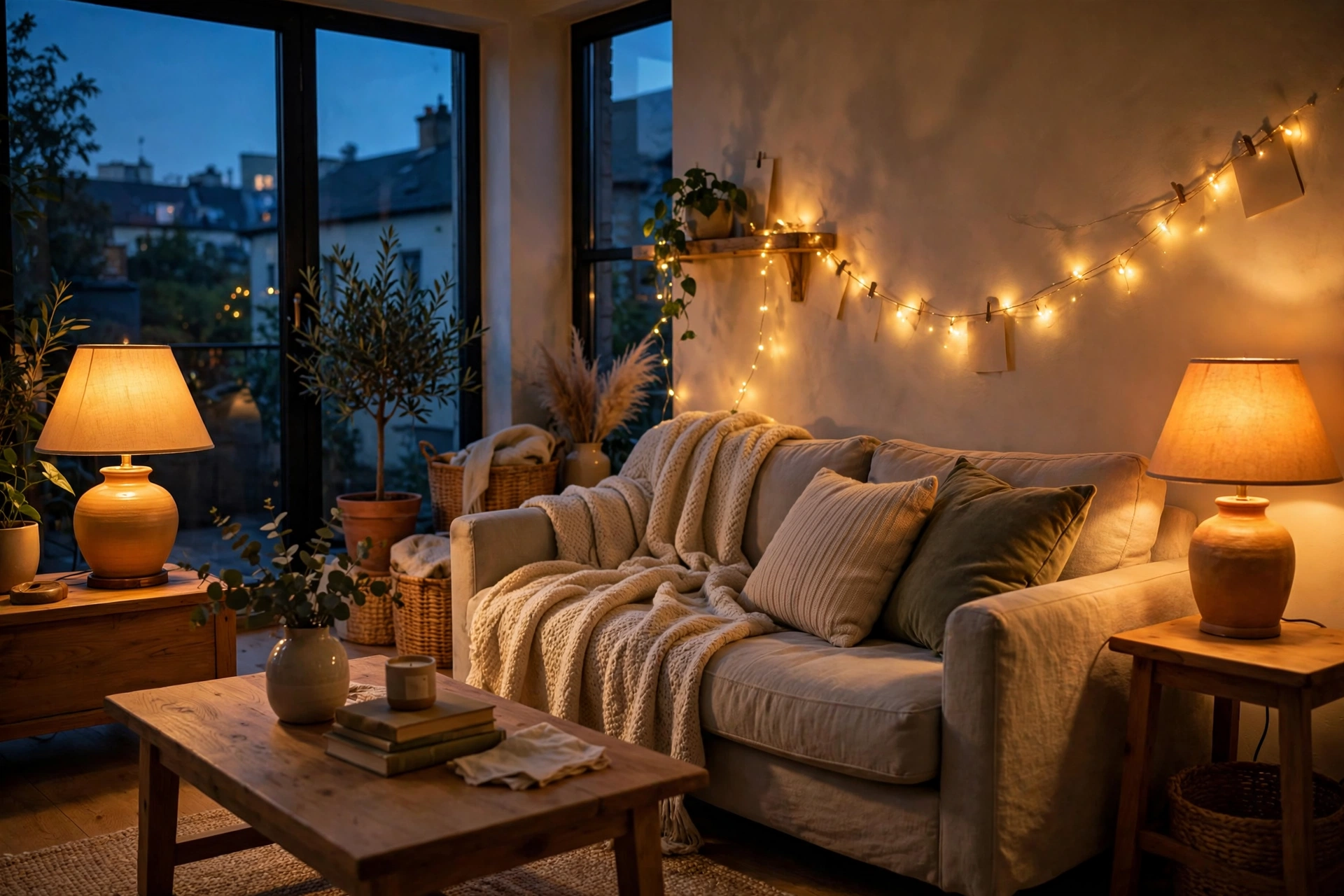
Short answer: Warm white (2700K) is best for living rooms and bedrooms — it gives a soft, amber glow that helps you relax. Cool white (4000K) is better for kitchens, bathrooms and home offices, where bright, clear light helps you see what you are doing. Most UK homes should use both, matched to each room.
What Do “Warm White” and “Cool White” Actually Mean?
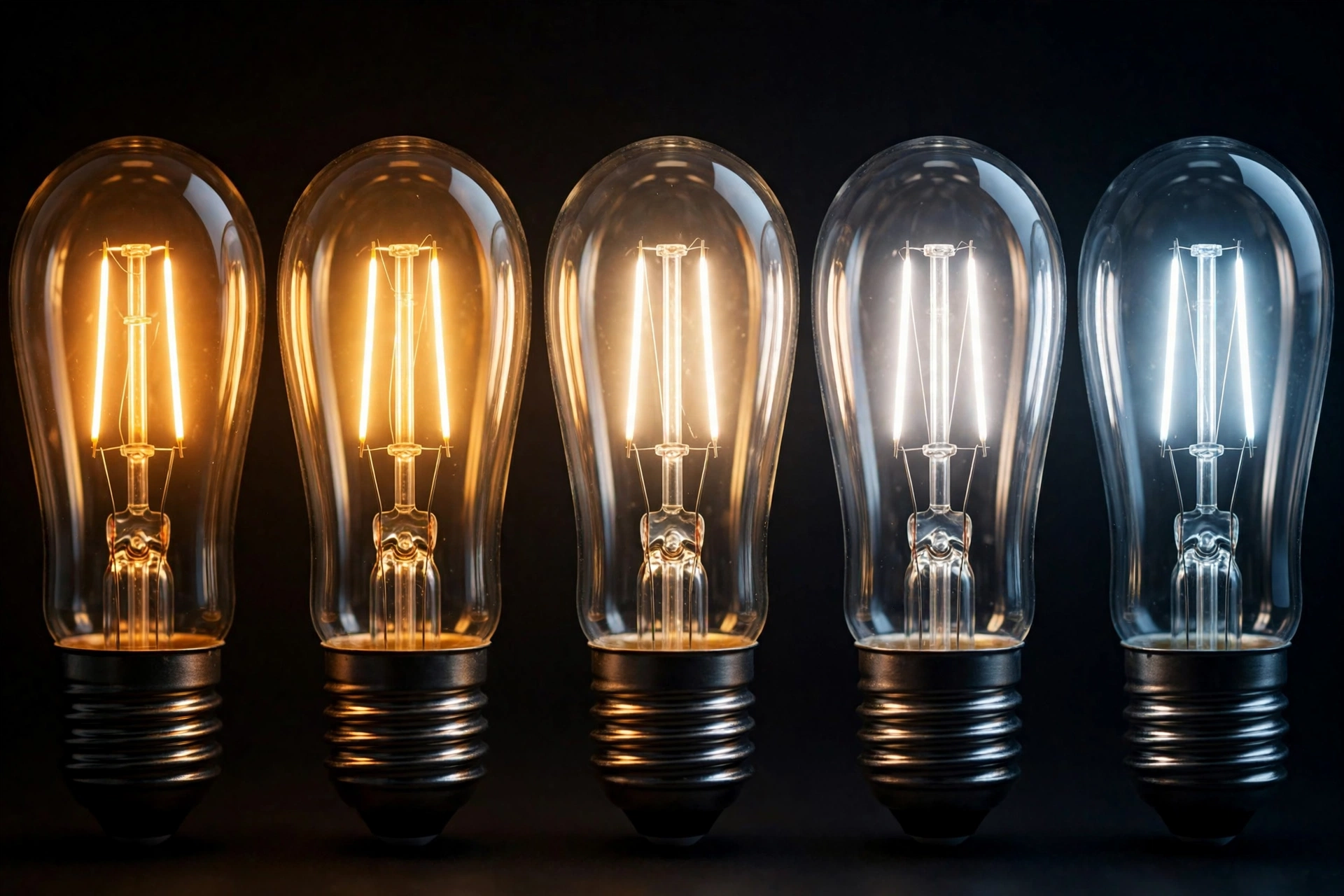
Light colour is measured on the Kelvin (K) scale, which describes the colour temperature of a bulb. The rule is simple: lower Kelvin = warmer, more amber light; higher Kelvin = cooler, more blue-white light. “Warm white” and “cool white” are simply the two most common stops on that scale for home lighting.
The Kelvin Scale at a Glance
- 2700K – Warm white: soft amber glow, like old incandescent bulbs and candlelight. The cosy choice.
- 3000K – Warm: slightly brighter white with a warm tint. Good all-rounder for living spaces.
- 4000K – Cool white: crisp, neutral white. Made for task lighting.
- 5000–6500K – Daylight: bluish-white, close to natural daylight. Best for garages and detailed craft work — too harsh for relaxing rooms.
Warm White vs Cool White: Head to Head
Atmosphere: Warm white flatters skin tones, wood furniture and warm paint colours — it is the light of restaurants and pubs for a reason. Cool white is honest and clinical; it shows every speck of dust and can make a living room feel like an office.
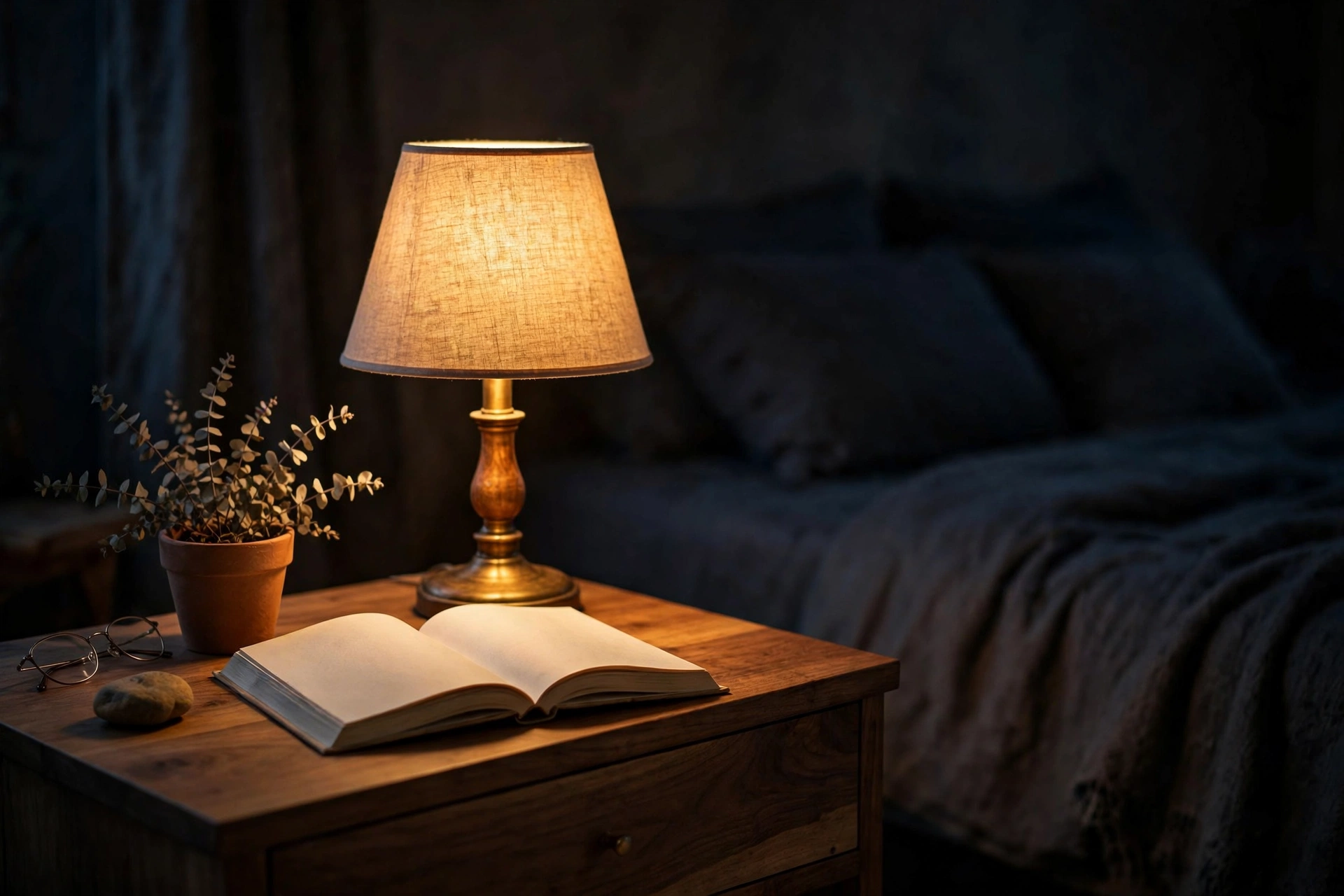
Sleep: Cooler, bluer light suppresses melatonin, the hormone that makes you sleepy, more than warm light does. Bright cool-white light in the bedroom in the evening can genuinely make it harder to drift off.
Energy use: A modern LED in either colour temperature uses up to 90% less energy than the old incandescent bulbs they replaced, and lasts around 15,000–25,000 hours. Colour temperature does not affect the saving.
Colour accuracy: Check the CRI (Colour Rendering Index) on the box. A CRI of 80+ renders colours faithfully; cheap low-CRI bulbs can make food, clothes and paint look odd whatever the Kelvin rating.
Which Bulb for Which Room?
Living room & bedroom: warm white (2700K)
These are relaxation rooms — go warm, always. Use dimmable warm-white bulbs if your switches allow it; dimmed to 50%, a 2700K bulb feels like candlelight. For bedroom ideas, see our guide to making your bedroom cosy for winter.
Kitchen & bathroom: cool white (4000K)
Task rooms need clarity. Cool white helps you see what you are chopping, check your appearance properly, and spot the grime you would rather clean. Under-cabinet LED strips in 4000K are ideal in kitchens.
Home office: cool white or daylight (4000–5000K)
For daytime focus, cooler light keeps you alert. If your office doubles as a bedroom corner, consider a smart bulb (Philips Hue, IKEA Dirigera) that shifts from cool by day to warm by evening.
Hallway & stairs: warm white (2700–3000K)
Hallways are transitional spaces — warm light feels welcoming when you walk in from a cold evening. It also matches the warm light spilling from living-room doorways.
UK Fittings Explained: B22, E27 and GU10
Kelvin is only half the story — the bulb must fit your sockets:
- B22 (bayonet): the classic UK push-and-twist fitting, still the most common in British homes.
- E27 (Edison screw): the large screw fitting, common on pendant lights and many IKEA shades.
- GU10: the two-pin spotlight bulb found in kitchens and bathrooms. Note: most GU10s are not dimmable unless stated.
Renters: you can change bulbs in any rented flat — just keep the old ones in a drawer and swap them back when you leave.
The 5-Minute Cosy Swap
Want the single fastest atmosphere upgrade in your home? Do this tonight:
- Buy a multipack of 2700K dimmable LED bulbs in your fitting (B&Q, Screwfix, IKEA and even Poundland stock them).
- Swap the living-room and bedroom ceiling and lamp bulbs — keep one bright light (cool white) in the kitchen.
- Turn off the big light. Use lamps and fairy lights instead.
Total cost: under £10. Total time: five minutes. The difference is instant.
LED Money Myths
“Are warm white bulbs being phased out in the UK?” No. What was phased out were inefficient technologies — first incandescent, then halogen — under energy-efficiency rules. Warm-white LEDs are fully compliant and widely available.
“Do LEDs really save money?” Yes. A 9W LED gives roughly the light of an old 60W incandescent. Across a whole house, lighting drops from one of the bigger electricity uses to a minor one.
Keep reading:


