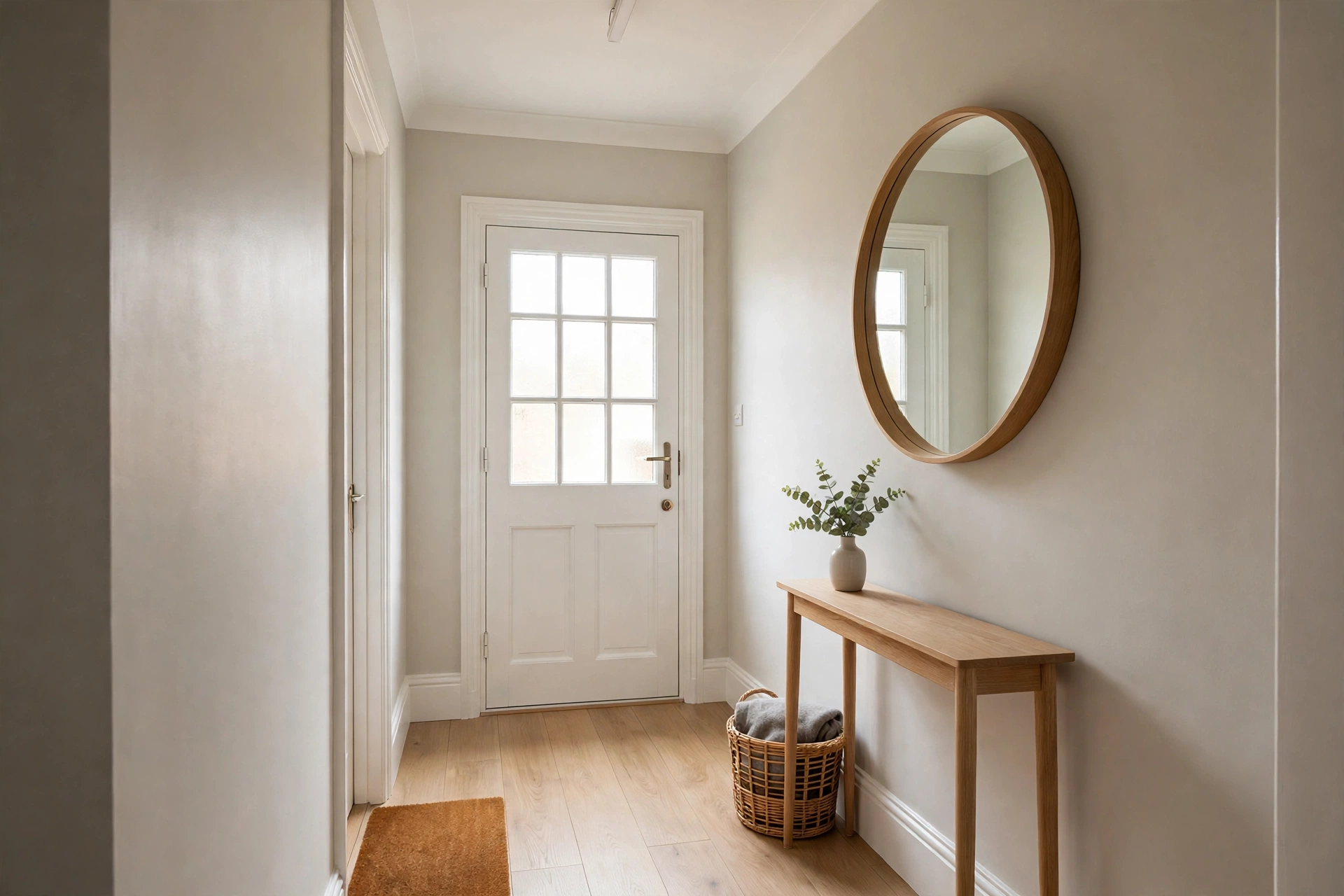
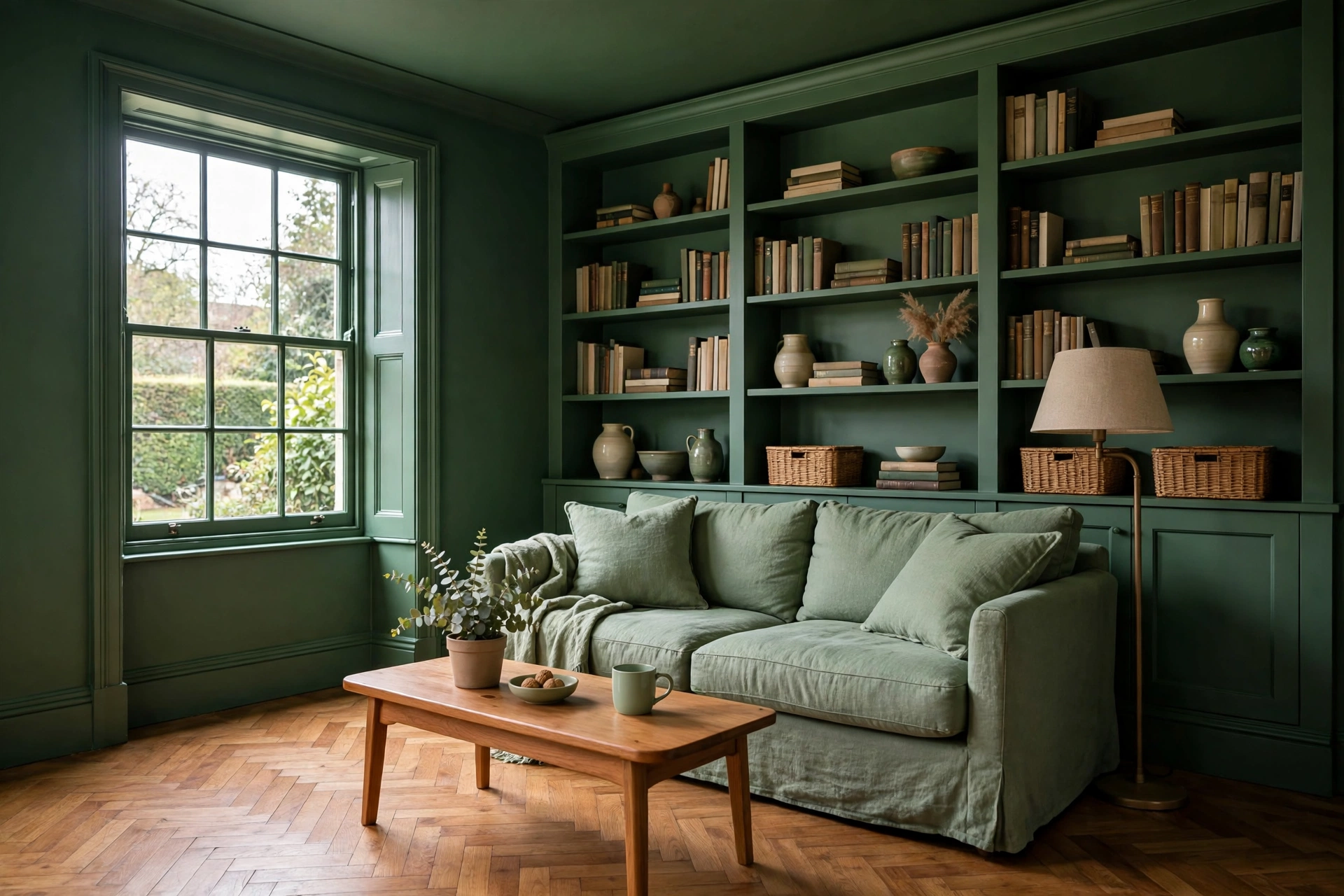
Short answer: Colour drenching means painting the walls, ceiling, skirting boards, doors and woodwork in one living room the same colour, so the whole room reads as a single, calm surface. It suits UK living rooms especially well, from Victorian terraces to new builds, because it hides awkward angles, makes small rooms feel taller and gives even a modest space a confident, designer finish.
What Is Colour Drenching?
Colour drenching is a painting technique where a single colour is used across every paintable surface in a room: the walls, the ceiling, the skirting boards, the window frames, the doors and even built-in shelving or radiators. The result is a room that feels wrapped in colour rather than decorated with it. The technique was popularised by paint brands including Farrow & Ball, whose colour-drenched room sets became a familiar sight at design shows in the early 2020s, and it has since become one of the most requested looks in UK homes.
It works because our eyes judge the size of a room partly by the lines where one colour stops and another starts. Take those lines away and the boundaries blur: ceilings feel higher, corners soften and a boxy room in a flat or a new build home feels calmer and more considered.
Why Colour Drenching Works in a Living Room
A living room has more surfaces competing for attention than almost any other room: a fireplace, a television, radiators, doors, windows and often a tangle of skirting and coving. In a typical UK living room, especially in a Victorian terrace or a 1930s semi, those details are part of the charm, but painted white against a coloured wall they chop the room into small visual pieces. Drenching them in the same colour lets the architecture speak without shouting.
The Best Colours for Colour Drenching a Living Room
Almost any colour can be drenched, but some shades behave better than others in a living room. The right choice depends on the light your room gets, its size and how bold you want to feel.
- Deep green: The classic choice. Sage, olive and forest greens feel calm and grounded, and they pair beautifully with warm wood, brass and linen. If you love this look, our dark green living room ideas show how to style it through the seasons.
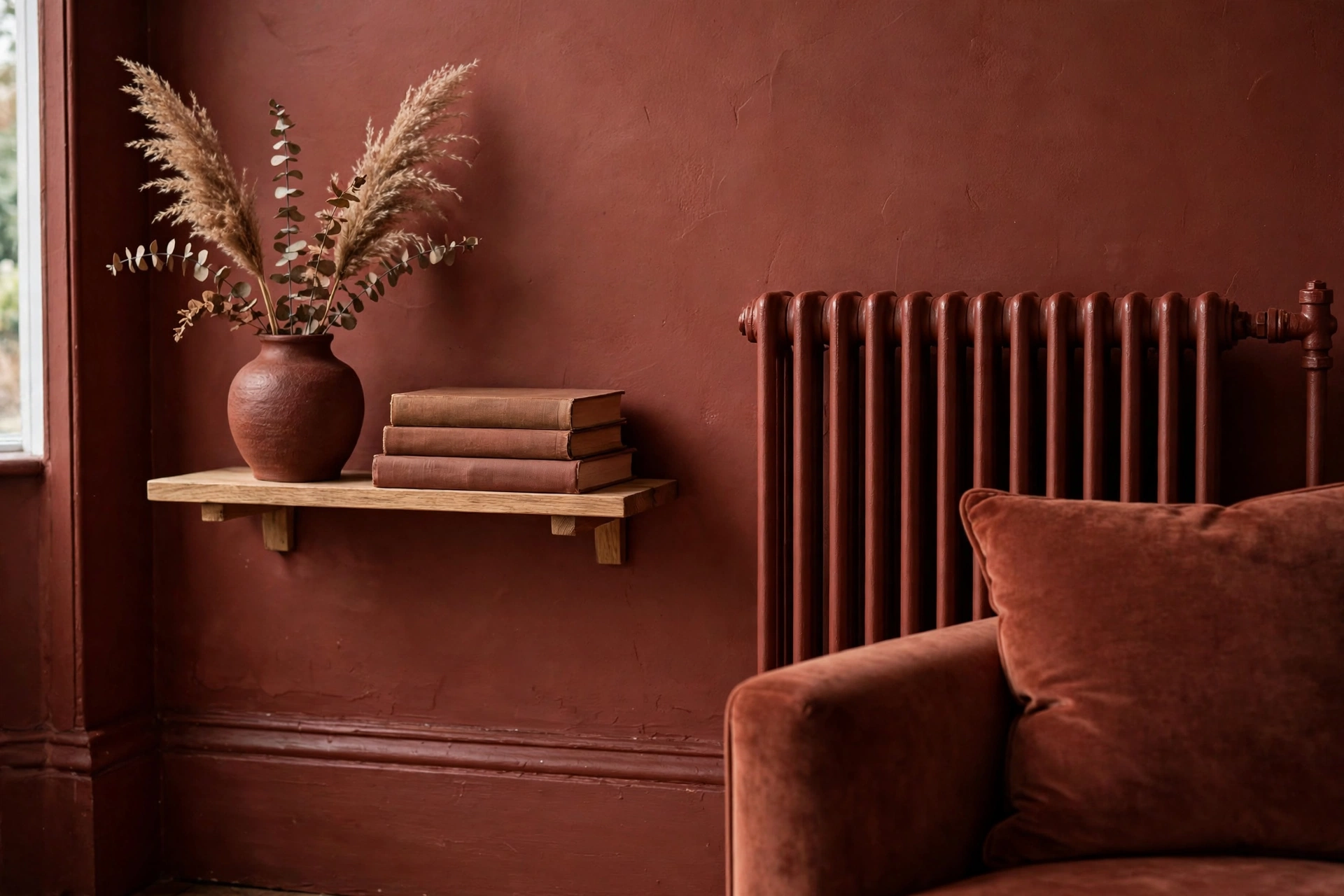
- Warm terracotta and rust: Rich, earthy and surprisingly cosy in a north-facing room, where cooler colours can feel grey and flat. Works well with cream sofas and natural textures.
- Soft blue-grey: A gentle, liveable option for smaller rooms. It keeps the room feeling airy while still giving you the wrapped-in-colour effect.
- Warm neutrals: Plaster pink, mushroom and warm greige are the safest entry point. They drench beautifully without overwhelming, and they suit rented flats as well as owned homes.
- Bold navy or charcoal: Dramatic and cocooning, especially in an evening room with lamps rather than overhead light. Best in rooms with good natural light or generous lamp lighting.
As a rule of thumb, warm colours suit north-facing rooms, which get cool, blue-toned light, while cool colours suit south-facing rooms, which get warm, golden light. Always test a large swatch on the wall and live with it for a few days before committing, because a colour that looks soft in the shop can read much stronger once it covers the ceiling too.
Colour Drenching vs a Feature Wall: Which Is Better?
Both approaches use colour to change a room, but they do very different jobs:
- Colour drenching: One colour on every surface. Best for making a room feel calm, larger and more cohesive. Hides awkward angles, dated woodwork and mismatched details. Needs confidence, but the result is forgiving.
- Feature wall: One wall in a bold colour, the rest neutral. Best for adding a focal point cheaply and quickly. Easier to reverse, but it can make a small room feel divided and it highlights, rather than hides, the room’s shape.
- Half-height panelling: Colour below a dado rail, neutral above. A good middle ground in period homes, and a natural fit for Victorian terraces with existing picture rails.
If your living room has lovely period details you want to celebrate, a feature wall or panelling may serve you better. If your room has awkward angles, a low ceiling or mismatched woodwork you would rather soften, colour drenching is the stronger choice. For more ideas on a single statement wall, see our bedroom feature wall ideas, many of which adapt well to living rooms too.
How to Colour Drench a Living Room Step by Step
Colour drenching is more forgiving than a two-tone scheme, but a little preparation makes the difference between a polished finish and a patchy one.
- Choose your colour and finish. Pick one colour, then choose finishes per surface: matt emulsion for walls and ceiling, and eggshell or satinwood for woodwork and radiators so they wipe clean.
- Prep every surface. Fill cracks, sand rough patches and wash down greasy areas, especially around radiators and fireplaces. Drenching shows up poor preparation more than a white ceiling would, because there is no contrast to hide behind.
- Paint the ceiling first. Work from the top down: ceiling, then walls, then woodwork. A roller on an extension pole makes the ceiling quick, and painting it the wall colour removes the need for a perfect cutting-in line.
- Paint the woodwork last. Skirting boards, door frames, window frames and doors go last, in eggshell or satinwood in the same colour. Mask the floor, not the wall, since there is no colour change to protect.
- Do not forget the details. Radiators, built-in shelves, the inside of an alcove and even the fireplace surround can all be drenched. A radiator painted the wall colour all but disappears, which is a gift in a small living room.
- Let it cure before styling. Give the paint a full day before you push furniture back and hang pictures. Then add texture, not more colour, to finish the room.
Colour Drenching in a Small Living Room
The most common worry about colour drenching is that a dark colour will shrink a small living room. In practice, the opposite often happens. A small room painted in one mid-tone colour, with the ceiling included, reads as a single space rather than a box with a lid, and that makes it feel taller and less cramped. The trick is to avoid the very darkest shades in a room with one small window, and to keep the furniture light in tone so the room does not feel top-heavy.
In a small living room or a flat, choose a mid-tone green, a warm plaster pink or a soft blue-grey rather than charcoal or navy. Keep the sofa in a pale fabric, use a mirror opposite the window to bounce light, and let one large piece of art do the talking instead of lots of small frames. The same logic applies to other tight spaces; our guide to what colour to paint a dark hallway uses the same principles for narrow, light-starved spaces.
What to Paint and What to Leave
Not everything in the room has to be drenched, and knowing what to leave alone keeps the look from feeling flat. Paint the walls, ceiling, skirting boards, door frames, doors, window frames, radiators and built-in storage. Leave the floor alone: warm wood, a natural rug or pale carpet gives the room a base that stops the colour from feeling overwhelming. Leave metalwork such as brass door handles, light fittings and curtain poles in their own finish, since a small metallic accent breaks up the colour beautifully.
Curtains deserve a thought too. In a drenched room, curtains in a tone slightly lighter or darker than the walls look intentional, while a clashing pattern can undo the calm you have just created. If your room has grey walls elsewhere in the house, our guide to what colour curtains go with grey walls covers the same tone-matching logic.
Styling a Colour-Drenched Living Room
Once the paint is dry, styling a drenched room is about texture rather than colour. Because the walls are doing so much of the work, the furniture and accessories should add contrast through materials: a boucle or linen sofa, a warm wood coffee table, a wool throw, a ceramic lamp and a few plants. Avoid adding a second strong paint colour; instead, layer in two or three tones of the same colour family through cushions and throws.
Lighting matters more in a drenched room than in a white one, because a single colour absorbs more light. Use three sources of light: a floor lamp by the sofa, a table lamp on a sideboard and, if you have one, a picture light or a candle on the mantel. Warm white bulbs (2700K) keep the colour looking rich in the evening; cool white bulbs can make deep greens and blues look flat. For winter evenings, when the room needs to feel extra inviting, the ideas in our cosy living room ideas for winter pair naturally with a drenched scheme.
Mistakes to Avoid When Colour Drenching
- Skipping the test patch: A colour doubles in intensity when it covers the ceiling as well as the walls. Test a large area and look at it in morning and evening light before buying the full amount.
- Using the same finish everywhere: Matt emulsion on woodwork scuffs and cannot be wiped clean. Use eggshell or satinwood on skirting, doors and radiators in the same colour.
- Forgetting the ceiling: Leaving the ceiling white is the single most common half-measure, and it breaks the wrapped effect entirely. If the ceiling feels daunting, remember that a roller makes it the quickest part of the job.
- Adding too many competing colours: One drenched colour plus neutrals and texture is the formula. A bright rug, a clashing cushion and a patterned curtain all at once will fight the paint.
- Painting over bad preparation: Drenching highlights lumps, cracks and old gloss. Spend the time on filling and sanding first; it is the least glamorous step and the most important.
Frequently Asked Questions
Does colour drenching make a living room look smaller?
No, it usually makes a room feel larger, not smaller. By removing the contrast lines between walls, ceiling and woodwork, the eye reads the room as one continuous space, which makes ceilings feel higher and corners softer. Very dark shades in a room with little natural light can feel enclosed, so in a small or north-facing living room choose a mid-tone colour such as sage green or warm plaster pink instead of charcoal or navy.
Should the ceiling be the same colour when colour drenching?
Yes, the ceiling is an essential part of the look. Leaving it white breaks the wrapped-in-colour effect and makes the room feel like a box with a lid. Use the same colour in a matt emulsion on the ceiling; it is the quickest part of the job with a roller, and it is what makes the room feel taller and calmer.
Can you colour drench a rented flat living room?
Yes, with your landlord’s permission in writing. Choose a warm neutral or soft sage that is easy to live with and easy to paint over later, and keep the original paint details so you can restore the room when you move out. If permission is refused, removable options such as a large painted canvas or drenched freestanding furniture can give a similar feel without touching the walls.
What is the best colour for colour drenching a living room?
There is no single best colour, but deep green is the most popular choice in UK homes because it feels calm, works with warm wood and brass, and suits both period and new build living rooms. Warm terracotta suits north-facing rooms, soft blue-grey suits small rooms, and warm neutrals are the safest choice if you want the drenched look without a bold statement.