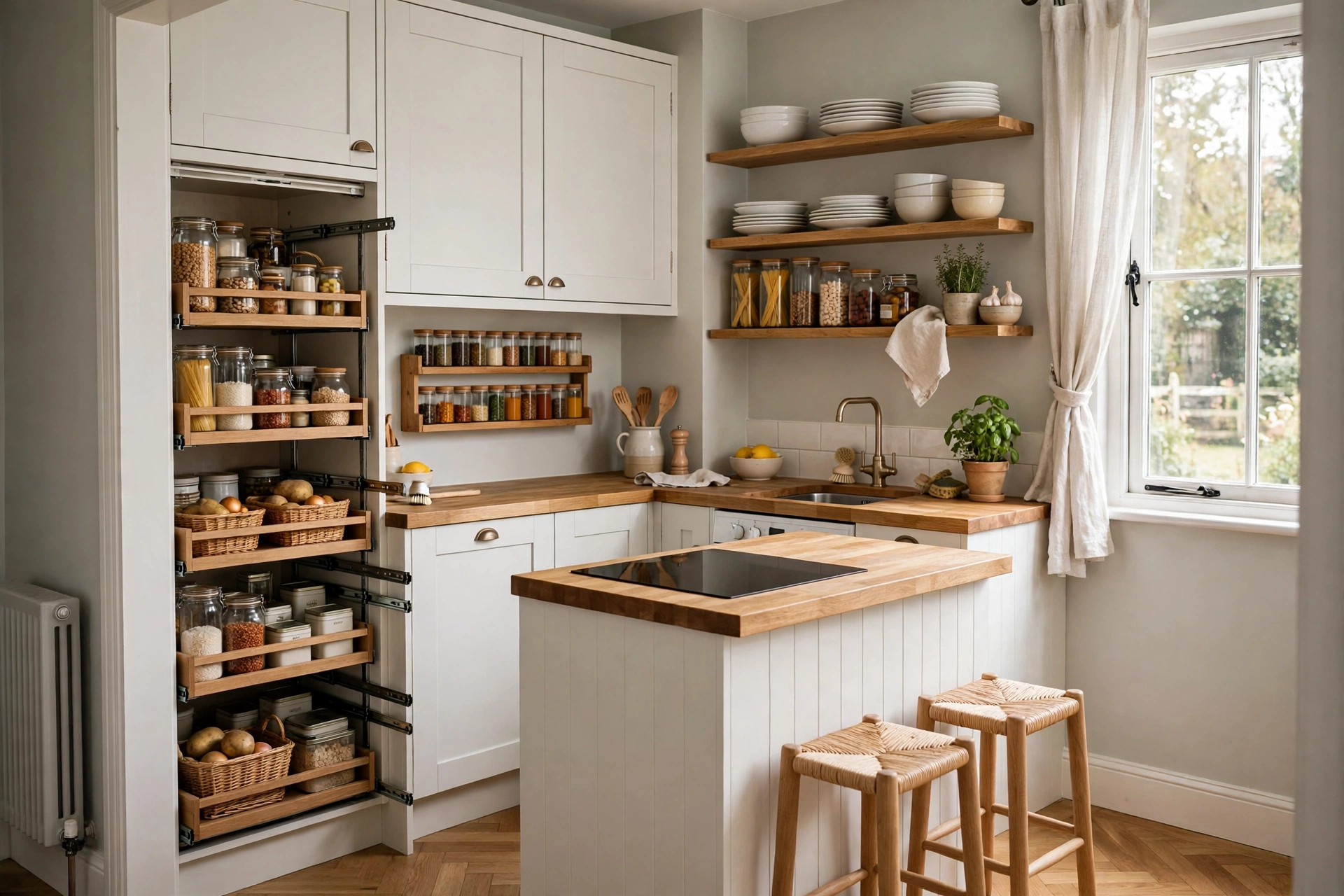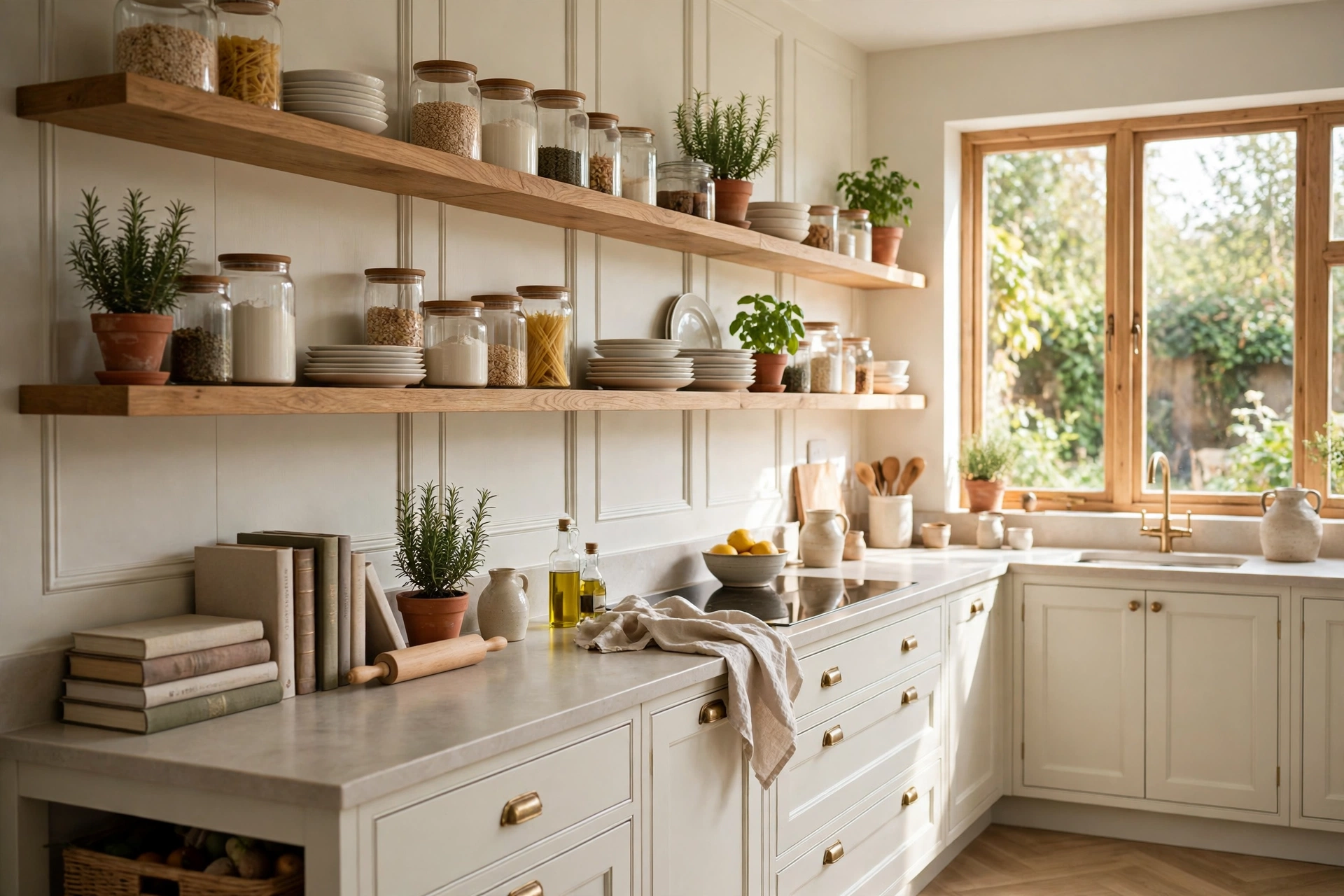
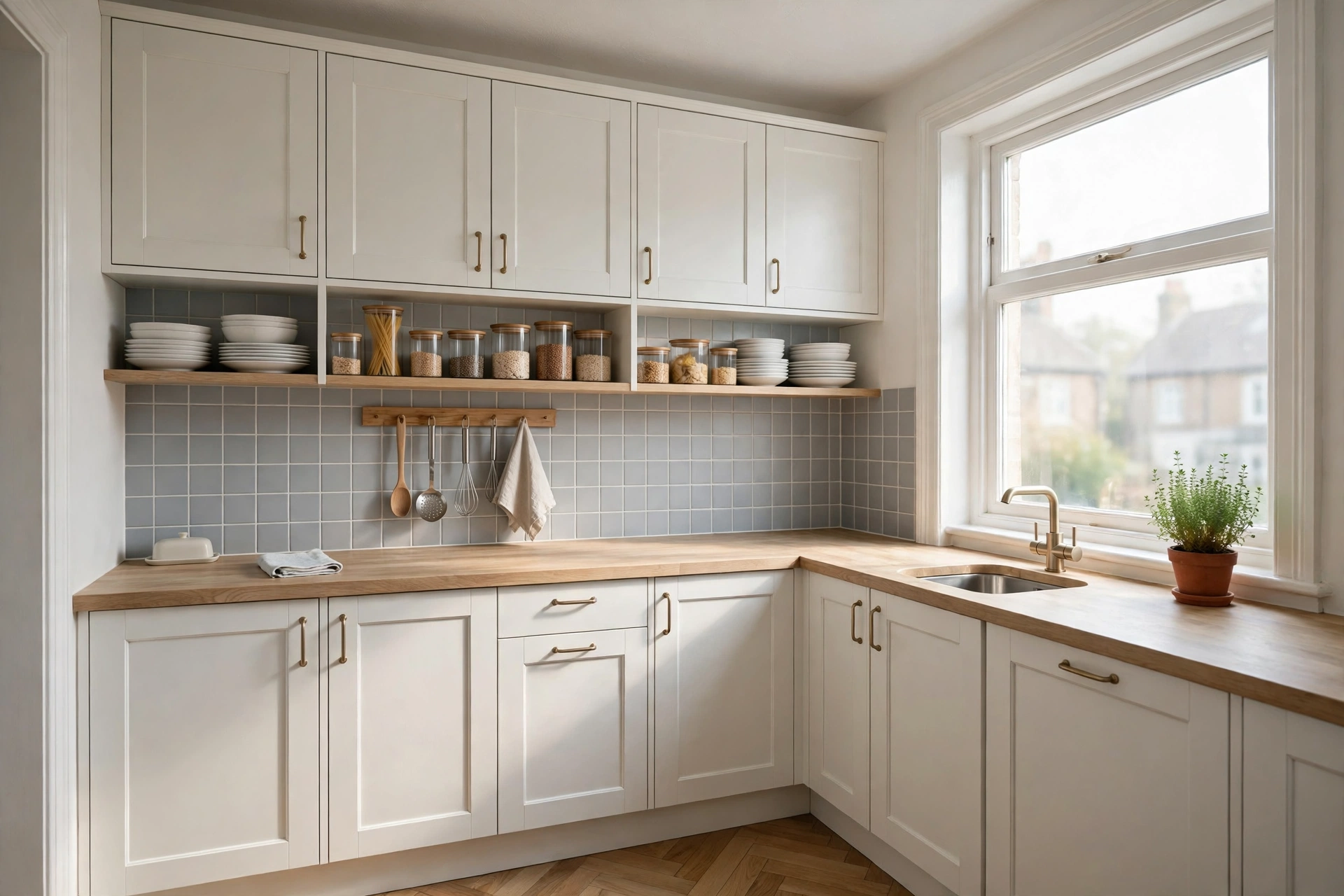
Short answer: To organise a small kitchen in the UK, start by decluttering ruthlessly, then divide the room into five zones for cooking, prep, washing up, storage and serving. Use vertical wall space, the inside of cupboard doors, drawer dividers and stackable storage, and keep worktops clear except for two or three daily essentials. The best small kitchens are not the ones with the most cupboards, but the ones where everything has one fixed home.
A cramped kitchen makes every meal feel like hard work. You open a cupboard and something falls out, the worktop disappears under clutter, and cooking for one feels like a juggling act. The good news is that organising a small kitchen rarely needs a refit. Most UK kitchens, from Victorian terrace galley kitchens to new build flats, can be transformed with a weekend of sorting, a few clever storage buys and a simple system that is easy to keep up.
What Does Organising a Small Kitchen Actually Mean?
Organising a small kitchen means arranging every item so it is easy to find, easy to reach and easy to put back. It is not about owning less for the sake of it, and it is not about buying dozens of matching containers. It is about giving each thing one fixed place, close to where you actually use it. Pans live near the hob, mugs live near the kettle, and cleaning products live under the sink, not scattered across three cupboards.
Standard UK base units are 600mm deep and worktops sit around 900mm high, so even a compact kitchen holds far more than it first appears to. The problem is usually not space, it is layout. When items are stored by habit rather than by use, cupboards fill up with things you never touch while the things you need daily end up piled on the worktop.
Step 1: The Ruthless Declutter
Before you buy a single storage box, empty every cupboard and drawer. Work one cupboard at a time so the kitchen stays usable, and sort everything into four piles: keep, donate, recycle and bin.
- Keep: items you have used in the last six months and will use again.
- Donate: duplicate utensils, spare mugs, gadgets in working order and cookbooks you never open. Charity shops and local reuse groups welcome them.
- Recycle: broken containers, chipped plates, out-of-date food and worn-out tea towels.
- Bin: anything broken, rusty or past its best that cannot be recycled.
Be honest about the gadgets. A bread maker used twice, a spiraliser gathering dust and three cheese graters are taking up space that your everyday plates and pans need. Most small kitchens only have room for the tools you genuinely use every week.
Step 2: Divide Your Kitchen Into Five Zones
Professional kitchen designers plan around zones, and the same idea works brilliantly in a small UK kitchen. Instead of thinking about cupboards, think about tasks. Each zone holds only the items used for that job, which cuts down on walking back and forth.
- Cooking zone: the hob and oven. Store pans, spatulas, wooden spoons, oils and spices within one step.
- Prep zone: the main stretch of worktop. Keep chopping boards, knives, mixing bowls and the food processor here.
- Washing zone: the sink and dishwasher. Keep washing-up liquid, sponges, tea towels and the drying rack close by.
- Storage zone: the fridge, freezer and larder cupboard. Keep dry goods, tins, pasta and baking supplies together.
- Serving zone: the table or breakfast bar. Keep plates, bowls, cutlery and glasses near where you eat.
Walk through your kitchen and check each item against its zone. The kettle usually belongs in the serving zone near the mugs, not in the prep zone where it steals worktop space. The bin belongs near the prep zone, where peelings and packaging are created.
Step 3: Make Your Cupboards Work Harder
Cupboards are the biggest storage asset in a small kitchen, yet most are used badly. A single deep shelf quickly becomes a graveyard where tins hide at the back for years.
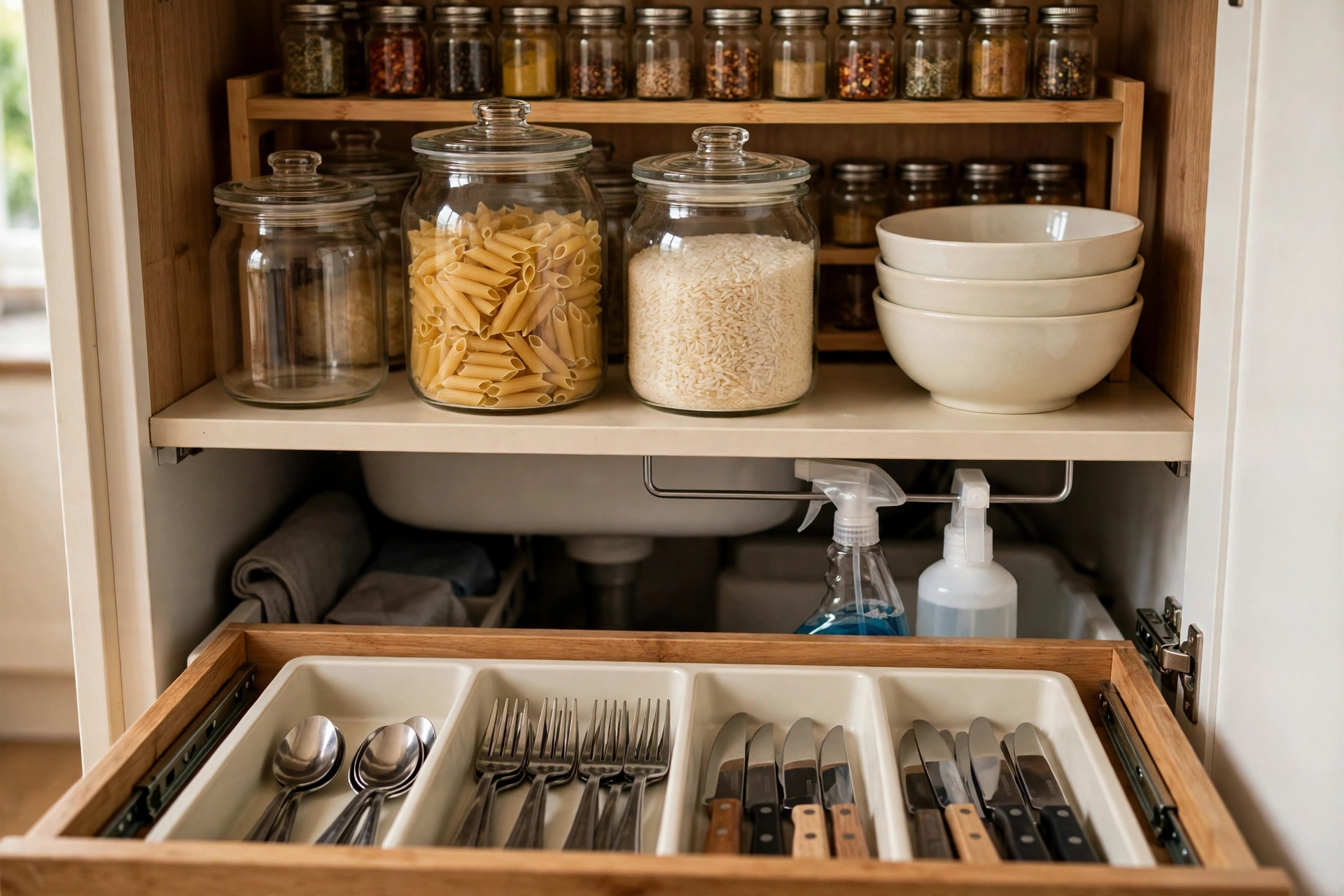
Add Shelf Risers and Stackable Storage
Shelf risers, also called cupboard shelves, double the usable space inside a tall cupboard by creating a second level for mugs, bowls and tins. Stackable wire or bamboo racks do the same job for plates. You can find both at IKEA, Dunelm, B&M and The Range for a few pounds each, and they need no tools or drilling.
Use the Inside of Cupboard Doors
The inside of a cupboard door is free storage. Stick-on or screw-in racks hold spice jars, cling film, foil and cleaning cloths. A small rack on the door under the sink keeps washing-up liquid and sponges off the worktop and easy to grab. Measure the depth first so the door still closes neatly.
Try Pull-Out Storage and Lazy Susans
Deep corner cupboards are the hardest space in any kitchen to use. A pull-out basket or a lazy Susan turntable lets you reach the back without emptying the front. A turntable is also ideal for oils, sauces and condiments in a tall larder cupboard, since a quick spin brings everything into view.
Step 4: Tame Your Drawers
Drawers fail when everything is loose. A cutlery tray is the obvious start, but the real win is giving every drawer a single purpose: one for cutlery, one for utensils, one for tea towels and cloths, and one for the odds and ends every kitchen collects.
Adjustable drawer dividers are cheap and fit any drawer, including the shallow ones common in new build flats. In the utensil drawer, stand long tools upright in a tall container or lay them flat in rows so you can see them all at a glance.
Step 5: Use Your Walls and Vertical Space
When floor and worktop space is short, the walls are your best friend. Wall-mounted storage adds the equivalent of an extra cupboard without taking a single centimetre of floor space.
- Peg rails and hooks: hang mugs, measuring cups and utensils from a rail under the wall cupboards or on a bare stretch of wall.
- Magnetic knife strips: free up a whole drawer and keep knives safe, sharp and visible.
- Open shelving: one or two shelves for everyday plates, bowls and glasses make a small kitchen feel bigger and put daily items within reach. Keep the shelves tidy, since everything is on display.
- Pot racks: a ceiling or wall-mounted rack gets bulky pans out of cupboards, though it suits taller ceilings best.
If you rent, check your tenancy agreement before drilling. Command strips, tension rods and freestanding rails give you most of the same storage without holes in the wall, and our guide to renters friendly kitchen decor ideas has more damage-free options.
Step 6: Keep Worktops Clear
Worktops are for working, not storing. A clear worktop makes a small kitchen look twice as big and gives you room to actually cook. Aim to keep only two or three daily essentials on the surface, such as the kettle, a chopping board and a utensil pot, and find a home for everything else.
Small appliances are the usual culprits. If the toaster, blender and food processor all live on the worktop, move the ones you use weekly into a cupboard and bring them out only when needed. A single tray can corral the kettle, sugar and tea together into one tidy group.
Step 7: Organise the Fridge and Freezer
A messy fridge wastes food and money. Use clear stackable boxes to group similar items, so yoghurts, cheeses and leftovers each have a zone, and keep a small list on the fridge door for items running low. In the freezer, flat-freeze sauces, soups and leftovers in labelled bags, then file them upright like books. This simple trick can double the usable space in a small freezer drawer.
Budget-Friendly Storage Buys in the UK
You do not need to spend a fortune to organise a small kitchen. A focused shop at the right retailers covers most of what you need for under fifty pounds.
- IKEA: the VARIERA range of drawer organisers, shelf inserts and turntables is designed for small kitchens and fits standard UK units. The RASKOG trolley is a favourite for narrow gaps between units.
- B&M and The Range: the cheapest place for stackable boxes, baskets, hooks and cleaning caddies. Quality varies, so check lids and hinges before you buy.
- Homesense: worth a browse for solid baskets and ceramic storage jars at a discount, though stock changes fast.
- Farrow & Ball and Dulux: if you repaint cupboard interiors or a feature wall while you reorganise, a light colour inside dark cupboards makes it far easier to see what is inside.
Measure your cupboards and drawers before you shop. A storage box that is two centimetres too wide is useless. For more ideas, see our guide to small kitchen storage ideas.
Small Kitchen Organisation Mistakes to Avoid
- Buying storage before decluttering: containers organise clutter, they do not remove it. Sort first, then buy only what fits the items you kept.
- Storing items far from where you use them: if the baking trays live above the fridge and the baking happens at the worktop, they will end up left out every time.
- Overfilling open shelves: open shelving only looks good when it is half empty. Cram it and the kitchen looks messier than before.
- Ignoring the top of the cupboards: the space above wall cupboards holds rarely used items like the Christmas cake tin or the picnic set. Keep a small step stool nearby so it stays usable.
- Forgetting the bin: a kitchen without a proper bin system fills up with bags of recycling on the floor. A pull-out bin or a slim pedal bin tucked at the end of the run solves it.
Keeping It Organised: The Five-Minute Daily Reset
Organisation only works if it lasts. The secret is a five-minute reset each evening: wash up or load the dishwasher, wipe the worktops, put everything back in its zone, and take out the recycling. Done daily, it stops clutter building up again.
Every month, do a quick cupboard check. Pull out anything that has crept back in, check dates on tins and spices, and wipe the shelves. Small kitchens reward small, regular habits far more than occasional big clear-outs. If you want to refresh the look as well as the layout, our open kitchen shelf styling ideas show how to make tidy storage look beautiful too.
Frequently Asked Questions
How do I organise a very small kitchen with no pantry?
Use the five zones method and treat one tall cupboard as your pantry, with stackable jars, a turntable for sauces and shelf risers for tins. Add a slim trolley in any narrow gap and use the inside of cupboard doors for spices and cleaning products.
What is the best way to organise kitchen cupboards in a UK flat?
Start by decluttering, then add shelf risers and stackable racks to double the usable space. Group items by zone, keep daily items at eye level, and store rarely used items on the highest shelves. Measure before buying any storage so it fits standard 600mm-deep UK units.
How can I organise a small kitchen on a budget?
Declutter first, which costs nothing, then spend on a few high-impact buys: drawer dividers, shelf risers, hooks and stackable boxes from IKEA, B&M or The Range. Most small kitchens can be fully organised for under fifty pounds if you measure carefully and buy only what fits.
How do I keep a small kitchen tidy long term?
Give every item one fixed home close to where you use it, and do a five-minute reset each evening to put things back and wipe the worktops. A quick monthly cupboard check stops clutter creeping back, and a one-in-one-out rule for gadgets keeps the cupboards from filling up again.