
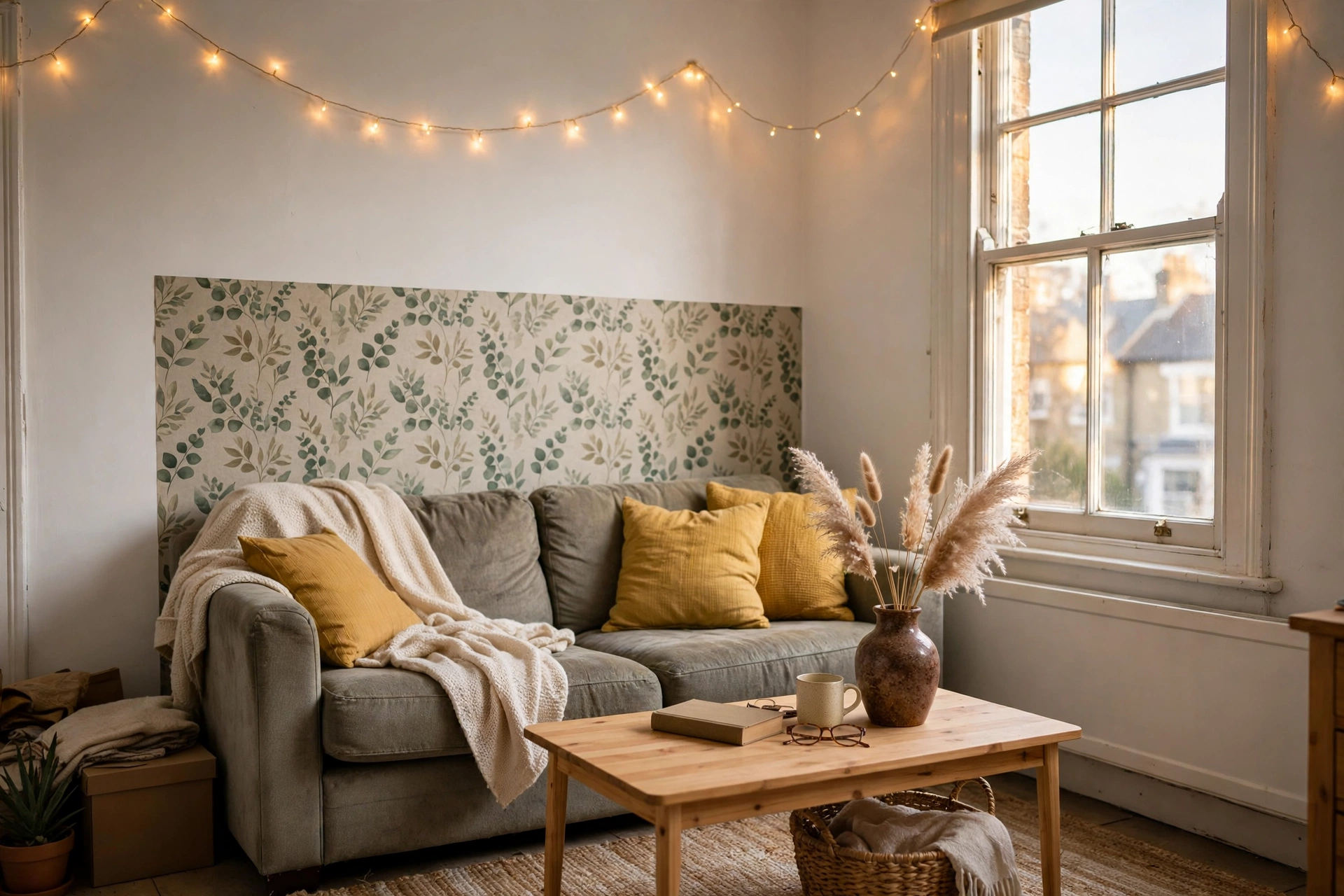
Short answer: To decorate a rented flat on a budget in the UK, focus on removable, no-damage changes: soft furnishings, peel-and-stick wallpaper, adhesive hooks, lighting and second-hand furniture. Spend first on the rooms you use most, shop Dunelm, IKEA, B&M and charity shops, and check your tenancy agreement before painting or drilling. Most flats can feel different for under £200.
Renting in the UK often means magnolia walls, tired carpets and a landlord who says no to drilling holes. That does not mean you have to live in a beige box. Renter-friendly decorating is the art of making a flat feel like home using changes you can undo in an afternoon, without losing any of your deposit.
What Does Renter-Friendly Decorating Mean?
Renter-friendly decorating means any change that improves your home without permanently altering the property: no drilling into walls, no painting without written permission, no removing fixtures, and nothing a landlord could reasonably call damage at the end of your tenancy.
Most of the visual impact in a room comes from things that are not fixed to the building at all. Textiles, lighting, furniture, plants and wall art do the heavy lifting, and all of them leave with you when you move. The golden rule is simple: if you cannot undo it in under an hour with no trace left behind, ask your landlord first, in writing.
Under the Tenant Fees Act 2019, your tenancy deposit in England is capped at five weeks’ rent where the annual rent is under £50,000. That deposit is exactly what is at stake when decorating goes wrong. A £15 tin of paint applied without permission can cost far more than £15 if the landlord charges for redecoration.
Start With What Your Landlord Actually Allows
Before you buy a single cushion, read your tenancy agreement. Most assured shorthold tenancies in the UK include a clause about alterations, and the wording matters. Some landlords ban all painting and drilling, others allow small picture hooks, and a few are happy for you to paint if you return the walls to white at the end.
- Can I paint? Many landlords say yes if you repaint before moving out. Get it in writing by email, and keep the message.
- Can I hang things? Small picture hooks are often fine, but large rawl plugs in plasterboard are not. Command strips and adhesive hooks are the safe default.
- Can I change anything fixed? Curtain poles, light fittings and kitchen handles are usually off limits unless the landlord agrees in writing.
If your landlord says no to everything, do not despair. The rest of this guide works entirely within a strict no-paint, no-drill tenancy. If painting is allowed, one accent wall in a warm colour from Farrow & Ball or Dulux can transform a room for the price of a single tin, but keep the receipt and note the original colour for move-out day.
Five No-Damage Tricks That Transform a Flat
These five ideas cost little, need no tools, and work in almost every rented flat in the UK.
1. Layer soft furnishings
Soft furnishings are the fastest way to hide a landlord’s furniture and a cold colour scheme. A large throw over a tired sofa, two or three cushions in a colour you love, and a thick rug over worn carpet change the whole feel of a living room in minutes. Dunelm and IKEA both sell cushion covers from around £4, and a good-sized rug from The Range or B&M can cost less than £30. Choose warm, textured fabrics: knitted throws, velvet cushions and wool-blend rugs make a flat feel cosy rather than rented.
2. Use peel-and-stick wallpaper on one wall
Peel-and-stick wallpaper is made for renters. It goes up without paste, peels off cleanly, and comes in hundreds of patterns, from subtle linen textures to bold botanical prints. Apply it to one feature wall, the back of a bookcase, or the front of a chest of drawers. A roll typically covers around 5 square metres and costs £15 to £30 from Dunelm, Amazon or specialist UK sellers. Test a small piece first on an inconspicuous patch of wall.
3. Fix the lighting
Most rented flats have one harsh ceiling light per room and nothing else. Add layers instead: a floor lamp in the living room corner, a small table lamp on a chest of drawers, and warm white fairy lights along a shelf or headboard. Warm white bulbs (2700K) make a room feel inviting, while cool white bulbs make it feel like an office. Battery fairy lights cost a few pounds from B&M and need no plug socket. For more on lighting, see our guide to how to light a living room with no ceiling light.
4. Hang art without holes
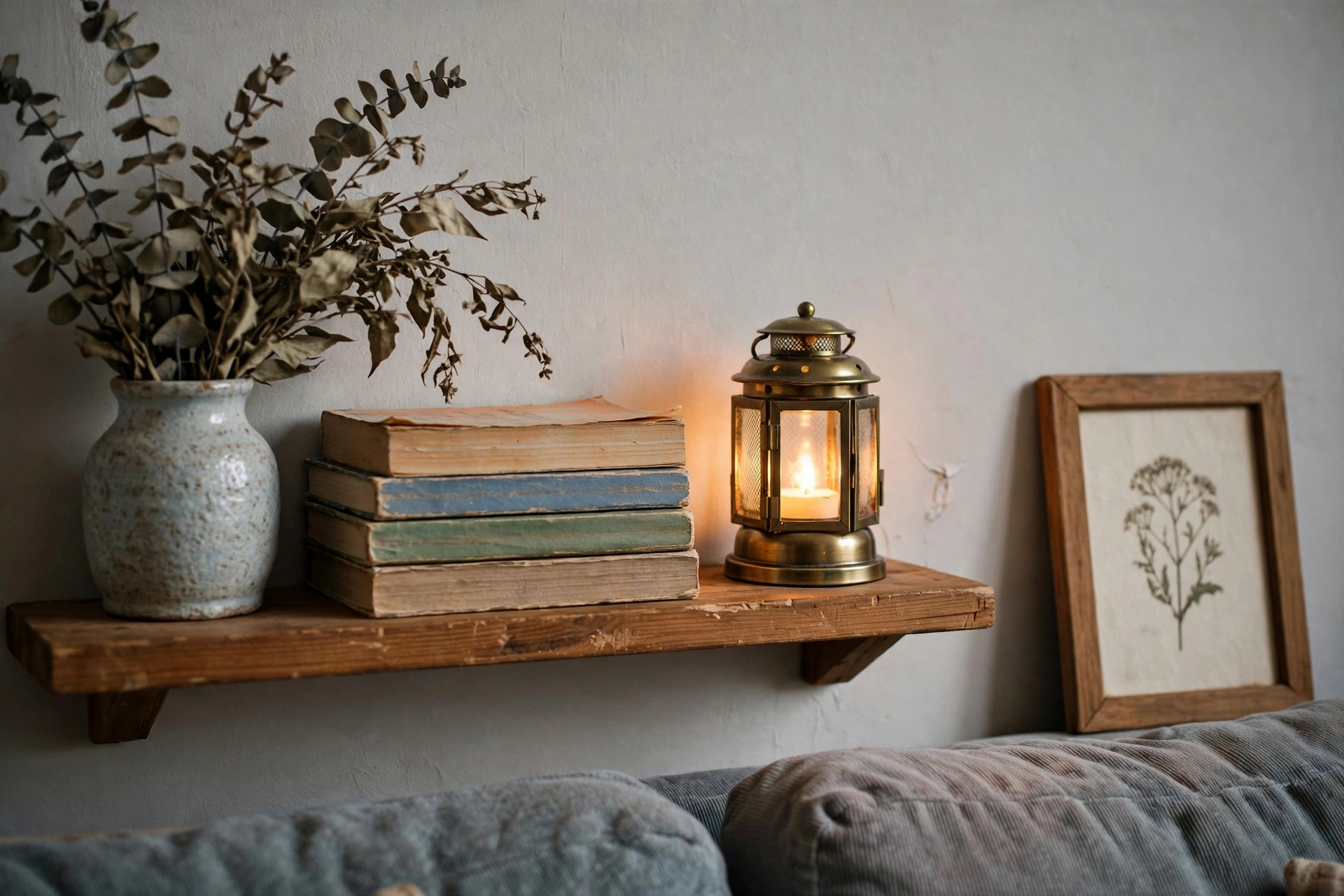
Command strips and adhesive picture-hanging strips hold most frames up to several kilos, and they remove cleanly if you follow the instructions. Lean larger frames against the wall on top of a chest of drawers or on the floor for a relaxed, gallery look that needs no fixings at all. Charity shops are full of framed prints for £2 to £5. A cosy living room needs art at eye level, not bare walls, and this is the cheapest way to get it.
5. Add plants and natural texture
Plants soften hard edges, hide awkward corners and make a flat feel lived in. Start with hard-to-kill varieties such as pothos, snake plants and spider plants, which survive British winters and forgetful watering. A £5 plant from IKEA or a garden centre, plus a second-hand pot, is one of the best value decorations you can buy. If you have no natural light, good-quality faux plants from Dunelm or Homesense give the same effect with zero upkeep.
Room-by-Room Budget Ideas
Living room: spend here first
You spend more waking hours in the living room than anywhere else, so it deserves the biggest share of your budget. Start with a rug to define the seating area and cover tired carpet, then add a throw and cushions to the sofa. A floor lamp in a dark corner and one piece of art on the main wall complete the change. If your flat is small, our small snug ideas show how to make a compact space feel inviting rather than cramped.
Bedroom: make it feel like a retreat
The bedroom is where cheap changes have the biggest emotional payoff. Fresh bedding in a colour you love costs from £15 at Dunelm or IKEA and changes the room instantly. Add a bedside lamp, a small rug beside the bed so your feet do not hit cold floorboards, and fairy lights above the headboard. A mirror opposite the window bounces light around and makes a small room feel twice as big. See our guide to a cosy bedroom for winter for more seasonal ideas.
Kitchen: style what you cannot change
Rental kitchens are often the hardest rooms to love, with dated cabinets and worktops you cannot replace. Focus on what sits on top instead. A matching set of storage jars, a wooden chopping board leaned against the wall, a small plant on the windowsill and a colourful tea towel can make a tired kitchen feel cared for. Keep worktops clear, as clutter makes a small kitchen feel smaller.
Bathroom: small changes, big difference
Bathrooms in rented flats are usually small and plain. A matching bath mat, a shower curtain in a colour or pattern you like, and a small wooden bath tray cost under £25 combined and change the room completely. Add a plant that likes humidity, such as a fern, and swap the harsh ceiling light for a warm white bulb. A tension rod across an alcove gives you extra hanging space for towels without a single screw.
Where to Shop in the UK on a Budget
You do not need a big budget to decorate well. You need to know where the bargains are.
- Dunelm: the best all-rounder for bedding, cushions, curtains and rugs, with frequent sales and a huge range under £20.
- IKEA: unbeatable for simple furniture, storage and plants. The LACK, KALLAX and RIBBA ranges are renter staples for a reason.
- B&M and The Range: the cheapest place for fairy lights, candles, vases, frames and seasonal decoration. Stock changes fast, so buy it when you see it.
- Homesense and TK Maxx: one-off finds, from mirrors to throws, often at half the high street price.
- Charity shops: frames, vases, books, lamps and even furniture for a few pounds.
- Facebook Marketplace and Gumtree: second-hand sofas, tables and shelving, often free if you can collect. Always check measurements before you go.
- Farrow & Ball and Dulux: worth it only if your landlord has agreed to painting. One tin of good paint covers better than two tins of cheap paint.
Set a monthly budget and shop in stages rather than all at once.
A Realistic Budget: What £200 Buys
Here is a realistic breakdown for decorating a one-bedroom rented flat. Prices are typical UK high street and second-hand prices, and every item is removable.
- Living room: rug £30, throw £12, two cushion covers £10, floor lamp £20, framed print £5. Total: £77.
- Bedroom: bedding set £18, bedside lamp £12, fairy lights £4, small rug £12. Total: £46.
- Kitchen: storage jars £10, chopping board £6, tea towels £5, plant £5. Total: £26.
- Bathroom: bath mat £8, shower curtain £7, plant £5. Total: £20.
- Hallway: mirror £15, adhesive hooks £4, runner rug £12. Total: £31.
That comes to £200 for a whole flat, and you can spend far less by buying second-hand or spreading the cost over a few months. The rug makes the biggest difference, so buy that first if you can only afford one thing.
Mistakes to Avoid When Decorating a Rented Flat
Most deposit deductions for decorating come from a handful of avoidable mistakes. Never paint without written permission, even if the colour seems harmless. Never use blu-tack or cheap adhesive pads on painted walls, as they can pull paint off and leave greasy marks. Never drill into a wall without knowing what is behind it, as pipes and cables run through UK flat walls in places you would not expect. Do not buy furniture before measuring: a sofa that does not fit through a Victorian terrace hallway or up a narrow staircase is a costly mistake.
Frequently Asked Questions
Can I decorate a rented flat without my landlord’s permission?
Yes, for anything removable. Soft furnishings, rugs, plants, freestanding furniture, adhesive hooks and peel-and-stick wallpaper need no permission in most tenancies. Painting, drilling and anything fixed to the building usually needs written permission, so check your tenancy agreement first.
How much does it cost to decorate a rented flat on a budget in the UK?
A one-bedroom flat can be transformed for around £150 to £200 using high street shops such as Dunelm, IKEA and B&M, plus second-hand finds. Start with a rug, lighting and bedding, which make the biggest difference, and add the rest over time.
What is the best renter-friendly way to hang pictures?
Command strips and adhesive picture-hanging strips are the safest option, as they hold most frames and remove cleanly when you follow the instructions. For larger frames, lean them against the wall on furniture or the floor. Avoid nails, screws and blu-tack, which can damage paint and plaster and risk your deposit.
Can I use peel-and-stick wallpaper in a rented flat?
Yes, peel-and-stick wallpaper is designed for renters and removes without damaging most painted walls. Test a small piece on a hidden area first, follow the removal instructions, and remove it before your final inspection. If your walls are freshly painted or the paint is flaking, ask your landlord first.
Decorating a rented flat on a budget is not about spending a lot of money. It is about spending a little money on the right things: light, texture, colour and comfort. Start with one room, buy the rug and the lamp, hang one picture, and let the rest follow.