
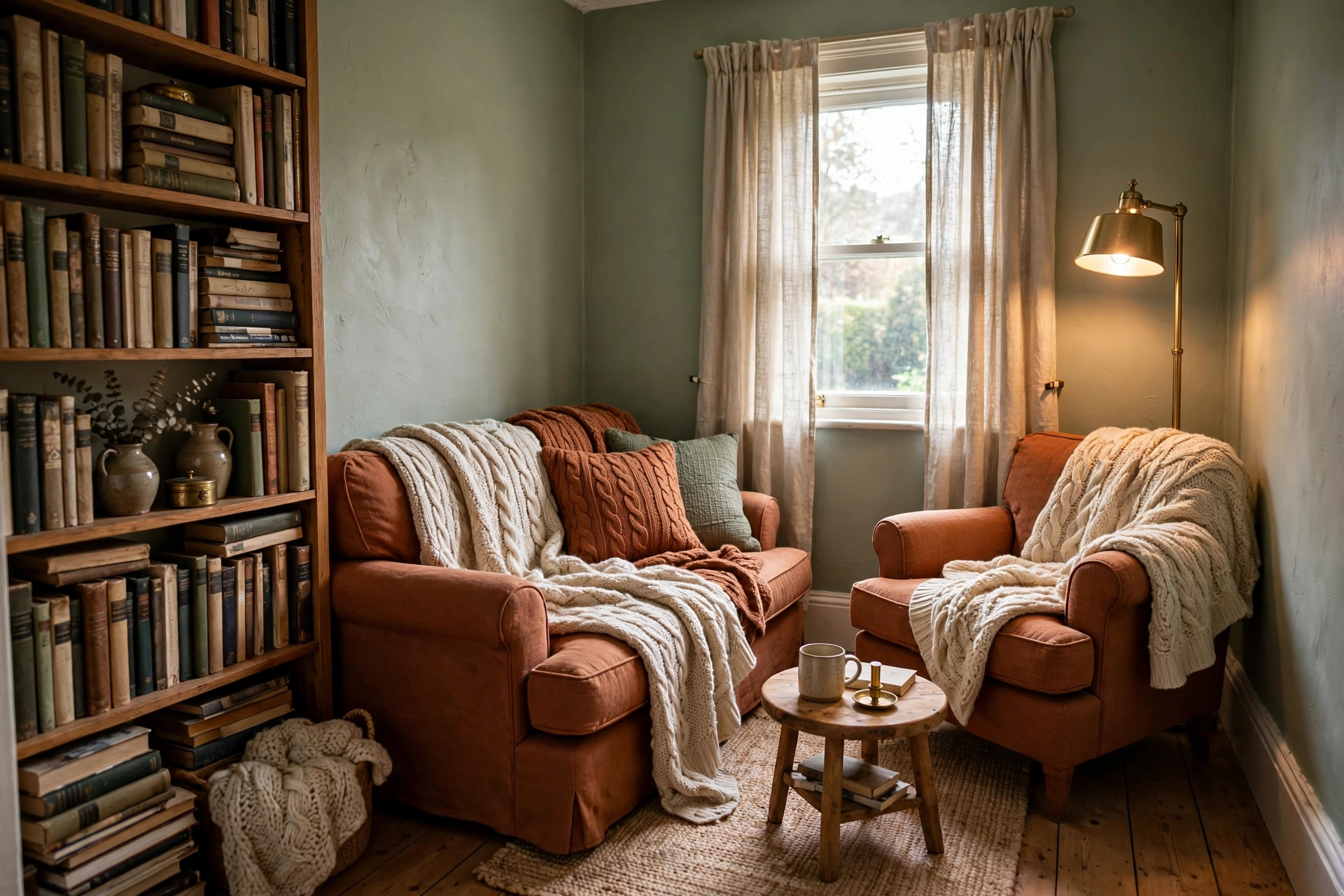
Short answer: The best small snug ideas for UK homes start with layout: float seating to create conversation, keep walkways clear, and choose a two-seater sofa or loveseat over a full three-seater. Layer warm 2700K lighting at two or three heights, use deep, cocooning colours on the walls, and add storage that doubles as furniture. A well-planned snug of just 3m × 3m can feel like the cosiest room in the house.
Every British home has one: the small second sitting room, the box room nobody knew what to do with, the awkward end of an open-plan space. The snug — that cosy, slightly old-fashioned word for a small, comfortable sitting room — has made a proper comeback, and it is no wonder. In an era of draughty open-plan living, a small room you can shut the door on and curl up in feels like luxury.
But small snugs are unforgiving. Get the layout wrong and the room feels cramped; get it right and it becomes everyone’s favourite spot in the house. These 18 ideas cover layout, seating, lighting, colour and storage for UK snugs of every shape.
What Is a Snug, Exactly?
A snug is a small, informal sitting room designed purely for comfort — for reading, chatting, watching films and dozing, rather than for show. Unlike a formal living room, a snug embraces its smallness: low lighting, soft seating arranged close together, books and blankets within arm’s reach. In UK homes the snug is often a converted box room (typically around 2.4m × 2.4m), a former dining room, or a sectioned-off corner of a larger space. The defining feature is not size but intent: it is the room you retreat to.
Layout Rules for a Small Snug
Before you buy a single cushion, get the layout right. These rules work in snugs from a 2.4m box room to a generous 4m square:
1. Measure first, buy second
Measure the room wall to wall, note the door swing and window positions, and sketch it on paper. In a 3m × 3m snug, a standard three-seater sofa (around 200cm wide) plus a coffee table leaves almost no walkway. A 140–160cm loveseat or two armchairs usually fits far better.
2. Float seating away from walls
Pushing everything against the walls is the classic small-room mistake — it creates a dead middle and makes the room feel smaller. Pull seating even 10–15cm off the wall and arrange chairs at a slight angle toward each other. Conversation distance (about 1–1.2m between seats) feels intimate in a snug; more than 2m apart feels disconnected.
3. Keep one clear walkway
You need one unobstructed path through the room, ideally 75–90cm wide. Everything else can be cosy and close. If the door opens into the room, arrange seating so you do not walk straight into the back of a sofa.
4. Zone with a rug
A rug defines the snug as its own room, even inside open-plan space. Choose one large enough that the front legs of all seating sit on it — in a small snug that usually means 160cm × 230cm. A flat-weave or low-pile rug in a warm pattern anchors the layout without adding visual clutter.
Seating That Fits a Small Snug
5. Choose a loveseat over a three-seater
A compact two-seater (140–170cm wide) gives proper sofa comfort without swallowing the room. Dunelm and IKEA both do small sofas designed for flats; look for models with slim arms and raised legs, which let light flow underneath and make the footprint feel lighter.
6. Add one statement armchair
A single armchair angled toward the sofa creates the classic snug conversation shape. Swivel chairs are brilliant in small snugs — one chair can face the sofa for chatting or turn toward the window or TV. A secondhand leather or velvet armchair from Homesense or a charity shop adds character for a fraction of new prices.
7. Build in a reading corner
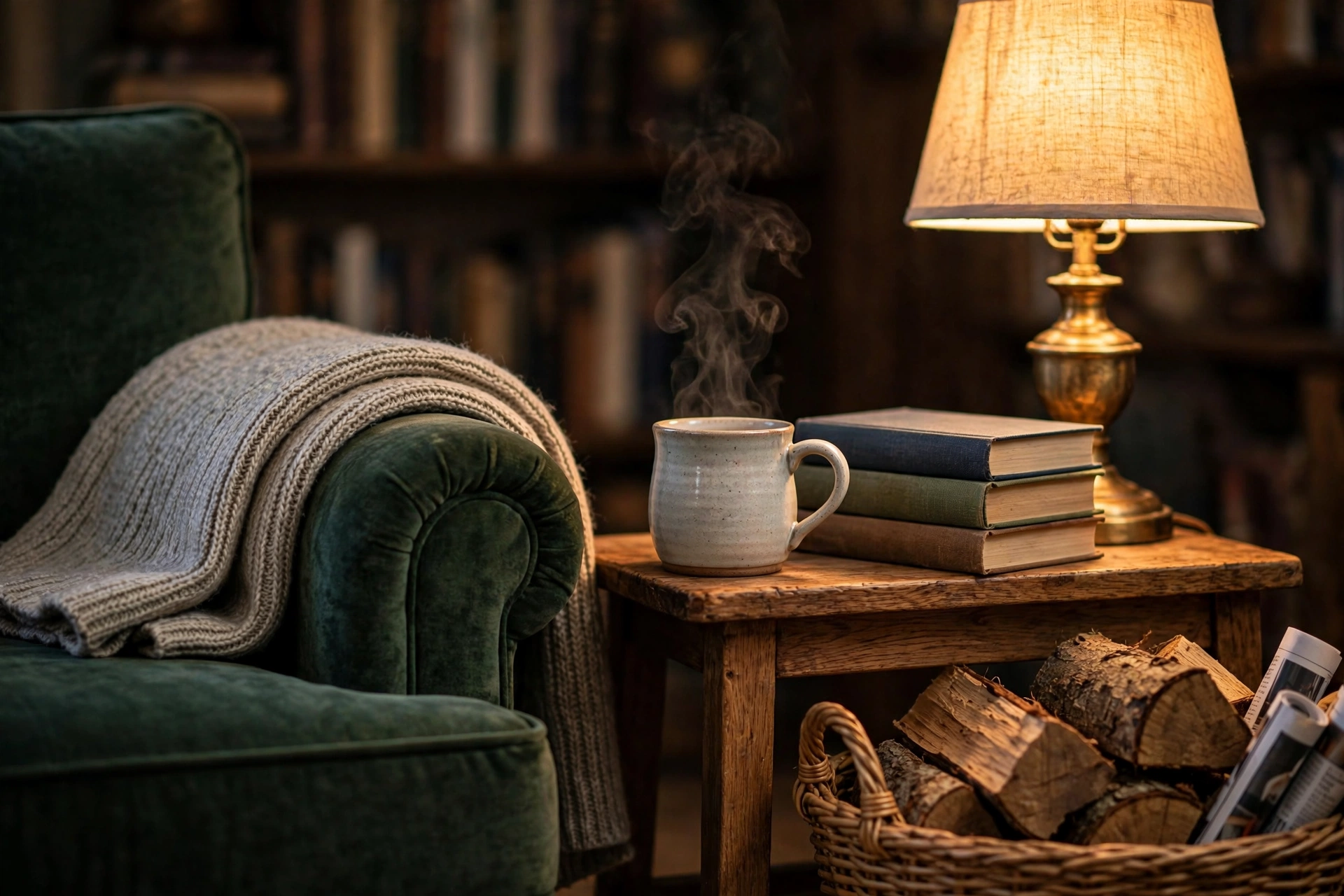
Every snug deserves a reading spot: an armchair, a floor lamp with warm light, and a small side table for tea and books, tucked into a corner or bay window. It needs only about 1m × 1m of floor space. Add a basket for current reads and a throw folded over the chair arm, and it becomes the most fought-over seat in the house.
8. Use an ottoman instead of a coffee table
In a truly small snug, a coffee table eats precious legroom. A storage ottoman does three jobs: footrest, extra seat when friends visit, and hidden storage for blankets and board games. Top it with a tray and it doubles as a coffee table.
Layered Lighting for Long Evenings
9. Light at three heights
The oldest designer trick for small rooms is lighting at multiple levels: something overhead (a pendant or flush fitting), something at eye level (table lamp or wall lights), and something low (floor lamp or candles). Three small warm pools of light make a snug feel deep and layered; one bright ceiling light makes it feel like an interrogation room.
10. Go warm — 2700K everywhere
Every bulb in the snug should be warm white (2700K). It flatters skin tones, deepens wall colours and signals “evening” to your brain. If your snug currently has cool daylight bulbs, swapping them is the single cheapest transformation available — see our warm white vs cool white bulbs guide for exactly what to buy.
11. Add dimmers or smart bulbs
A snug needs to shift from reading-bright to film-night dim. Plug-in dimmers cost under £15 and work with most table and floor lamps; smart bulbs let you dim from the sofa. Being able to lower the lights is what turns a small sitting room into a proper snug.
Colour and Texture: Cosy Without Clutter
12. Embrace deep, cocooning colour
Small rooms do not need pale walls. Deep greens, inky blues, warm terracotta and rich aubergine make a snug feel enveloping and deliberate — pale walls in a small dark room just look dingy. Farrow & Ball Studio Green or Dulux Sapphire Salute are classic snug colours. If you are nervous, paint just the wall behind the sofa.
13. Layer texture, not stuff
Cosiness comes from texture: a chunky knit throw, velvet cushions, a wool rug, linen curtains. The trick is layering three or four textures in a tight colour palette rather than adding more objects. Two cushions per seat is plenty in a small snug; more than that and you spend your evenings moving them.
14. Hang curtains high and wide
Even a small snug window looks grander with curtains hung close to the ceiling and extending 15–20cm beyond the frame on each side. It makes the window — and the room — feel bigger. Thermal-lined curtains in a heavy fabric also keep a small room noticeably warmer, which matters in a room you sit still in. For the full draught-proofing approach, see our guide to making your bedroom cosy for winter — the same principles apply.
Storage That Earns Its Place
15. Use the alcoves
Victorian and Edwardian snugs often have chimney-breast alcoves — the most useful square metres in the house. Fitted or freestanding bookshelves in the alcoves turn dead space into a library wall, which is arguably the defining feature of a proper snug. IKEA BILLY bookcases fit most alcoves and cost a fraction of fitted joinery.
16. Choose furniture with hidden storage
Every piece in a small snug should work twice: ottoman with storage inside, side tables with drawers, a TV unit that hides the board games. Open baskets look lovely but collect dust and visual noise; lidded storage keeps the snug calm.
Four Snug Styles Compared
Not sure which direction to take your snug? Here is how the four most popular UK snug looks compare. Our guide to 10 popular styles of home decor goes deeper into each look:
- Modern country: deep green walls, rust and cream textiles, wooden furniture, bookshelf wall. Warm, timeless, suits period homes. Shop it at Dunelm and Homesense.
- Scandi-minimal: pale wood, off-white walls, one dark accent, sheepskin throws. Calm and airy but less cocooning; best for snugs that double as home offices.
- Dark academia: inky walls, leather armchair, brass lamps, floor-to-ceiling books. Dramatic and enveloping; needs good layered lighting to avoid gloom.
- Retro eclectic: secondhand finds, bold artwork, mixed patterns, vintage lighting. The most personal and budget-friendly; charity shops and Facebook Marketplace are your friends. Our 50 DIY home decor ideas on a budget has more low-cost projects.
17. Bring in Something Alive
A plant softens every snug. Low-light tolerant plants — aspidistra, ZZ plant, snake plant — thrive in the dim corners snugs tend to have, and a trailing pothos on a bookshelf adds life at zero floor cost. If you kill plants, a large dried arrangement in a floor vase gives the same softness with no watering.
18. Finish With Scent and Sound
The final layer of a snug is invisible: a candle or diffuser in amber, cedar or vanilla, and a small Bluetooth speaker tucked on a shelf for background music or radio drama. These are what make guests say “I love this room” without quite knowing why. Keep throws folded and remotes in a tray, and the snug stays inviting instead of sliding into clutter.
A Quotable Truth About Snugs
Here is the thing estate agents will not tell you: the smallest room in the house is often the one buyers remember. A well-dressed snug photographs beautifully and sticks in the memory because it promises something every buyer wants — a place to retreat. Even if you are not selling, designing your snug as the room you would show off first is a reliable guide to getting it right.
Frequently Asked Questions
What size room works as a snug?
Almost any small room works — from a 2.4m × 2.4m box room to a 4m × 4m second sitting room. Below about 2m square you are really making a reading nook rather than a snug; above 5m square, zone the space with a rug so the seating area still feels intimate.
How do I fit a TV in a small snug?
Wall-mount it — a TV on the wall frees the entire floor footprint a stand would take. In a 3m snug, a 43–50 inch TV is the sweet spot; sit 1.5–2m away. Mount it at eye level from your seated position (about 100–110cm from floor to screen centre) to avoid neck strain.
What is the best colour for a small snug?
Deep, warm, cocooning colours: forest green, deep terracotta, inky navy or warm charcoal. They make small rooms feel intentional and enveloping. Pair with warm white 2700K lighting and pale wood or brass accents to keep the depth from turning gloomy.
Can I make a snug in an open-plan living room?
Yes — use a rug to define the zone, float an armchair and small sofa facing each other, and add a floor lamp and bookshelf to create boundaries without walls. A folding screen or open shelving unit makes a convincing room divider while keeping light flowing.
A snug is proof that the best rooms are not the biggest ones. Get the layout right, light it warmly, commit to a cocooning colour and give everything a place to live, and even the smallest box room becomes the heart of the home. If you are carrying the cosy feeling through the rest of the house, our autumn hallway decor ideas start the warmth at the front door.


