Short answer: A small double bedroom works best when the bed goes against the longest wall, storage goes vertical, and every piece of furniture earns its floor space. Choose a 135 cm double bed or a slim ottoman bed, keep the colour palette pale and calm, and use mirrors, layered lighting and under-bed storage to make the room feel larger than it is.
What counts as a small double bedroom in the UK?
A small double bedroom is a room designed to fit a standard double bed, a 135 cm by 190 cm mattress, plus basic furniture, but with little floor space to spare. In many UK homes, particularly Victorian terraces, 1930s semis and new-build flats, a second or third bedroom is a double in name only. Once the bed is in place, there may be less than 60 cm of walking space on each side.
That tight footprint is exactly why layout matters more than shopping. Before buying anything, measure the room properly: wall to wall in both directions, the door swing, the radiator position and the window sill height. A tape measure and a rough sketch on paper will save you from ordering a bed frame that blocks the wardrobe door. As a rule of thumb, leave at least 45 cm of clear space beside the bed so you can get in and out comfortably, and around 60 cm in front of wardrobes and drawers so doors and drawers open fully.
Start with the bed, not the decor
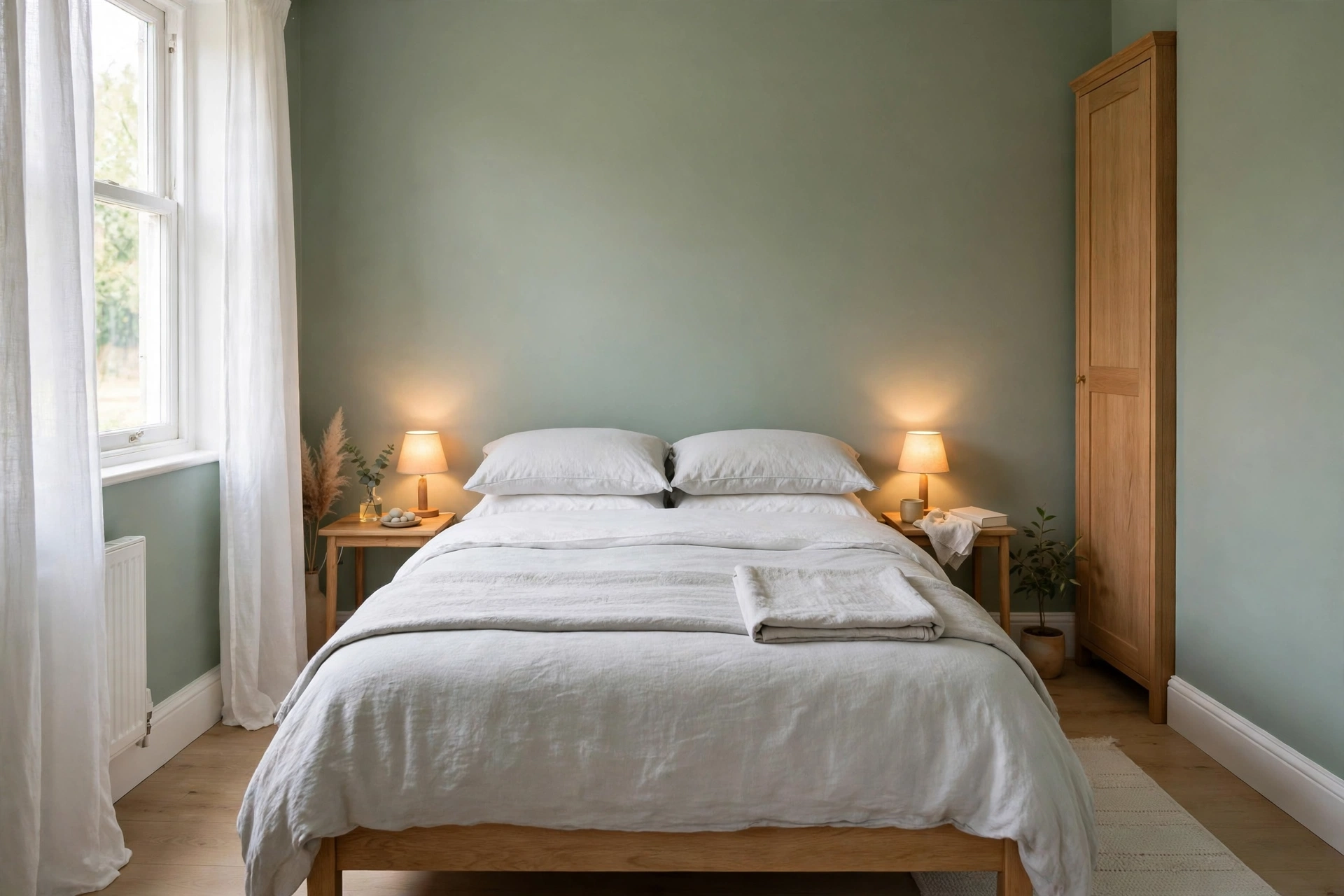
Every small double bedroom layout starts with one decision: where the bed goes. Push the headboard against the longest uninterrupted wall, ideally the wall opposite the door, so the bed becomes the focal point as you walk in. In a narrow room, centring the bed on the wall looks balanced, but pushing it into a corner can free up a surprising amount of floor space and works well in a box room or a guest bedroom.
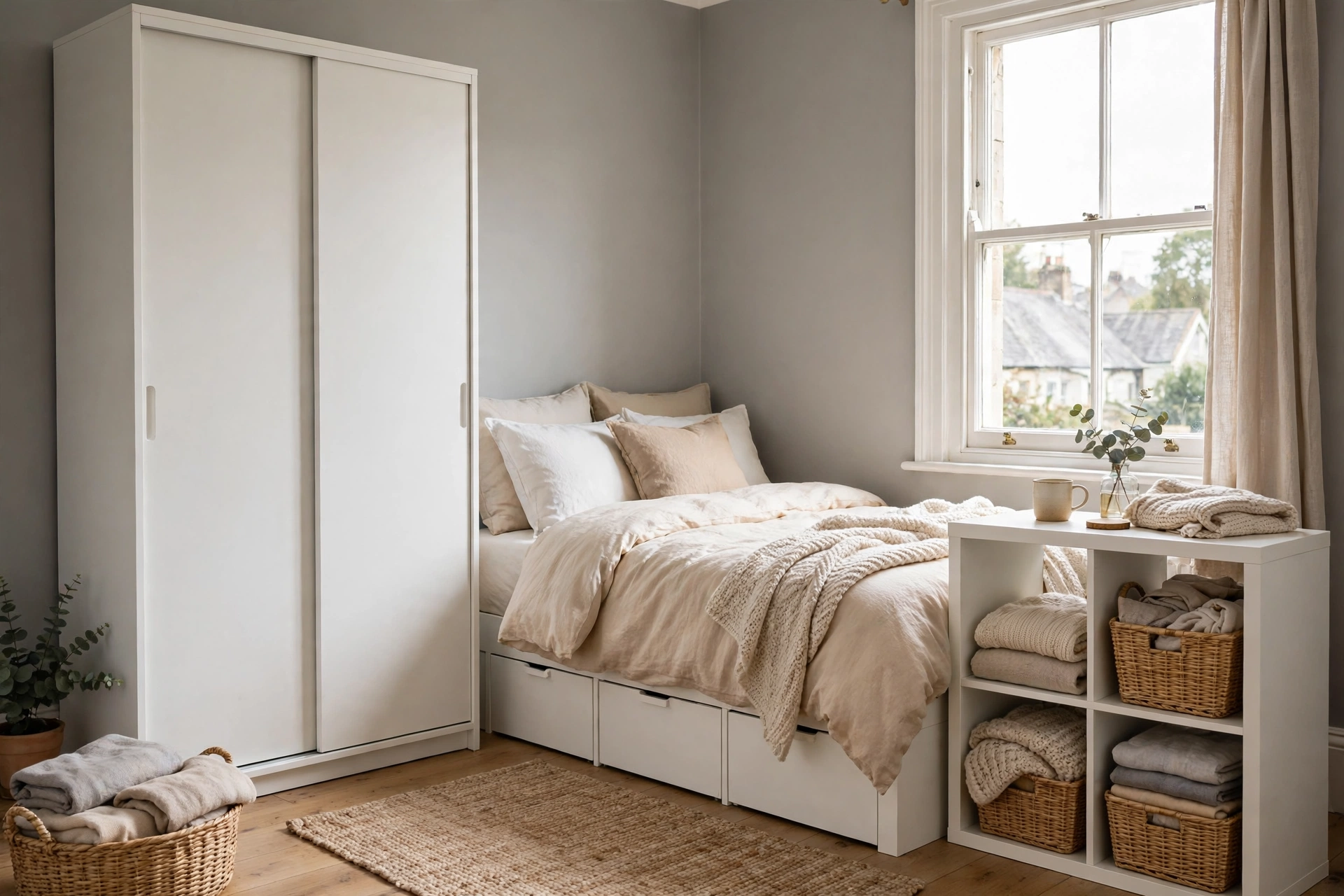
Choose the right bed frame and you gain storage without losing an inch of floor. An ottoman bed lifts on gas struts to reveal the full area beneath the mattress, which is ideal for spare bedding, out-of-season clothes and luggage. A divan with drawers gives similar storage at a lower price, while a slim metal or wooden frame keeps the room feeling light and airy. Avoid bulky sleigh beds and heavy upholstered headboards in a tight room, as they eat into the space visually as well as physically.
One quotable fact worth remembering: a standard UK double bed measures 135 cm wide by 190 cm long, which is 45 cm narrower than a king size. That single difference can be the gap between a room that works and a room you have to shuffle sideways through, so measure before you assume a bigger bed will fit.
Four layouts that work in a small double bedroom
There is no single best layout, only the one that fits your room shape. These four arrangements cover most UK bedrooms:
- The classic centre: bed centred on the longest wall, with a small bedside table on each side. Best for square rooms with a clear wall. It feels calm and symmetrical and gives both sleepers equal access.
- The corner tuck: bed pushed into a corner, headboard on the short wall. Best for narrow rooms and box rooms. It frees up a full wall for a wardrobe or a desk, though one sleeper climbs over the other.
- The window wall: bed under or beside the window, with storage on the opposite wall. Best for rooms with a large window and limited wall space elsewhere. Keep the headboard below the sill so light still reaches the room.
- The split zone: bed on one side, a compact dressing area or desk on the other. Best for rooms that must double as a home office or dressing room. A rug or a change in lighting marks the boundary between the two zones.
Whichever layout you pick, keep the route from the door to the bed clear. If you have to step around furniture to reach the bed, the layout needs another look.
Storage ideas that actually work
Small double bedrooms fail when clutter has nowhere to go, so storage is not an afterthought. It is the whole project. Start by using the height of the room: tall, slim wardrobes make far better use of space than wide, low ones, and a shelf running above the door or above the wardrobe holds boxes you only need twice a year.
Under-bed storage is the easiest win in any small bedroom. Vacuum bags flatten winter duvets and spare bedding into a fraction of their size, and shallow boxes on wheels slide neatly under most divan bases. If your bed sits on a solid frame, a set of matching under-bed boxes keeps the space tidy rather than turning it into a dumping ground.
Make the most of awkward corners and alcoves. A floating shelf in a chimney breast alcove holds books and a lamp without taking any floor space, and a narrow chest of drawers, around 40 cm deep, fits where a standard 50 cm chest will not. In a room with a sloping ceiling or an awkward nook, a made-to-measure wardrobe from a supplier like IKEA, with its PAX system, or a local carpenter, can turn dead space into genuinely useful storage. For more ideas on squeezing storage into tight rooms, see our guide to small bedroom storage ideas UK and these IKEA small bedroom storage hacks.
Colour and light: make the room feel bigger
Pale, warm colours make a small bedroom feel larger, but that does not mean the room has to be plain white. Soft off-whites, pale grey, warm greige and muted sage all reflect light and keep the walls feeling far apart. If you love colour, use it on one wall behind the bed, or through bedding and cushions, so the room keeps its calm base.
Paint the ceiling the same colour as the walls, or one shade lighter, and the ceiling line blurs, which makes the room feel taller. Glossy finishes reflect more light than matt, so a satin finish on woodwork and a light-reflecting paint on the walls can add a gentle lift. Farrow & Ball and Dulux both make pale shades designed for small, dark rooms, and it is worth testing a sample pot on the wall before committing to a full tin.
Light matters as much as colour. A single ceiling pendant leaves dark corners, so layer the light: a warm white ceiling light for general use, a wall light or clip-on reading light beside the bed, and a small lamp on the chest of drawers. Mirrors double the effect of whatever light you have, so hang a large mirror opposite the window or above the chest of drawers to bounce daylight around the room. Sheer voile curtains or light linen panels let daylight in while keeping privacy, and they look far lighter than heavy blackout curtains on a small window.
Furniture that earns its floor space
In a small double bedroom, every piece of furniture should do at least two jobs. A bedside table with a drawer and a shelf holds a book, a phone charger and a glass of water without needing a second surface. A storage ottoman at the foot of the bed gives you somewhere to sit while you put your shoes on and hides spare blankets inside. A wall-mounted shelf replaces a bedside table entirely in the tightest rooms.
Choose furniture with legs rather than solid bases. A chest of drawers or a bedside table on slim legs shows more floor beneath it, which tricks the eye into reading the room as larger. The same logic applies to the bed: a frame on legs feels lighter than a solid divan base, even though the divan stores more. If storage is the priority, pick the divan; if the feeling of space matters more, pick the legged frame.
Keep the scale right. A small double bedroom does not need a full dressing table, a wide chest and a tallboy. One good wardrobe, one chest of drawers and two bedside tables are usually enough. Measure the footprint of each piece before you buy, and leave a clear 60 cm gap in front of drawers and wardrobe doors. Retailers like Dunelm, IKEA, B&M and The Range all stock compact ranges sized for UK box rooms and small doubles, so shop the measurements, not the display photos.
Styling touches that finish the room
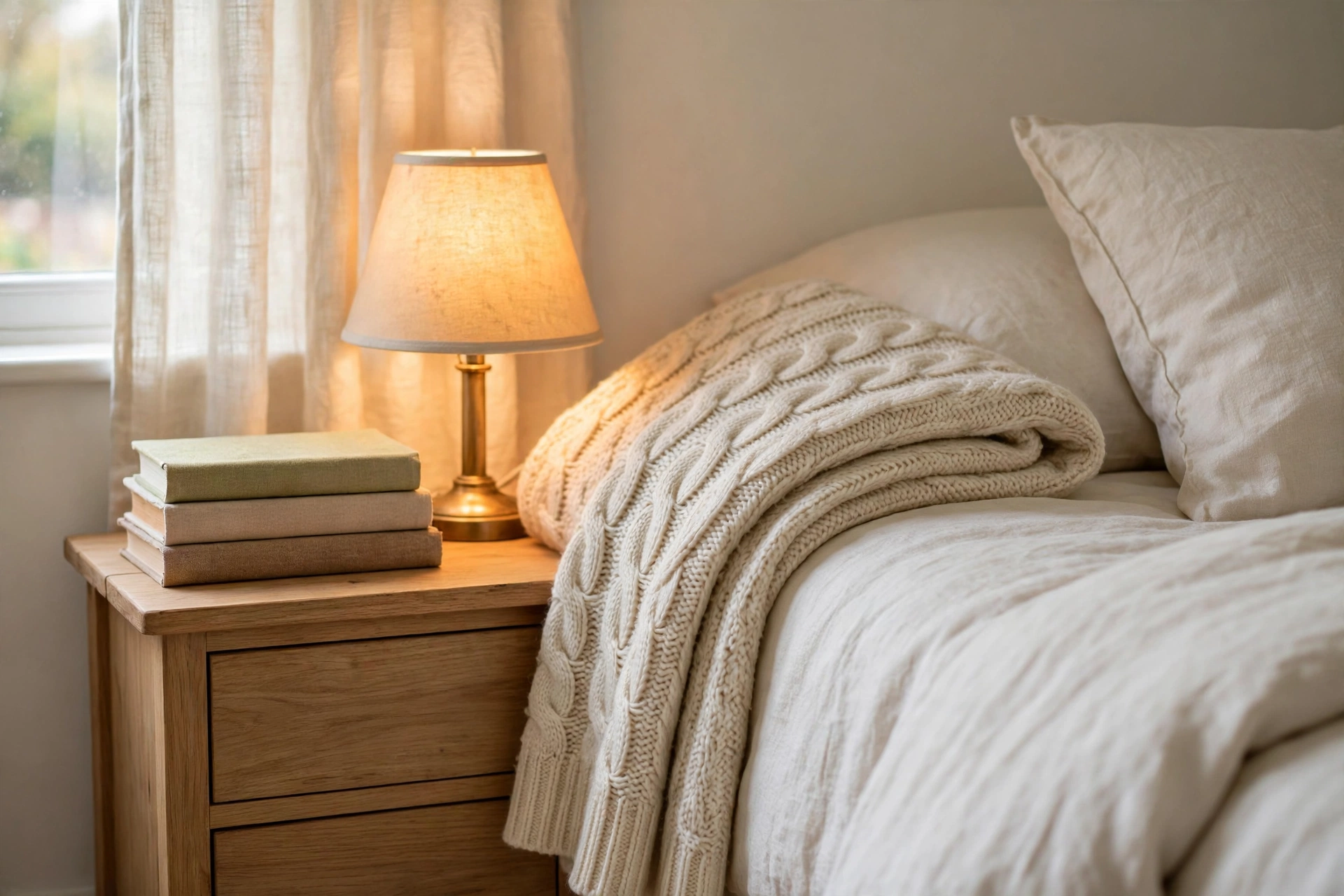
Once the layout and storage are sorted, styling is what makes the room feel like a bedroom rather than a storage unit. Keep bedding simple and pale, then add texture rather than pattern: a knitted throw, a linen cushion, a soft rug beside the bed. Two or three textures are enough; more than that and the room starts to look busy.
A rug does more than warm cold feet. A rug that runs under the front two-thirds of the bed and extends about 45 cm on each side ties the bed to the room and makes the floor feel generous.
Hang one piece of art above the bed, or a small pair of framed prints, and keep the rest of the walls clear. A single picture at eye level gives the room a focal point without cluttering it. If you want more personality, add it through a favourite cushion, a scented candle or a small plant on the windowsill rather than through more furniture. For ideas on the smaller details, our guide to how to style bedside tables UK shows how to finish the space beside the bed without overfilling it.
What to avoid in a small double bedroom
A few common mistakes make small bedrooms feel smaller than they are. Avoid dark, heavy curtains that block the window, oversized wardrobes that dominate the wall, and more than one pattern fighting for attention. Skip the extra chair or the second chest of drawers unless you genuinely use it daily, because unused furniture is just storage for clutter.
Resist the temptation to push every piece of furniture flat against the wall. A bedside table pulled a few centimetres out, or a chest of drawers angled into an alcove, often works better than a rigid line of furniture around the edge of the room. And keep the floor visible wherever you can: clear floor space is the single strongest signal that a room is bigger than it looks.
Frequently Asked Questions
What size is a small double bedroom in the UK?
A small double bedroom is usually around 9 to 11 square metres, just large enough for a standard 135 cm by 190 cm double bed plus a wardrobe and a chest of drawers. In older UK homes the room may be smaller still, which is why measuring before buying furniture is essential.
Can you fit a double bed and a wardrobe in a small bedroom?
Yes, in most cases. Put the bed against the longest wall, choose a slim wardrobe around 50 cm deep, and leave at least 60 cm of clear space in front of the wardrobe doors. A sliding-door or mirrored wardrobe saves the swing space a hinged door needs.
How do I make a small double bedroom look bigger?
Use pale colours on the walls and ceiling, hang a large mirror opposite the window, layer warm white lighting, and choose furniture on legs so more floor is visible. Keep the floor as clear as possible and store clutter out of sight in ottoman or under-bed storage.
What is the best bed for a small double bedroom?
An ottoman bed is the best all-rounder because it gives you the full area under the mattress as hidden storage. A divan with drawers is a cheaper alternative, while a slim wooden or metal frame suits rooms where the feeling of space matters more than storage.