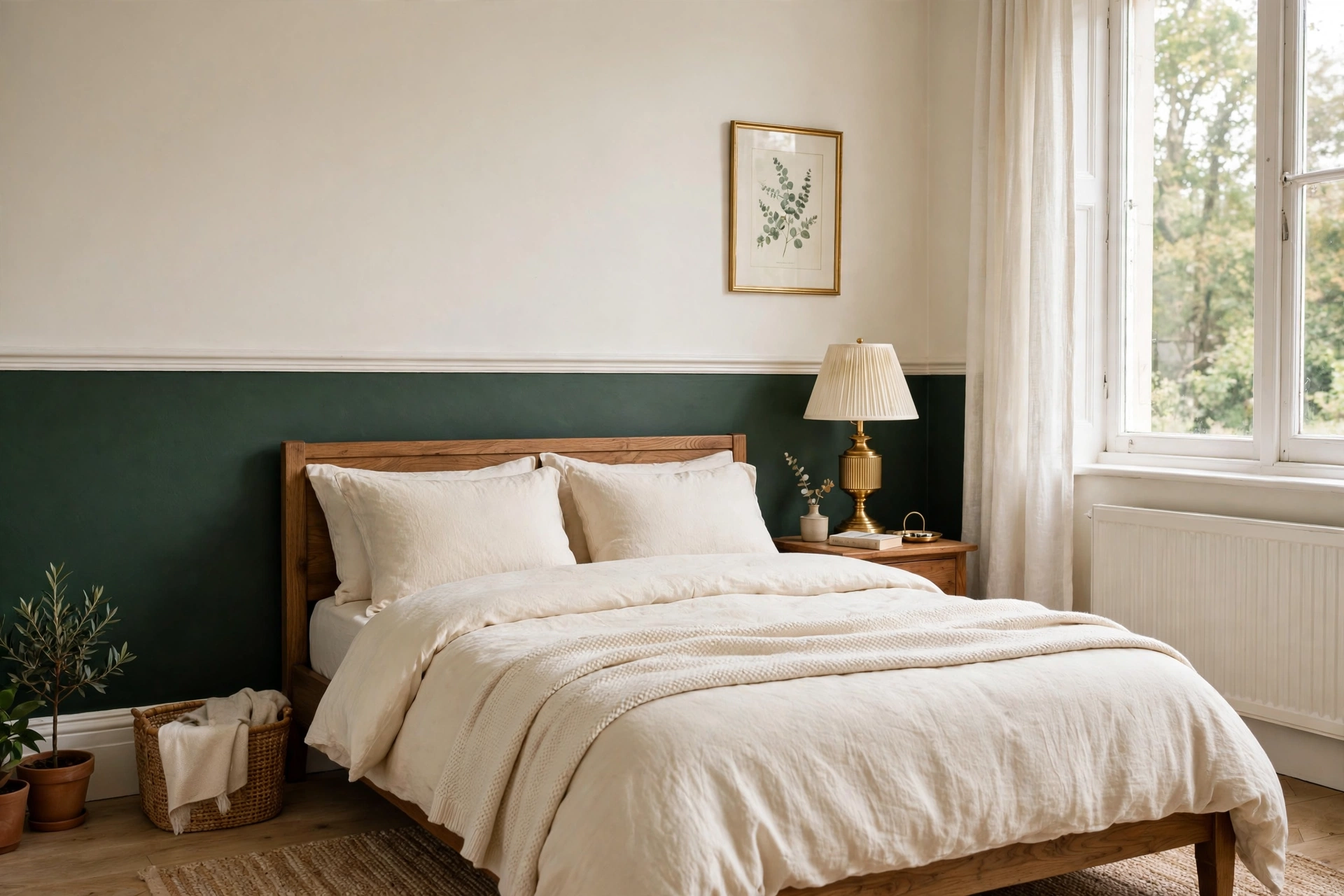
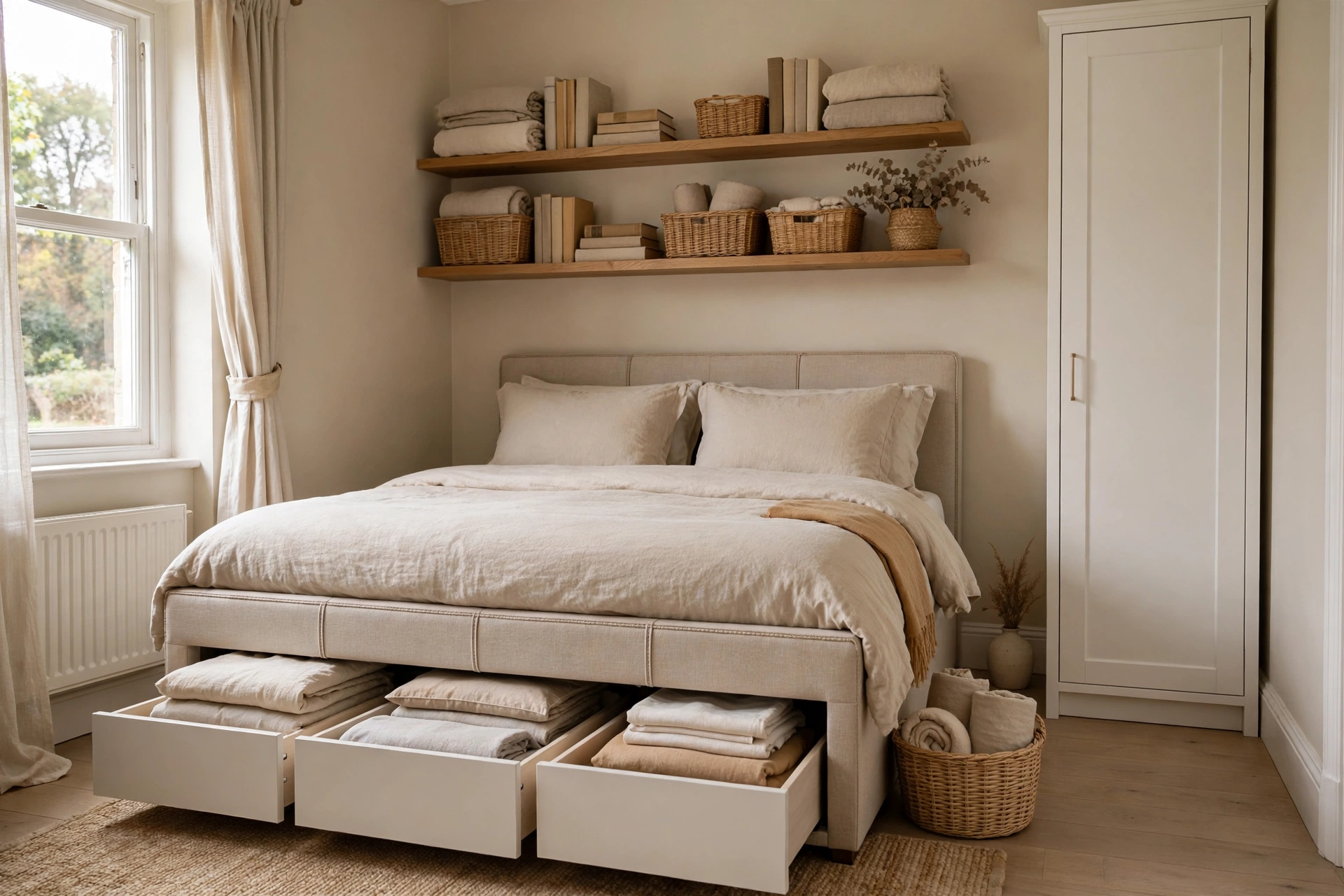
Short answer: The best small bedroom storage ideas UK homeowners rely on use three tricks: the under-bed zone (divan drawers, ottoman beds, or slim rolling boxes), vertical space (floating shelves, over-door hooks, tall wardrobes), and furniture that hides storage (storage ottomans, beds with headboards that open, bedside tables with drawers). Measure your room first, then spend money only on pieces that do double duty.
Small bedrooms are a British rite of passage. From box rooms in Victorian terraces to single bedrooms in new-build flats, the average UK spare bedroom barely fits a double bed, let alone a wardrobe, a chest of drawers and anywhere to put the laundry basket. The result is clutter that makes an already small room feel smaller — and a constant, low-level battle with storage.
The good news: a small bedroom does not need more square metres, it needs smarter square metres. The 15 ideas below use the storage zones most bedrooms waste entirely, with options for owners and renters, and for budgets from under £20 to full furniture swaps.
What Is Small Bedroom Storage?
Small bedroom storage is the practice of fitting a full bedroom’s worth of belongings into a room of roughly 10m² or less by using three zones most people ignore: the volume under the bed, the walls and doors (vertical space), and the insides of furniture that looks like furniture. In UK homes this matters more than most people realise — new British homes are among the smallest in Western Europe, according to research by the Royal Institute of British Architects, which is why clever storage is practically a national skill. The techniques here work in box rooms, single bedrooms, flat-share rooms and guest rooms.
1. Start With a 5-Minute Storage Audit
Before buying anything, audit what you actually need to store. Empty the room mentally and list it: everyday clothes, seasonal clothes, bedding, shoes, books, chargers and tech, laundry, and the awkward extras (suitcases, wrapping paper, the box of cables nobody dares throw away). Group them by how often you touch them — daily, weekly, seasonal, rarely. Daily items earn the easiest access (bedside drawer, wardrobe rail); rare items earn the hardest-to-reach spots (top of wardrobe, deep under-bed). This single exercise stops the classic mistake of buying storage that fits your room but not your stuff.
Measure while you are at it: bed frame height from floor (decides whether under-bed boxes fit), wall lengths, and the space around the bed. Most under-bed storage boxes need 15–20cm of clearance. Write the numbers down — guessing in the shop is how people end up with drawers that do not open.
2. Under the Bed: Your Biggest Hidden Storage Zone
The space under a bed is roughly the size of a wardrobe lying down, and most bedrooms leave it empty or fill it with dust. Claim it properly:
- Divan drawer beds: the classic UK solution. Two or four built-in drawers, no wasted gap, and everything hidden. If you are buying new, a drawer divan beats a frame on legs for small rooms every time.
- Ottoman beds: the whole mattress lifts on gas struts, opening one huge storage cavity. Ideal for bedding, suitcases and seasonal clothes. Worth it if you can reach the middle of the bed to lift it.
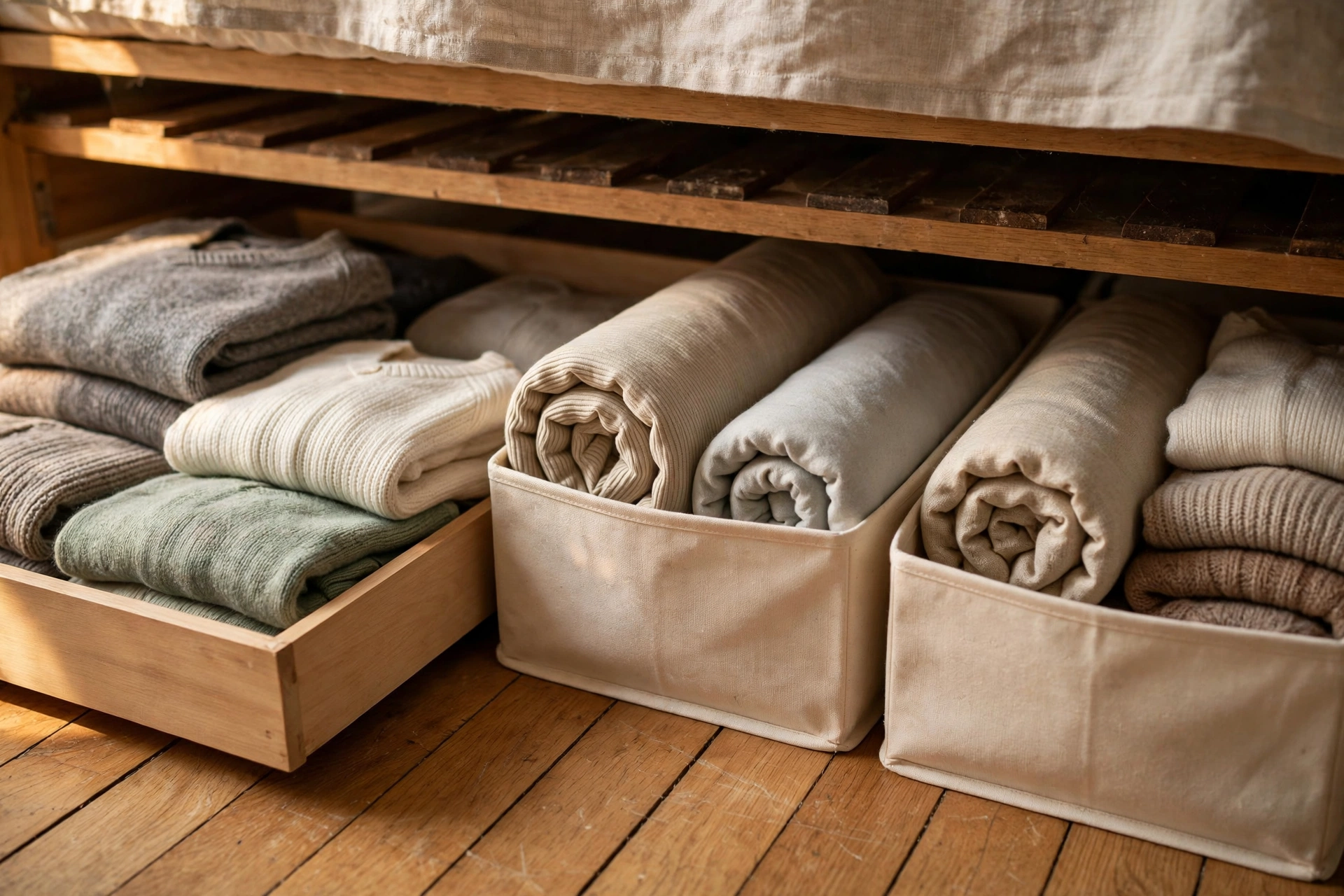
- Slim rolling boxes: for existing bed frames, low-profile wheeled boxes (look for 18–25cm depth at IKEA, The Range or Dunelm) slide under and out. Choose lidded ones — they stay dust-free and stack neatly.
- Vacuum bags for seasonal clothes: the winter duvet and heavy coats compress to a fraction of their size and live under the bed all summer.
One caution: do not block the under-bed area entirely if your room is prone to damp — leave a small air gap, especially against exterior walls, and avoid storing anything directly on floorboards in ground-floor rooms. For styling ideas once the clutter is hidden, see our cosy winter bedroom ideas.
3. Go Vertical: Walls, Doors and Corners
Small bedrooms run out of floor space, not wall space. Work upwards:
- Floating shelves above the bed: two shelves above the headboard hold books, alarm clocks and decor — freeing the bedside tables or replacing them entirely. Fit them at picture height so they read as styling, not storage.
- Tall, narrow wardrobes: a 50cm-wide wardrobe that reaches the ceiling stores more than a wide low one and steals less floor. IKEA PAX and similar systems let you go full ceiling height with doors that suit the room.
- Over-door hooks and organisers: the back of the bedroom door holds tomorrow’s outfit, dressing gowns, bags and belts — zero floor space used.
- Corner shelves and ladder shelves: corners are dead space in most bedrooms; a narrow ladder shelf or two corner shelves turn them into display and storage.
- Picture ledges instead of deep shelves: a 10cm-deep ledge holds framed prints, small plants and candles above a desk or dresser without the bulk of a bookcase.
4. Furniture That Hides Storage
In a small bedroom, every piece of furniture should earn its floor space twice. The best double-duty pieces:
- Storage ottoman or blanket box at the foot of the bed: holds spare bedding and doubles as a seat for getting dressed. Upholstered ones from Dunelm or The Range look like proper furniture, not a compromise.
- Bedside tables with drawers: skip the trendy open nightstands in small rooms — a drawer each side swallows chargers, medication, glasses and books.
- Storage headboards: headboards with built-in shelves or lift-up compartments put books and alarm clocks within reach with no nightstand at all.
- A desk-dresser hybrid: if you work from the bedroom, a narrow console with drawers serves as both dressing table and desk — one footprint, two jobs.
- Nesting or folding pieces: a folding luggage rack lives flat against the wall and opens for guests; nesting side tables tuck away when not needed.
This double-duty thinking is the same principle behind our small snug ideas — hide the clutter, show the calm.
5. Wardrobe and Drawer Organisation
Adding storage is only half the job — the inside of your wardrobe decides how much it actually holds. Slim velvet hangers take up half the rail space of chunky wooden ones. A second tension rail doubles hanging space for shirts. Drawer dividers, shelf cubbies and hanging shoe organisers turn one deep shelf into six usable compartments. Decant small items (socks, underwear, accessories) into boxes or drawer inserts so nothing vanishes into the back. The goal is simple: every item visible, every item reachable, nothing stacked more than two deep.
6. Renter-Friendly Storage (No Drilling Required)
Renting does not mean living out of piles. Landlord-safe options that leave no marks:
- Freestanding garment rails: a sturdy double rail (IKEA MULIG or similar) adds hanging space with zero fixings — style it neatly and it looks intentional.
- Over-door and adhesive hooks: command-style hooks hold bags, robes and jewellery; over-door racks need no screws at all.
- Under-bed boxes and ottomans: pure furniture, no fixings, fully portable to the next flat.
- Stackable fabric cubes: canvas storage cubes from B&M or Homesense stack into open shelving or inside wardrobes and move with you.
- A tall narrow bookcase: freestanding, holds books plus baskets, and doubles as a room divider in studio flats.
7. Storage Ideas by Budget
Under £20: under-bed boxes, over-door hooks, drawer dividers, vacuum storage bags, adhesive hooks.
£20–£100: floating shelves, a storage ottoman, slim rolling drawers, a garment rail, fabric cube sets, a tall narrow bookcase from the second-hand market.
£100–£400: a drawer divan base, a wardrobe with full-height doors, a storage headboard, a proper ottoman bed frame.
Worth the splurge: the bed itself. You spend a third of your life in it and it occupies the most floor space — a bed with serious built-in storage is the single highest-impact purchase in a small bedroom. Buy second-hand wardrobes and shelves; buy the bed new.
For more budget-friendly finds, our B&M home decor finds are full of cheap storage pieces that look far more expensive than they are — and our cosy reading corner ideas show how to carve a quiet nook out of a small room without losing storage.
8. What to Avoid in Small Bedrooms
- Open storage everywhere: a few open shelves look styled; all-open storage looks cluttered. Keep most things behind doors and drawers.
- Furniture that blocks the door swing: measure the arc of the door before placing wardrobes and drawers — fighting the door every morning gets old fast.
- Dark, heavy pieces in bulk: one dark wardrobe is fine; a room of dark wood shrinks visually. Mix in light finishes and mirrors.
- Storing “someday” items: if it has not been used in a year, it does not earn space in a 10m² bedroom. Charity shops and loft space exist for a reason.
- Ignoring the top of the wardrobe: it is prime real estate for labelled boxes of seasonal and rarely-used items — just keep a step stool handy.
Frequently Asked Questions
How can I add storage to a small bedroom without a wardrobe?
Use a freestanding garment rail for hanging clothes, under-bed boxes for folded items, a tall narrow bookcase with fabric cubes for the rest, and over-door hooks for bags and robes. This combination replaces a wardrobe with zero drilling and works in rented rooms.
What is the best bed for a small bedroom with lots of storage?
An ottoman bed gives the most storage volume — the entire under-mattress area opens on gas struts. A drawer divan is the best everyday option, with two to four easy-access drawers and no wasted gap around the base.
How do I organise a small bedroom on a budget?
Start with under-bed boxes, over-door hooks and drawer dividers (all under £20 each), add vacuum bags for seasonal clothes, and buy one larger piece — a storage ottoman or tall bookcase — second-hand. Declutter first; organisation only works on stuff you actually keep.
Where should I put shoes in a small bedroom?
Use the inside of the wardrobe door (hanging shoe organiser), a slim pull-out shoe rack beside the bed, or lidded boxes under the bed. Keep only the current week’s shoes out — the rest live in boxes, labelled, out of sight.