Short answer: A bedroom feature wall is one wall, usually behind the bed, given a bolder colour, texture or material than the rest of the room. In UK homes the easiest wins are a deep paint colour, slim wood slat panelling, or a patterned wallpaper, each costing from around £30 to £250 for a standard double bedroom wall, and all achievable in a single weekend.
What Is a Bedroom Feature Wall?
A bedroom feature wall, also called an accent wall, is a single wall decorated differently from the other three to create a focal point. In most UK bedrooms it sits behind the headboard, because that is where the eye lands first when you walk in. The other walls stay pale and calm, which makes the feature wall feel deliberate rather than busy. The effect works in every kind of British home, from a Victorian terrace with high ceilings and picture rails to a new build flat with plain plasterboard walls and a box room that needs character.
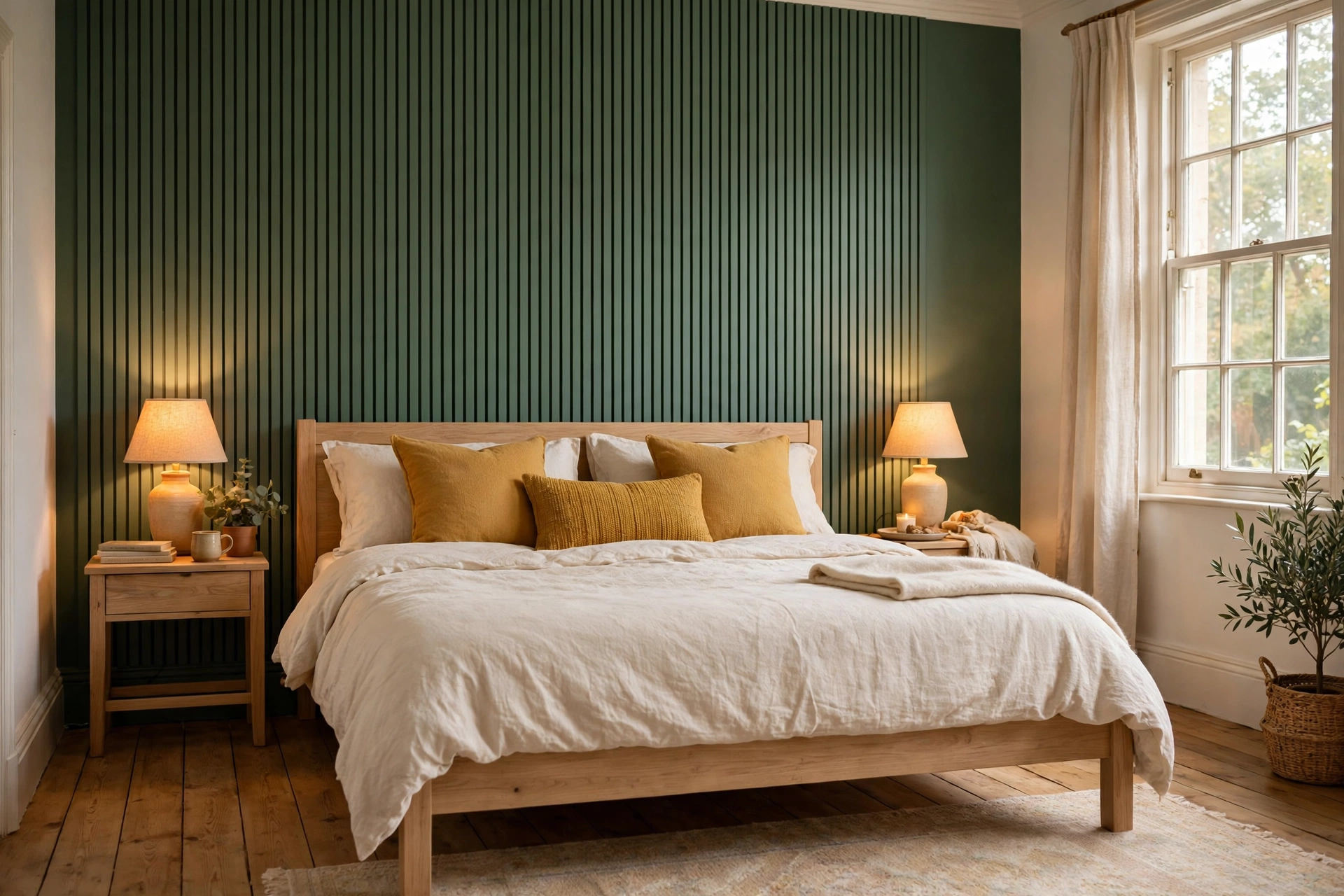
The idea is simple: one confident choice does the decorating work for the whole room. A deep green wall behind a light oak bed, a row of timber slats, or a soft botanical wallpaper can make a plain bedroom feel finished without new furniture.
15 Bedroom Feature Wall Ideas UK
These ideas are grouped by finish, from the cheapest and quickest to the most dramatic. Every one suits a typical UK bedroom, and most work in rented homes too if you choose a removable option.
1. Paint It a Deep, Cosy Colour
The classic feature wall, and still the best value. Deep green, inky navy, warm charcoal or a rich plum instantly adds depth behind the bed. Farrow & Ball and Dulux both sell rich, flat matt emulsion shades that suit bedrooms, and a single 2.5 litre tin usually covers a standard wall in two coats. Keep the other walls warm white so the dark wall feels cosy, not gloomy. For more paint inspiration, see our dark green living room ideas UK, as the same colours translate beautifully to bedrooms.
2. Try Colour Drenching
Colour drenching means painting the feature wall, skirting boards, and even the ceiling in the same shade, so the wall melts into the room. In a small UK bedroom it actually makes the space feel bigger, because there are no hard edges breaking the room up. A mid-tone sage green or dusty blue works best if you are nervous about going dark.
3. Add Slim Wood Slat Panelling
Vertical timber slats are the most popular feature wall in UK homes right now. Thin oak or walnut battens fixed to a painted backing board add warmth and texture, and they hide uneven plaster, a blessing in older terraces. Ready-made slat panels from B&Q, Wickes or IKEA cost roughly £40 to £120 per panel, and a standard wall needs two or three. Fix them with grab adhesive and a few screws for a weekend job.
4. Classic Shaker-Style Panelling
Rectangular MDF frames painted the same colour as the wall give a calm, period feel that suits Victorian and Edwardian homes. Paint the panelling and the wall one colour, deep grey-green or warm navy, for a tailored look, or paint the frames a shade darker than the wall for subtle definition. It is the most forgiving DIY panelling style, because small measuring errors disappear under paint.
5. Go Bold with Patterned Wallpaper
One wall of wallpaper is the fastest way to add pattern without overwhelming a small bedroom. Botanical prints, soft geometrics and delicate stripes all work, and paste-the-wall papers from Graham & Brown or Dunelm make hanging far easier than traditional paste-the-paper. A single roll, around £25 to £45, often covers the wall behind a double bed. Pair a busy paper with plain bedding in one of its colours.
6. Create a Mural Wall
A large-scale mural, misty woodland, soft mountains, or a watercolour landscape, turns the wall behind the bed into a piece of art. Mural wallpaper comes in panels sized to your wall, so measure carefully and order a little extra. Keep the rest of the room quiet: plain linen bedding, light wood and one or two colours picked from the mural.
7. Use a Two-Tone Split
Paint the lower two-thirds of the wall one colour and the top third another, split by a picture rail or a painted line. A deep colour below and pale above suits rooms with low ceilings, because the pale band lifts the ceiling visually. Our two tone wall ideas for bedrooms UK guide shows exactly where to place the split for different ceiling heights.
8. Add a Limewash Finish
Limewash paint gives a soft, cloudy, chalky texture that flat emulsion cannot match. It suits calm, relaxed bedrooms and looks wonderful in natural light. Apply it in loose, criss-cross brush strokes over two coats, and choose a warm neutral, plaster pink, soft clay or pale sage, for a gentle, lived-in feel.
9. Fit a Fabric or Upholstered Panel
A padded, upholstered panel behind the bed adds softness and soundproofing, which helps in flats with thin walls. Use a plain linen or velvet in a colour that echoes your bedding, fixed as one large panel or a grid of squares. It doubles as a comfortable headboard, so it is ideal if your bed has none of its own.
10. Try a Brick or Stone Effect
Exposed brick suits industrial-style bedrooms, but real brick is rare in UK homes. Brick-slip tiles or a realistic brick-effect wallpaper give the same look for a fraction of the cost and mess. Keep it to the wall behind the bed and balance it with soft textures, a wool throw, linen bedding and warm lighting, so the room stays cosy.
11. Hang a Gallery Over a Painted Wall
Sometimes the feature is not the wall itself but what hangs on it. Paint the wall a soft, muted colour, then hang a tight grid of framed prints or family photos above the bed. Matching frames and even spacing matter more than the pictures themselves. This is the best option for renters, because the paint is easy to restore and the frames come down with a few picture hooks.
12. Add a Picture Ledge and Lighting
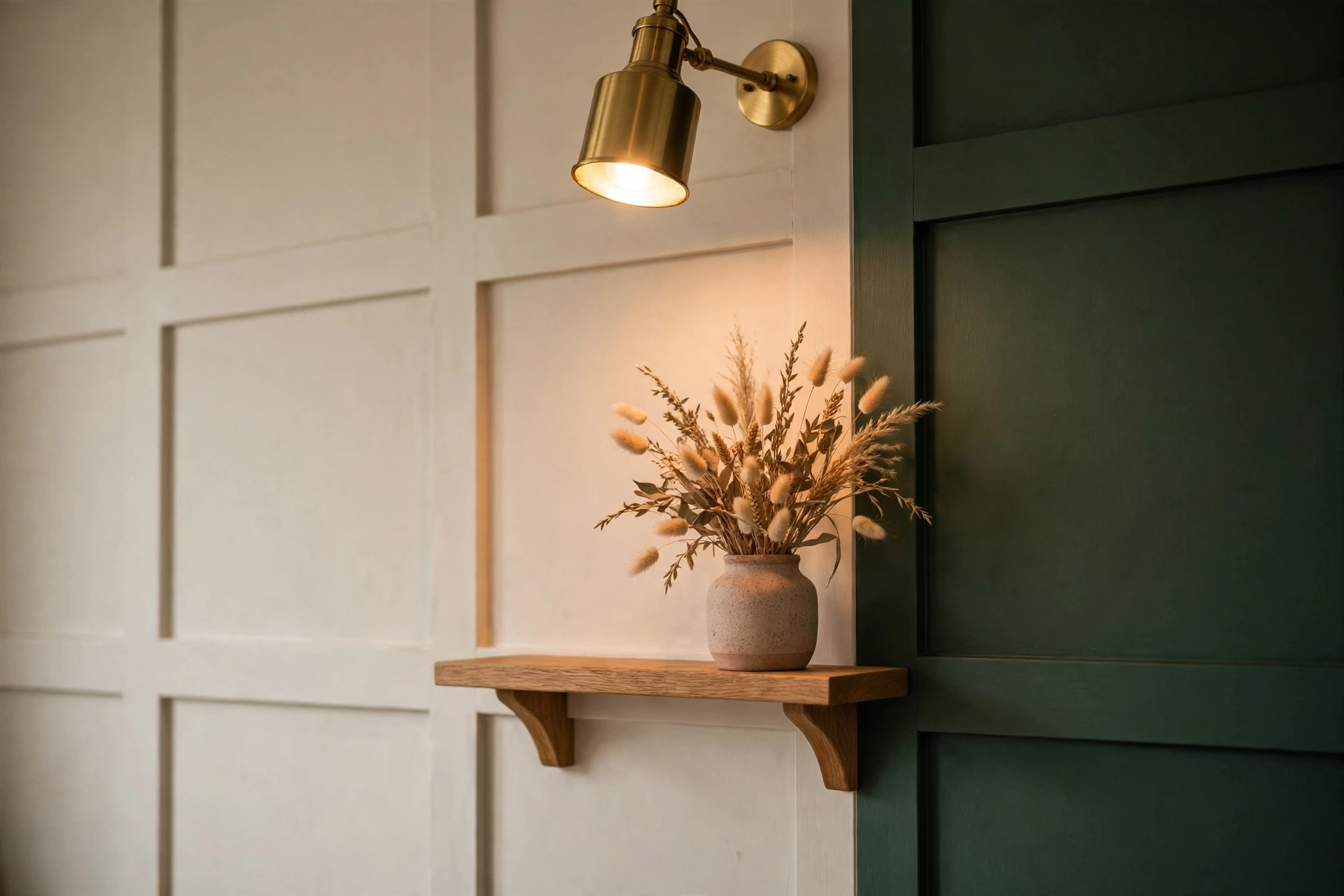
A slim oak picture ledge with a brass picture light above it turns a plain wall into a display. Lean two or three framed prints on the ledge, add a small vase, and let the warm light wash down the wall in the evening. It costs very little, needs only two screws, and you can swap the art whenever you fancy a change.
13. Use Peel-and-Stick Wallpaper in a Rental
Removable wallpaper is the renter-friendly feature wall. Modern peel-and-stick papers from Dunelm, The Range or Homesense come off cleanly and leave no marks, so you can enjoy a bold pattern without risking your deposit. Choose a design with a small repeat so the pattern lines up easily, and always test a corner first.
14. Frame the Bed with an Arch
Paint a soft arch shape on the wall behind the bed, a rounded-top rectangle in a colour one or two shades deeper than the wall. It frames the headboard beautifully, costs nothing but a small tin of paint and a roll of masking tape, and suits boho and modern bedrooms alike. Mark the arch with a pencil and string before you paint.
15. Go Dark and Moody with Black
A near-black wall, soft black, charcoal or very deep plum, behind the bed creates a cocooning, hotel-like feel. It works best in bedrooms that get good daylight, and it makes brass lamps, light wood and cream bedding glow against it. If black feels too much, try it first on the wall behind the bed only, and keep the ceiling white.
Feature Wall Finishes Compared
Choosing a finish is easier when you can see cost, effort and staying power side by side. Here is how the most popular UK bedroom feature wall options compare for a standard wall behind a double bed, roughly 3.5 metres wide:
- Paint: £30 to £60, one day, easiest to change, endless colours.
- Peel-and-stick wallpaper: £40 to £90, one afternoon, renter-friendly, removes cleanly.
- Patterned wallpaper: £50 to £120, one day, huge pattern choice, lasts for years.
- Wood slat panelling: £120 to £250, one weekend, warm and textured, hides uneven walls.
- Shaker panelling: £80 to £180, one weekend, classic period look, needs careful measuring.
- Mural wallpaper: £100 to £220, one day, most dramatic, needs exact measurements.
- Upholstered panel: £150 to £300, one day, soft and sound-absorbing, doubles as a headboard.
Paint wins on price and flexibility, panelling wins on texture and durability, and wallpaper wins on pattern. Most UK bedrooms suit any of the three, so choose the finish you will still love in five years rather than the one that is trending this month.
How Much Does a Bedroom Feature Wall Cost in the UK?
A painted feature wall is the cheapest option at roughly £30 to £60 for paint, brushes and masking tape. A wallpapered wall costs £50 to £120 including paste and tools, while wood slat panelling runs £120 to £250 for a standard double bedroom wall. Hiring a decorator to paint the wall adds around £100 to £180 for a day’s labour, and a carpenter fitting panelling typically charges £200 to £400. Whatever your budget, measure the wall first: multiply its width by its height to get the area in square metres, then check coverage on the tin or roll.
Here is a fact worth remembering: painting a single feature wall uses roughly a quarter of the paint needed for a whole bedroom, yet it delivers most of the visual change. That is why decorators call it the highest-impact, lowest-cost update in a bedroom.
How to Choose the Right Wall
The wall behind the bed is the natural choice in almost every UK bedroom, because the bed is the largest piece of furniture and the wall frames it. If your bed sits under a window, choose the longest clear wall instead, as a feature wall interrupted by a door or wardrobe loses its impact. Avoid walls with radiators if you can, because heat can lift wallpaper edges and dry out paint over time.
Light matters too. A north-facing bedroom gets cool, flat light, so warm colours, terracotta, warm green, deep mustard, stop it feeling cold. A south-facing room can take cooler shades such as slate blue or grey-green. If you are unsure, paint a large test patch and live with it for a few days before committing.
Frequently Asked Questions
Which wall should be the feature wall in a bedroom?
The wall behind the bed is the best choice in almost every bedroom, because the bed frames it and your eye lands there first. If the bed sits under a window, pick the longest clear wall instead, and avoid walls with doors, wardrobes or radiators, which break up the effect.
What is the best colour for a bedroom feature wall?
Deep green, navy, charcoal and warm plum are the most popular UK choices because they feel cosy without shrinking the room. In a north-facing bedroom, pick a warm shade such as terracotta or sage green; in a bright south-facing room, cooler tones like slate blue work well.
Can you have a feature wall in a small bedroom?
Yes, a feature wall often makes a small bedroom feel bigger, because it adds depth and draws the eye to one point. Choose a mid-tone colour or a small-repeat wallpaper rather than a very dark shade or a large-scale pattern, and keep the other walls pale.
How much does a bedroom feature wall cost in the UK?
A painted feature wall costs roughly £30 to £60 in materials, wallpaper £50 to £120, and wood slat panelling £120 to £250 for a standard double bedroom wall. Hiring a decorator adds around £100 to £180, while a carpenter fitting panelling typically charges £200 to £400.